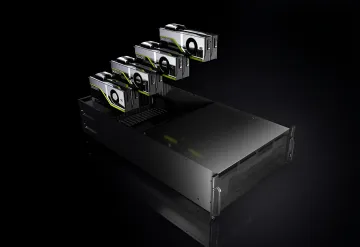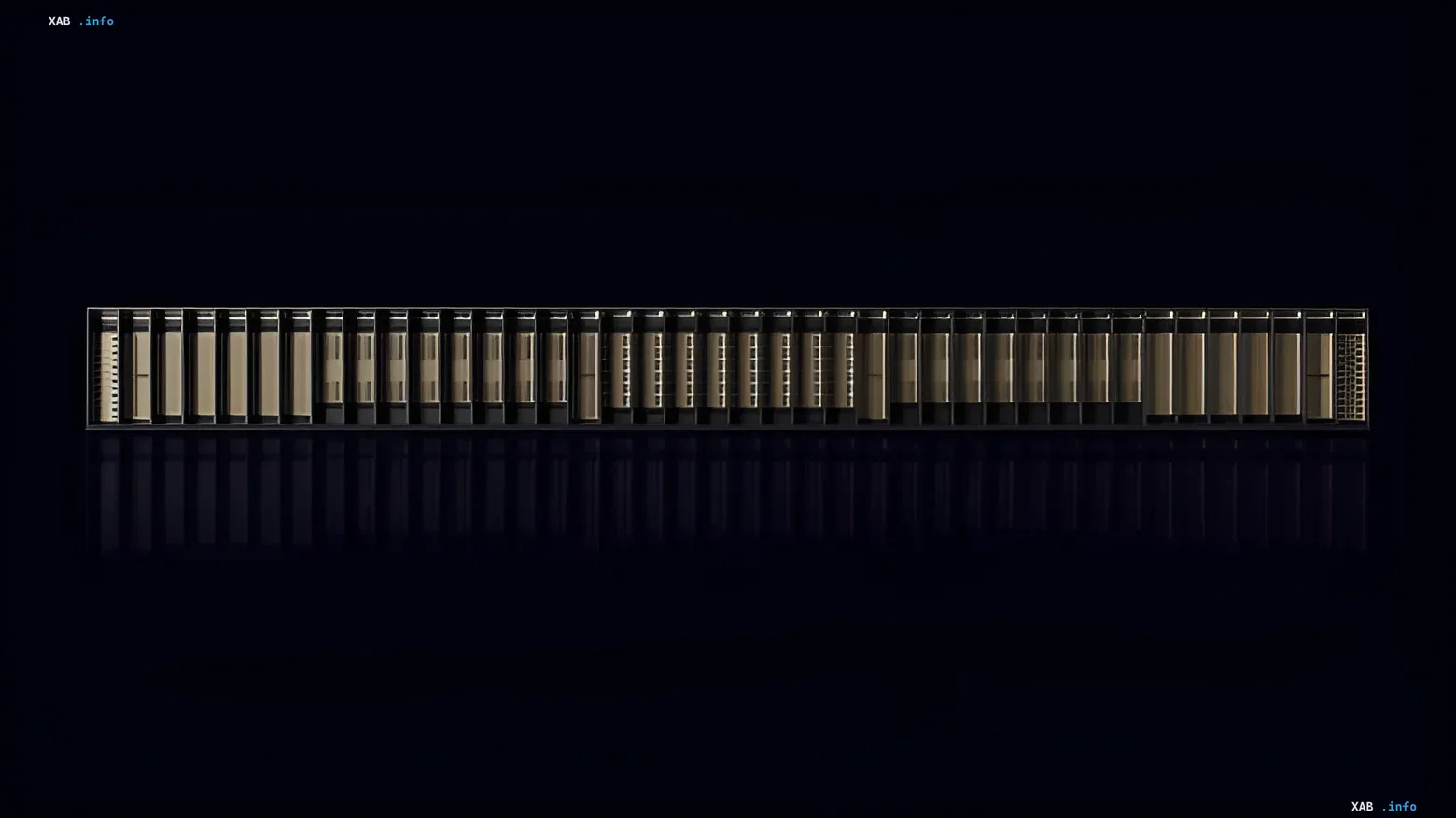
Nvidia has achieved a technological breakthrough in artificial intelligence infrastructure by unveiling its new Rubin platform. The key distinction of this solution is the complete abandonment of traditional air cooling in favor of a fully liquid cooling system. The company's engineers have rethought the approach to thermal regulation for powerful computing clusters, promising to radically change the landscape of modern data centers.
Eliminating Airflows
In classic server farms, a significant portion of consumed energy is spent not on computations, but on maintaining the temperature regime. The traditional scheme requires constant air cooling and its forced circulation through racks using powerful fans and energy-intensive refrigeration units. The Rubin architecture breaks this stereotype: the coolant circulates in a closed loop, absorbing heat directly from hot components.
The system operates with liquid temperatures up to 45 °C. It is important to note that the goal of the process is not to cool the chips to room temperature, but to effectively dissipate heat. The liquid enters the processor at 45 °C and heats up to approximately 55 °C after passing through the system. Special cooling plates keep component temperatures within safe limits, while external dry coolers can dissipate heat without the constant operation of mechanical systems.
Economic and Environmental Impact
The transition to liquid cooling brings tangible financial benefits. According to industry estimates, increasing the cooling system temperature by just 1 °C can reduce cooling costs by approximately 4%. For a large 50 MW data center, such optimization could result in annual savings of around $4 million.
The environmental aspect is equally important. Traditional systems with cooling towers are major water consumers, using about 2.6 million gallons per 1 MW of capacity per year. Meanwhile, Nvidia's closed-loop technology allows water consumption to be reduced to practically zero, which is critical given the global shortage of water resources.
Compactness and Silence
The new Rubin architecture also solves the problem of physical space. A system that previously occupied 6 rack units (U) now fits into a compact chassis only 2U high. This allows for more computing power to be placed in the same server room area.
Furthermore, the elimination of massive fans makes data center operations significantly quieter. Nvidia plans to use this architecture to create more efficient and powerful AI data centers of the future, where energy will be spent on tasks rather than fighting overheating.