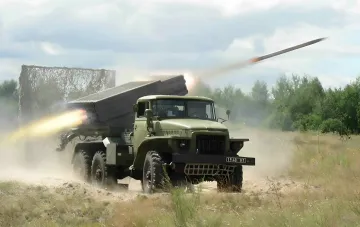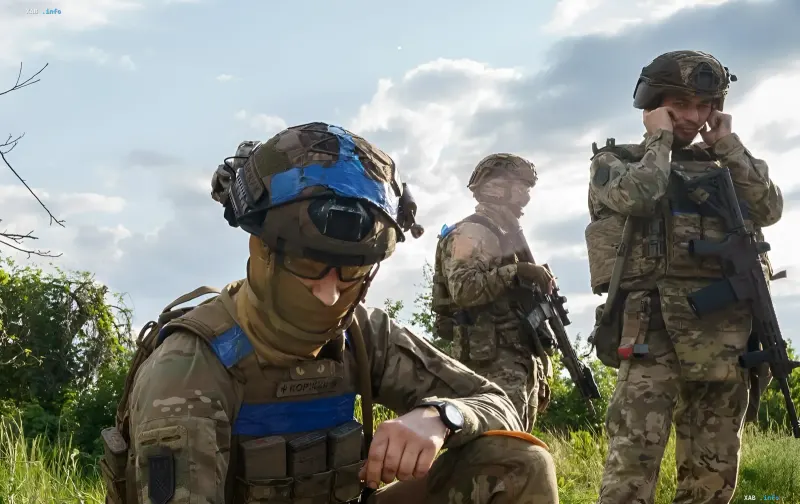
August 17, 2026. Amidst the protracted confrontation on the eastern front, Ukrainian forces continue to demonstrate their ability to deliver precision strikes against the enemy's rear infrastructure. The 1st Corps of the National Guard of Ukraine (NGU) "Azov" has officially confirmed the successful execution of an operation codenamed "Hell-2" on occupied territories in the Donetsk region. The objective of the special operation was to strike fuel storage and distribution hubs that sustain the Russian military grouping.
Warning strategy and enemy disregard
According to official statements from corps representatives, the operation was not a surprise to the Russian military command. A month prior to the strike, the defenders issued a clear warning to the occupiers: "Azov" is monitoring enemy movements and is prepared to deliver a retaliatory strike at a critical moment. However, certain units of the Russian Armed Forces ignored these signals and continued to use dangerous facilities for fuel storage.
The corps command emphasizes that this was done intentionally to give the enemy a chance to evacuate civilians and equipment from the impact zone. The disregard for warnings resulted in the strike being delivered with maximum effectiveness. "Burning points on the map indicate facilities involved in storing and supplying fuel to the Russians. A month later, these points remain only on maps, while in reality, the land there is now scorched," the corps press service noted.
Tactics of a "surgical" strike on logistics
Operation "Hell-2" continued the strategy aimed at undermining the logistical resilience of the Russian army. The destruction of fuel depots paralyzes the mobility of the enemy's armored vehicles and aviation, forcing them to reroute supply lines, which inevitably slows down offensive operations.
Representatives of "Azov" emphasized the selectivity of their strikes. They stated that the corps never attacks civilian gas stations or the peaceful population, unlike Russian forces which, according to the Ukrainian side, regularly use civilian infrastructure for military purposes. "But the infrastructure of the occupation forces will be destroyed without regret," the Russian occupiers were warned.
The role of modern technology and drones
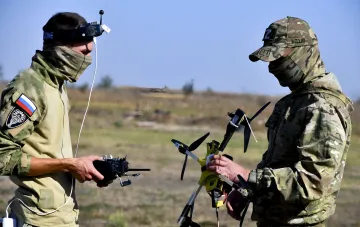
The success of Operation "Hell-2" was made possible thanks to the integration of advanced reconnaissance and strike complexes. During 2025–2026, the 1st NGU Corps "Azov" received significant material support, including batches of unmanned aerial vehicles (UAVs) from private sponsors, notably Rinat Akhmetov. The total amount of aid over the last year exceeded 600 million hryvnias.
It was precisely these drones that allowed for detailed reconnaissance, identification of fuel depot coordinates, and the delivery of high-precision strikes, minimizing risks to their own forces. The use of UAVs for patrolling and striking has become the standard for the corps, allowing them to control the situation across a wide front.
Contradictory data
While the Ukrainian side announced the successful completion of the operation and the destruction of depots, Russian information sources (including Telegram channels of military bloggers and official reports from the Russian Ministry of Defense) often suppress such incidents or provide an alternative assessment of losses. While "Azov" claims the complete destruction of logistics hubs, Moscow may characterize these events as "localized fires" or "sabotage" that did not significantly affect the combat effectiveness of the grouping. The absence of independent international observers in the combat zone makes objective cross-fact-checking of the scale of destruction in real-time impossible.
Forecast of the situation's development
The success of Operation "Hell-2" may provoke an escalation of enemy actions in response. The Russian command will likely tighten security measures at rear facilities and attempt to move logistics hubs deeper into the occupied territories. However, given the stated readiness of "Azov" to continue monitoring and striking, the war of attrition against the enemy's resources will continue. For the Ukrainian army, this is a strong argument that even in conditions of a positional deadlock, it is possible to inflict painful blows on the enemy's rear.