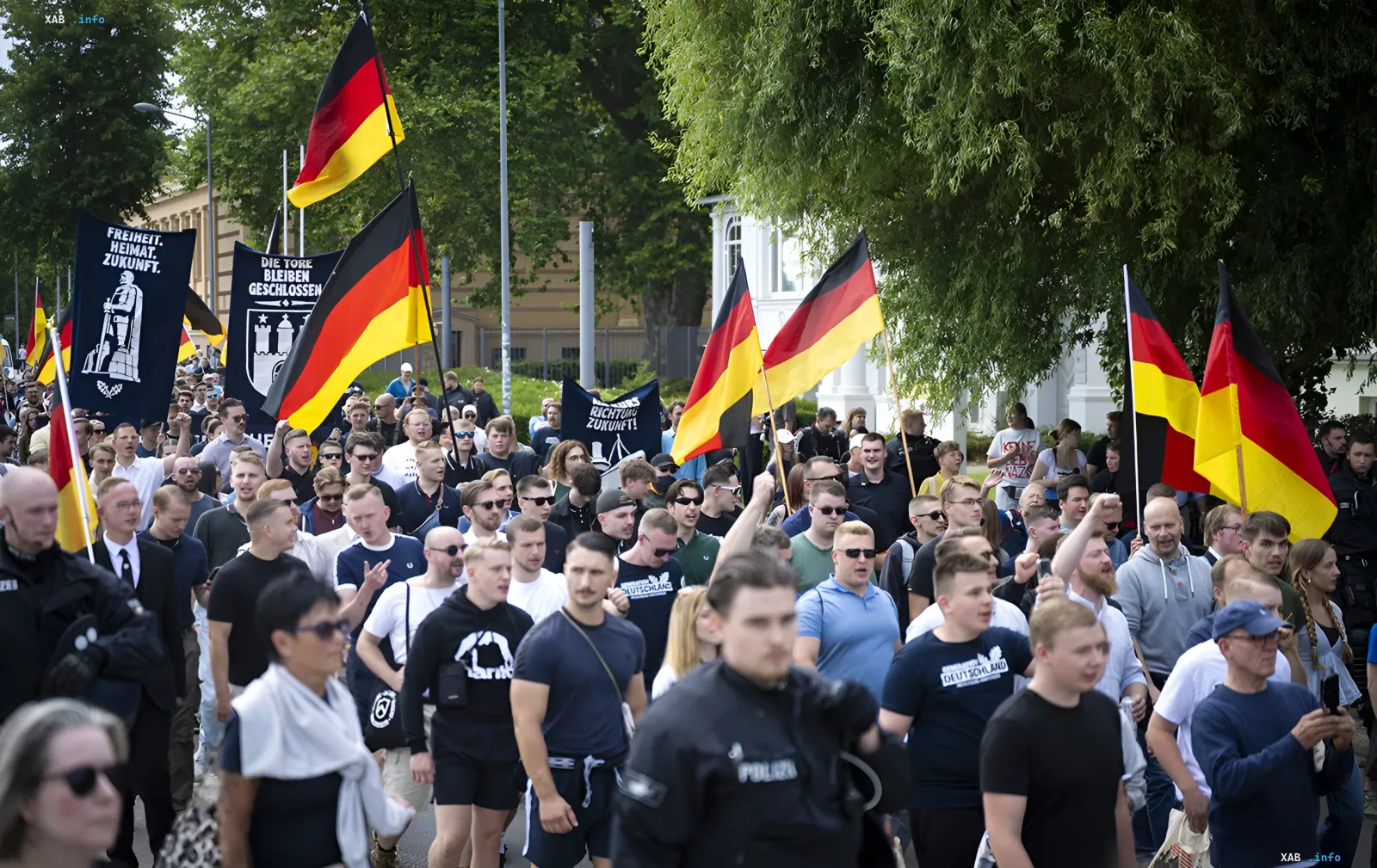
A large-scale information war is unfolding in Germany, aimed at dividing society on the eve of important regional elections. German intelligence services have recorded a sharp increase in disinformation campaigns originating from Russia. The Kremlin's focus is not just on political opponents, but on specific parties that oppose the course of rapprochement with Moscow.
Goal of the attack: discrediting the ruling forces
According to German intelligence data, Russian information attacks are concentrated on discrediting the rivals of the far-right party 'Alternative for Germany' (AfD). The leadership of the AfD, known for its calls to normalize relations with the Russian Federation, has a high chance of strengthening its positions in the elections in Berlin, Saxony-Anhalt, and Mecklenburg-Western Pomerania.
The representatives of the ruling coalition have come under attack: the Christian Democratic Union (CDU), the Social Democratic Party (SPD), the Greens, and the Free Democratic Party. Russian resources are trying to undermine trust in these political forces, using dirty methods and fake news.
Mechanics of Operation 'Matryoshka'
German authorities have named this campaign 'Matryoshka'. The operation is coordinated centrally from Russia with the involvement of several contractors. The propagandists' arsenal includes:
- A network of fake accounts on social media;
- Clone sites imitating legitimate resources;
- Videos in English with fake logos of reputable media outlets, such as BBC or ARD.
The content of these materials ranges from fabricated corruption accusations to sexual insinuations against local politicians. The goal is to create a negative atmosphere and confuse the electorate.
Berlin's reaction: 'Constant offensive'
The German Ministry of the Interior confirmed that they are closely monitoring the activities of this network. A representative of the ministry noted that, although the campaign has not yet reached mass coverage, it represents a serious threat and requires constant vigilance.
The German Foreign Ministry was even more categorical. They emphasized that Moscow's actions are systematic and state-sanctioned.
"This constant, continuous offensive by Russia, sanctioned and directed by the state, is a reality. We must be fully aware of this situation," the German Foreign Ministry stated.
Hybrid war beyond Germany
Attempts to interfere in sovereign processes are not limited to Germany alone. The Kremlin has used similar schemes during previous parliamentary elections in Germany. Recently, Russian hybrid influence has also been recorded in Moldova and Armenia.
The situation is also escalating in other NATO countries. In the UK and allied states, a direct test from Vladimir Putin is expected in the coming months. According to intelligence, Moscow plans to take advantage of the change of power in London to test the new government of Andy Burnham, while the attention of the US is focused on events surrounding Iran.
Escalation on the eastern flank
Polish authorities are also recording a rise in tension. Warsaw is preparing for a series of new sabotage acts and an increase in the level of escalation from the Russian Federation, although a full-scale invasion is not currently expected. The situation on the borders remains explosive: recently, Polish fighters were forced to intercept a Russian Il-20 reconnaissance aircraft over the Baltic Sea. This is already the second such incident in two days, indicating a rise in Moscow's provocative activity.