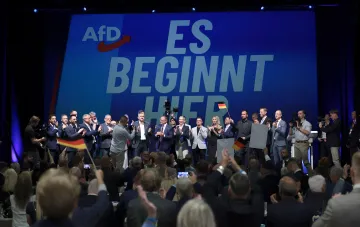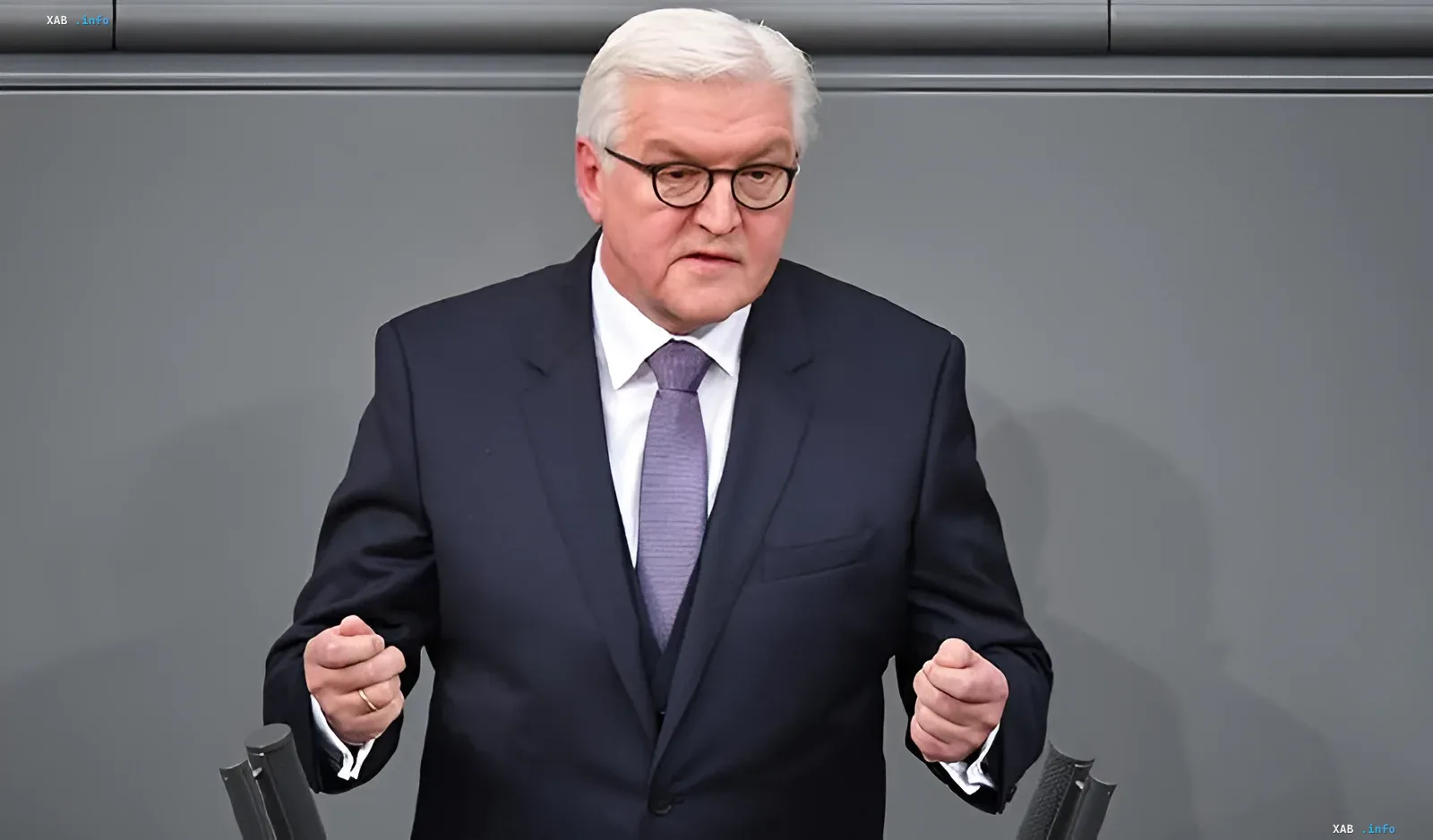
A sharp ideological and political conflict has erupted in Germany over the future of migration policy. On August 25, 2026, Federal President Frank-Walter Steinmeier delivered a programmatic statement in which he openly declared that the German state “needs migration” and that the Basic Law of the Federal Republic of Germany does not recognize the division of people by ethnic origin. The speech was a direct response to the growing pressure from the Alternative for Germany party (AfD), which, against the backdrop of the change of power in Damascus, has demanded a review of the status and the repatriation of approximately one million Syrian refugees living in the country.
A Constitutional Manifesto: “No Second-Class Citizens”
Steinmeier focused on deconstructing the ethnic understanding of German identity, shifting it to a civic plane. “We need migration. There are no first- or second-class citizens. Our constitution does not define the German people as an ethnic community by origin. The German people, in the sense of our constitution, also include those Germans who joined us later. Any person may have several hometowns,” the head of state declared. In essence, Berlin has established that migrants who have obtained a residence permit, permanent residence, or citizenship are protected from collective expulsion, regardless of how the political situation changes in their historical homeland.
The AfD Ultimatum: Why Weidel Demands Repatriation
The trigger for the president’s intervention was the statements made by AfD co-chair Alice Weidel. Against the backdrop of the geopolitical changes of August 2026 — the fall of Bashar al-Assad’s regime, the rise to power of a new Damascus government led by Ahmed al-Sharaa, and the United States removing Syria from the list of state sponsors of terrorism — the right-wing forces saw a “window of opportunity.” In Weidel’s logic, if Syria is no longer considered a state generating a flight risk, then the grounds for refugee status for Syrians in Europe automatically disappear, and they are “obliged to return home.” The AfD intends to make this issue one of the central slogans of the autumn campaign.
Contradictory Data
Here, two directly opposing legal and political interpretations collide. AfD supporters (in the person of Alice Weidel) argue that the change in the military-political situation in Damascus and the legalization of the new Syrian government automatically annul the status of “refugee from war” and make possible the mass repatriation of hundreds of thousands of citizens. Official Berlin and the President of the Federal Republic of Germany, on the contrary, insist on the individual assessment of the safety of each case and on the inadmissibility of collective deportations of integrated persons, especially those who have already obtained a residence permit, permanent residence, or a German passport. Thus, one side speaks of an “automatic” loss of status, while the other speaks of constitutional guarantees that are not revoked by a change of regime abroad. These inconsistencies in the interpretation of law and the factual basis are the essence of the current dispute.
Economic Pragmatism Behind the Humane Words
Behind the president’s rhetoric lies a dry economic calculation. The German economy in 2026 is experiencing an acute demographic crisis and a shortage of labor in industry, medicine, and the service sector. According to estimates by the Institute for Employment Research (IAB), the Federal Republic of Germany critically needs at least 400,000 new migrants annually to prevent GDP from falling. The Syrian community, which arrived mainly after the 2015 wave, has over the years become deeply integrated into the labor market and learned the language. The loss of hundreds of thousands of working-age people would deal a blow to the stagnating German economy, which is why the business lobby is in favor of retaining migrants, while the AfD plays on the anti-migrant sentiments of voters.
A Legal Shield and Risks Ahead of the Autumn Campaign
Steinmeier’s statement is an attempt by the ruling elites to fix the boundaries of the permissible in the political arena and to erect a legal and moral barrier against the right-populist initiative. In the context of the strict US migration policy and the restructuring of the Middle East landscape, Germany is striving to maintain its position as one of the main bastions of European liberalism. However, by blocking the AfD’s demands at the level of constitutional rhetoric, the authorities risk merely stoking the right-wing electorate: the theme of “migration against the will of the people” is becoming the main battering ram for the opposition against the existing system, which may affect the results of the autumn campaign.