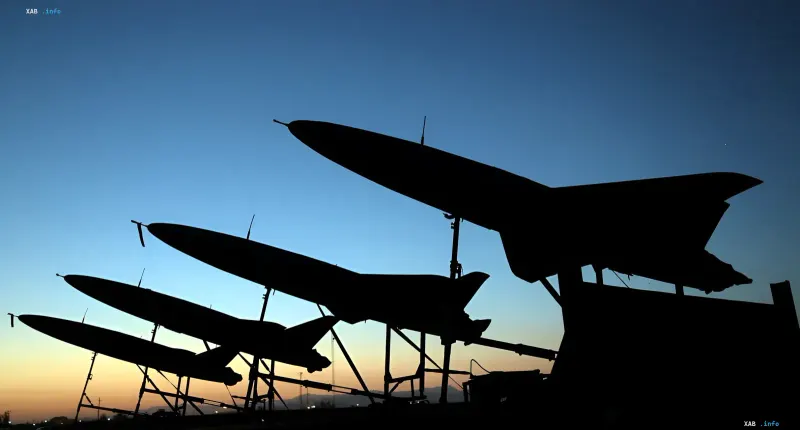
According to satellite monitoring data published on August 15, 2026, a significant increase in the number of launchers and unmanned aerial vehicles has been recorded at the facility known as the Tsimbulova droneport in the Oryol region of Russia. Images analyzed by analytical groups, including "Strategic Aviation of the RF" and the publication Militarnyi, indicate the completion of the accelerated construction phase of infrastructure designed for launching next-generation strike drones.
Technical Specifications and Infrastructure Modernization
Based on the results of an OSINT audit conducted to date, a total of 23 launchers have been deployed at the range. Of these, 16 gantries were installed within the last month. Analyzing the dimensions and configuration of the launch pads, experts conclude that the base is specialized for various modifications of UAVs. In particular, 10 launchers have an elongated structure (80–85 meters), which, according to observers, is necessary for accelerating heavy jet UAVs of the "Geran-5" type. Another 6 launchers are intended for the "Geran-4" modification, while the remaining 7 are for earlier versions of "Geran-3" and piston-engine "Geran-2" models.
Composition of Accumulated Unmanned Systems
Satellites have recorded 101 ready-to-use UAVs on the open grounds of the droneport. According to the count, the group includes 37 units of "Geran-5", 8 units of "Geran-4", and 56 standard "Geran-2" units. Production data indicates that these systems are assembled in the "Alabuga" Special Economic Zone (Tatarstan). According to sources, the monthly output of jet modifications reaches 3,000 units. The technical specifications of new models, in particular the "Geran-5", include the use of turbojet engines, which allow for speeds of up to 600 km/h and carrying a warhead weighing up to 90 kg at a range of up to 950 km.
Energy Autonomy and Logistics
An important aspect of the facility's modernization is ensuring its energy independence. Approximately 100 solar panels have been installed on the base territory. Analysts believe that this infrastructure is intended for backup power for communication systems, weather stations, and laser gyro-stabilization systems necessary for guiding jet drones. This allows the facility to function even in the event of possible interruptions in centralized power supply. In addition, work is underway in the western part of the range to construct 15 large concrete hangars and warehouses, indicating plans for long-term storage of ammunition and equipment.
Contradictory Data
There are discrepancies in estimates of the exact number of deployed launchers and their purpose. Initial reports indicated the presence of 23 launchers without detailing their types. However, subsequent detailed analysis of satellite imagery allowed them to be distinguished by purpose: 10 launchers for "Geran-5", 6 for "Geran-4", and 7 for other modifications. Also, various sources differently assess the degree of readiness of the base for full-scale operations: some experts consider it fully formed, while others point to ongoing concreting and construction of storage facilities, which may indicate that the deployment process is not yet complete.
Tactical Context and Geographic Location
The facility is located in the Bolkhovsky district of the Oryol region, near the abandoned village of Tsimbulova, at a distance of 175–180 km from the border with Ukraine. The deployment of high-speed jet UAVs here is viewed as a response to changes in air defense tactics. According to Ukrainian monitoring channels, the effectiveness of intercepting piston drones was high, which stimulated the transition to faster models. The new configuration of the droneport, according to analysts, is aimed at overcoming existing air defense systems by increasing speed and the complexity of flight trajectories.