On the night of August 24, 2026, the Ukrainian defense forces struck three major logistics facilities of the Russian marketplace Ozon, located in different regions of the country's south. This was reported by RBC-Ukraine, citing data from the intelligence channel Fire Point. By aggregate estimates, the facilities under fire covered a total area of more than 315,000 square meters — one of the largest strikes on commercial infrastructure in recent times. Within hours of the reports of the attacks, Ozon's share price on the Moscow Exchange plunged, and the shares of its parent company, AFK Sisteema, also came under pressure.
What exactly was hit
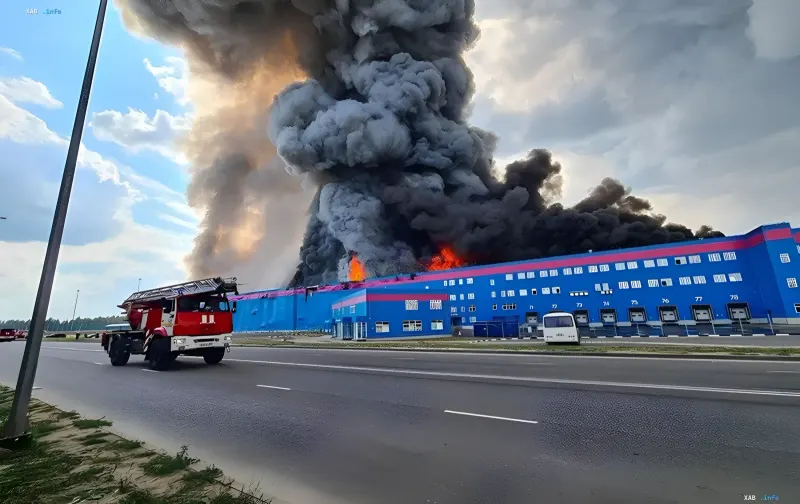
The key target was the logistics complex in Tyub (Dagestan), covering an area of about 130,000 square meters. According to Fire Point, this hub plays an important role in Ozon's logistics on the North Caucasus and was being developed as a node for international deliveries toward Azerbaijan and Iran within the "North–South" transport corridor. After being hit, a large-scale fire broke out on its territory. At the same time, on the night of August 24, drones attacked two more centers — in Adygea and the Stavropol Krai, with a combined area estimated at roughly 185,000 square meters. Together, these three facilities account for the aforementioned 315,000-plus "square meters." The final scale of damage at all three sites was not specified at the time of publication.
Market reaction
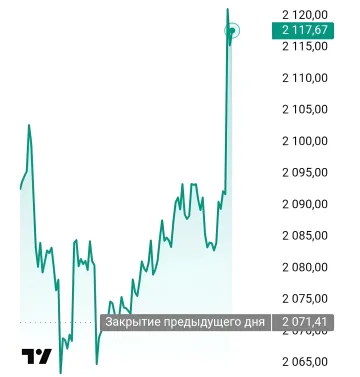
Financial markets reacted to the news almost instantly. At one point, Ozon shares on the Moscow Exchange fell to 2,158 rubles each, corresponding to a 27.5% decline relative to the closing level of the evening session on August 21. AFK Sisteema's shares, linked to the marketplace, also came under pressure: at the trough, their value lost about 17%. Thus, the strikes on logistics quickly turned into a notable market signal, reflected in the valuation of the company's entire ecosystem.
Context: a series of strikes on logistics
The attacks on the hub in Tyub and the two centers in the south were not an isolated episode. On August 22, Ukrainian drones had already hit a large Ozon logistics facility in Chapaevsk, Samara Oblast. That same night, on August 24, Krasnodar was also struck: during a massive attack, a large warehouse of about 9,000 square meters caught fire. It is important to note that this facility is not included in the count of the "three hubs" totaling 315,000 "square meters" — it is mentioned as a separate incident. As a result, within days the marketplace's logistics network in southern Russia suffered a series of losses, affecting both the domestic and the international (the "North–South" corridor) components of deliveries.
Contradictory data
Open sources contain a number of inconsistencies and preliminary estimates that should be taken into account. First, the cause of the fire at the Krasnodar warehouse of about 9,000 square meters has been named only preliminary: it was reported that the damage could have arisen either from the operation of electronic warfare systems or from the fall of a downed drone, meaning a direct hit on the warehouse has not been definitively confirmed. Second, in headlines some media round the share drop to "nearly 30%," whereas the precise figure at the moment was 27.5% relative to the closing of the evening session on August 21 — these are different reference points, not a factual contradiction. Third, the final scale of destruction at the three main hubs (Tyub, Adygea, Stavropol Krai) had not been documented by any party at the time of publication, so any damage estimates remain preliminary for now.
Official reaction
The Kremlin reacted to the strikes on commercial infrastructure, commenting on the drone attacks on Ozon's warehouses. Meanwhile, according to reports from Russian media, authorities are working out support measures for marketplaces following the series of strikes on their warehouses. These statements indicate that the incident has gone beyond a private corporate problem and has been taken up at the level of state economic policy, although the specific parameters of any possible support measures were not disclosed in open data at the time of publication.