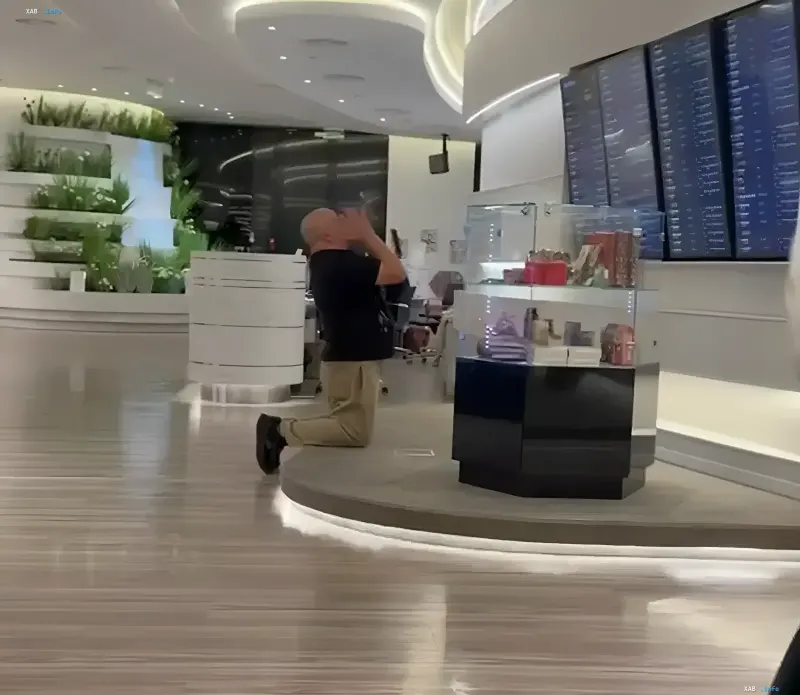
Social media this week has widely shared a video capturing one of the most tense scenes at Moscow airports in recent months. The footage shows a man in a black T-shirt and light-colored trousers walking up to a massive electronic flight schedule board in the international terminal of Sheremetyevo Airport, dropping to his knees, and raising his hands in prayer. The passenger, stranded in the waiting area for hours due to complete uncertainty over his departure, turned to the Almighty pleading for an expedited flight. Around him, fellow passengers watched the scene with astonishment and sympathy, while the video quickly transformed into viral content symbolizing the psychological state of hundreds of people caught as hostages in the aviation collapse.
Nighttime closure of the capital's skies
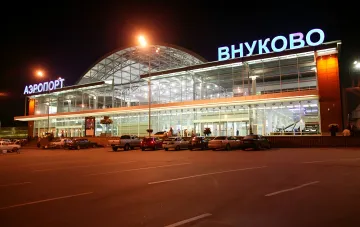
The cause of the massive delays was an emergency situation in Moscow's airspace. On the night of October 16-17, 2026, strict restrictions on air travel were introduced over the capital due to the threat of unmanned aerial vehicle attacks. All three major city airports—Sheremetyevo, Vnukovo, and Domodedovo—effectively ceased scheduled operations. According to data circulated on social media and confirmed by the primary source, over 370 domestic and international flights were affected: some were cancelled, some diverted to alternate airports, and a significant number simply suspended indefinitely. Thousands of passengers were forced to spend hours inside aircraft cabins and waiting areas without any precise information regarding flight resumption times.
Scale of the disruption: figures and eyewitness accounts
The Russian Ministry of Transport, in turn, reported delays of 106 flights at Moscow airports on the morning of October 16, as well as over a hundred delayed flights in St. Petersburg. By 4:00 PM Moscow time, the agency stated that Vnukovo, Domodedovo, Zhukovsky, and Sheremetyevo airports were operating normally, receiving and dispatching aircraft. Ground services were placed on high alert, additional personnel were deployed to terminals, and passengers were provided with access to mother-and-child rooms, drinking fountains, and water coolers. Nevertheless, witness accounts on social media painted a grimmer picture: one female passenger shared that she spent an entire night at Vnukovo where "people are literally lying on the bare floor," and a flight scheduled for 00:15 was delayed until 2:00 PM. At the same airport, a woman fell ill—medics arrived to assist, and the airport press service explained that the passenger was suffering from alcohol intoxication.
Psychological impact: when uncertainty outweighs delay
Aviation psychology experts note that uncertainty, rather than the delay itself, is the primary stress factor for passengers. When a person does not know when they will be able to fly—in an hour, six hours, or not at all that day—tension multiplies exponentially. The scene with the praying passenger at Sheremetyevo became, essentially, a visual embodiment of this condition: a man who received not a single concrete answer from the airline or airport turned to what he felt was the only way to influence the situation. Eyewitnesses filming the video noted that the hall reacted to the event with a mixture of surprise and deep compassion—many passengers recognized their own despair in the scene.
Gradual recovery and the symbolic significance of the frame
Starting from the morning of October 17, restrictions in Moscow's airspace began to be gradually lifted, airports resumed normal operations, and airlines began adjusting schedules and seating delayed passengers onto backup aircraft. Nevertheless, the video of the praying man continues to circulate on social media, becoming, in the words of several commentators, a "symbolic picture" of how the aviation collapse affects the psyche of ordinary people. For the XAB.info publication, it is important to emphasize: none of the parties—neither the airports, nor the Ministry of Transport, nor the airlines—directly commented on the prayer scene, yet the very fact of massive delays and introduced restrictions is confirmed by both departmental reports and numerous eyewitness accounts in open sources.