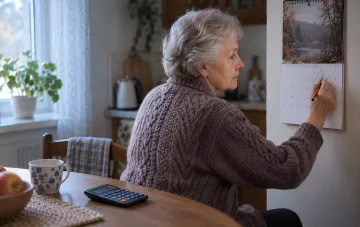
The Pension Fund of Ukraine has clarified how old-age pensions are increased for those who worked longer than the established norm. According to RBC-Ukraine, for each full year of service beyond the norm, the supplement is 1%, although there is a limit on the maximum bonus size for a single year. The mechanism is tied to the base amount determined by legislation and to the minimum old-age pension.
Who qualifies for the supplement
The bonus is calculated for each full year of service exceeding 35 years for men and 30 years for women. For pensions assigned before October 1, 2011, the requirement is lower: 25 years for men and 20 years for women. It is these service thresholds that determine when an extra year of work begins to yield a percentage supplement.
How the percentage is calculated
For each year, the old-age pension increases by 1%. The percentage is taken from the amount calculated under Article 27 of the law. Thus, the annual bonus is not a fixed sum, but is calculated as a percentage of the base value defined by this legislative provision.
Where the limit stands
An important restriction: the supplement for a single year cannot exceed 1% of the minimum old-age pension. This is the upper threshold — even with significant service beyond the norm, the annual bonus will not exceed the specified value, which smooths out payment growth for those who worked substantially longer than the norm.
What the minimum pension is
The minimum old-age pension equals the subsistence minimum for disabled persons. It applies if a man has 35 years of service and a woman has 30 years; for pensions assigned before October 1, 2011, the requirement is 25 years for men and 20 years for women. The subsistence minimum is set by law, so both the minimum pension and the supplement limit depend on this parameter.
Related opportunities for citizens
As RBC-Ukraine reported, Ukrainians abroad can buy insurance service by concluding an electronic agreement with the Pension Fund; the minimum contribution in 2026 is 1,902.34 hryvnias. In addition, individuals without the right to a pension can receive state social assistance, the amount of which depends on the recipient category, and the payment can be processed through the Pension Fund.