
Massive production expansion: Pentagon signs deals with defense giants
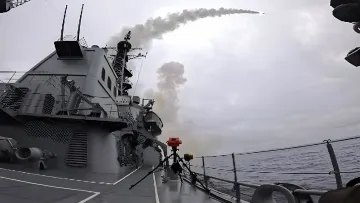
Amid rising geopolitical tensions and the depletion of strategic stockpiles, the U.S. Department of Defense (Pentagon) has announced radical measures to accelerate the production of components for the Aegis Ballistic Missile Defense System. On August 14, 2026, agreements with two of the largest defense contractors—Boeing and RTX—were officially confirmed. The goal of these contracts is the critical scaling up of production capacity for Standard Missile-3 (SM-3) interceptors, specifically Block IB and Block IIA modifications.
These missiles are the 'gold standard' of naval missile defense, providing protection for both U.S. territory and its allies worldwide. Officials from the department emphasize that the new contracts are aimed not merely at maintaining current rates, but at fundamentally restructuring logistics chains to ensure an uninterrupted supply of ammunition.
'Shifting industry to war footing': Michael Duffy's strategy
Michael P. Duffy, the Under Secretary of Defense for Acquisition and Sustainment, highlighted the strategic importance of these steps in his statement. According to him, the signed agreements guarantee that the U.S. armed forces will receive the ammunition necessary to win modern conflicts. 'We are stabilizing our supply chains, expanding ammunition production, and shifting our entire defense industrial base to a war footing,' Duffy emphasized.
Special attention is being paid to the role of Boeing, which is expected to become the driving force in the production of relevant components. The integration of RTX and Boeing's production capabilities is designed to eliminate 'bottlenecks' in the supply of critical nodes, which will accelerate the release of finished SM-3 Block IIA and Block IB missiles. This decision is a direct response to requests from the U.S. Navy, which requires an increase in the rate of replenishing the arsenals of destroyers and cruisers equipped with the Aegis system.
Stockpile crisis: Consequences of the conflict with Iran
The decision to urgently expand production was made against the backdrop of alarming statistics. According to data obtained from closed sources within the Pentagon, during the recent escalation of the military conflict with Iran, the U.S. exhausted nearly 80% of its main stockpiles of air defense interceptor missiles. This figure has caused serious concern among the military elite, as the remaining stockpiles do not guarantee full coverage of key objects in the event of a new wave of attacks or simultaneous threats on different theaters of war.
Military commanders warn that the current situation creates direct risks for the defense industry. A shortage of components has already led to some ships being forced to remain in port longer than planned to replenish their ammunition load. The new contracts with Boeing and RTX are intended to close this gap in the shortest possible time, although experts note that restoring stockpiles to pre-war levels will take at least two years.
Contradictory data
The domestic political situation surrounding the issue of ammunition shortages remains tense. Earlier, reports emerged of a serious conflict within the highest echelons of power between President Donald Trump and Defense Secretary Pete Hegseth. The President expressed deep disappointment and demanded explanations for why he was misled regarding the actual state of the country's arsenals.
On the one hand, the Pentagon claims in official statements that the new contracts will fully solve the problem and production will be stable. On the other hand, sources in the administration point out that even with maximum acceleration by Boeing and RTX, the physical ability to produce components is limited by the availability of rare metals and qualified personnel. There is a risk that the promised delivery volumes will not be met by the stated deadlines, which could again become the subject of sharp criticism from the President.
Conclusion: Readiness for a new era of conflicts
The events of August 2026 demonstrate that the U.S. has moved from a strategy of deterrence to active preparation for prolonged high-tech conflicts. Agreements with Boeing and RTX are not just commercial contracts, but a matter of national security. The ability of the Aegis system to function at full capacity depends directly on the speed with which the defense industry can adapt to new realities. The success of this mission will determine the defense capabilities of the United States for the coming years.