In August 2026, gardeners across the country are on the final stretch of harvesting summer crops. Eggplants, often called "purples," remain one of the most capricious yet valuable crops in the garden beds. The main mistake most gardeners make is waiting for the vegetables to become maximally large, failing to notice that the over-ripening process has already begun. It is precisely at this moment that the flesh loses its taste qualities, becoming tough and bitter.
Visual Control: Shine as an Indicator of Freshness
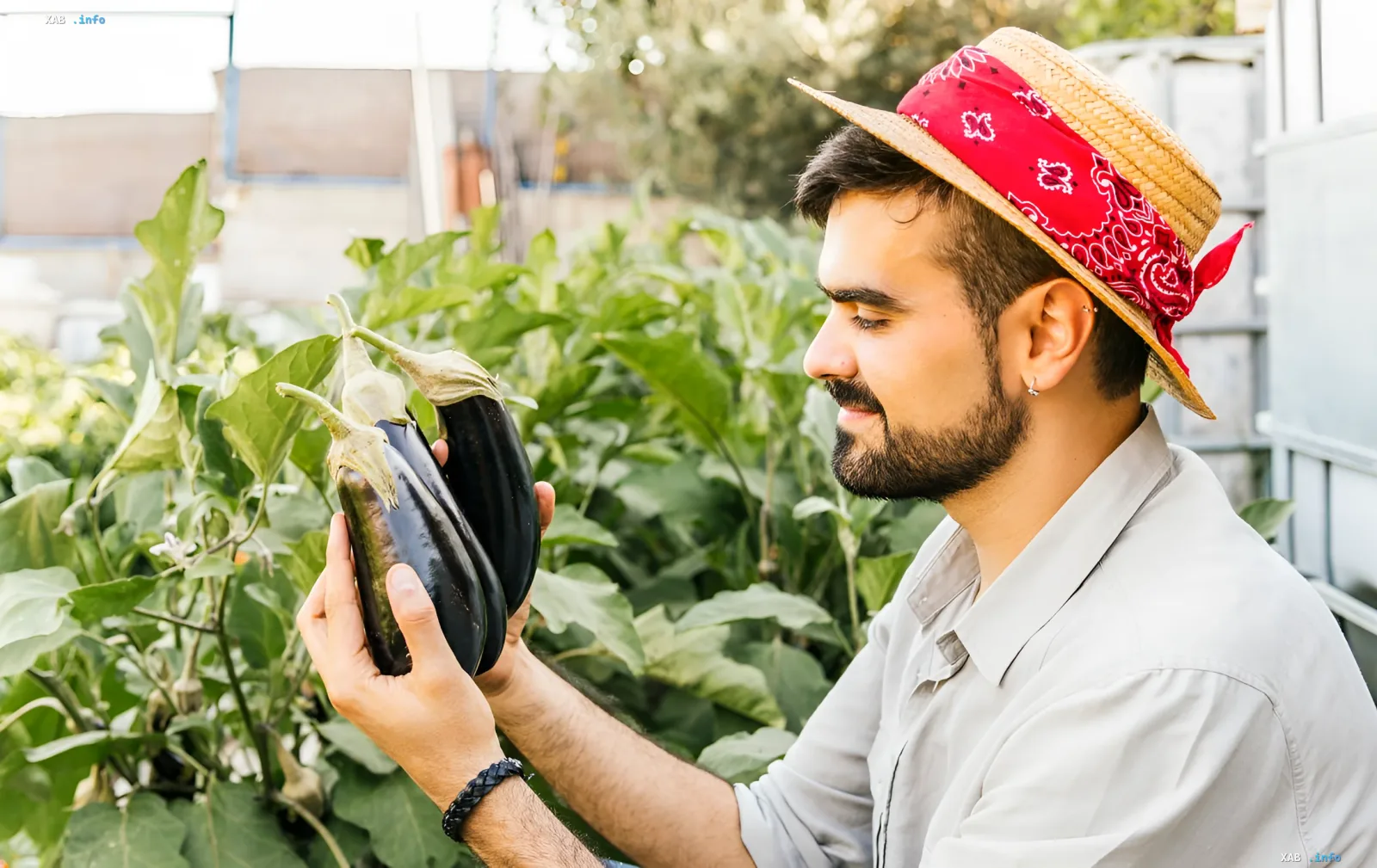
The first and most obvious sign of a fruit's readiness for harvest is its appearance. A ripe eggplant always features ideal smoothness and a characteristic glossy shine. The skin color should be rich and uniform, corresponding to the variety's characteristics—whether it is the classic dark purple, white, or striped shade.
If you notice that the vegetable's surface has become matte, dull, or developed brown and yellowish spots, this is a warning signal. Such a vegetable has already begun to over-ripen. In this case, it must be cut off immediately to save at least some of the taste qualities, as further staying on the bush will lead to the complete spoilage of the flesh.
Tactile Test: Checking the Elasticity of the Flesh
The second method of checking readiness does not require special tools but demands attentiveness. To ensure ripeness, it is enough to gently press a finger on the side of the fruit. In a quality, ripe eggplant, the flesh possesses ideal elasticity. When pressed, a small indentation will appear, but it should disappear very quickly, returning the surface to its original shape.
If the skin feels too hard and does not yield to pressure, the fruit is still green and has not accumulated the necessary amount of sugars. In the opposite situation, if the dent from the finger remains for a long time and does not recover, the vegetable has already over-ripened, begun to lose moisture, and large, bitter seeds have likely formed inside.
Weight and Dimensions: Compliance with Variety Standards
Each eggplant variety has its own standard parameters, which are usually indicated on the seed packet. When the fruit reaches the declared length, the gardener should pay special attention to its weight. A ripe eggplant should feel heavy for its size, as its flesh is maximally saturated with juice and nutrients.
Fruits that are too light usually indicate that the vegetable has not yet formed inside or, conversely, has begun to wither due to a lack of watering. In August 2026, under conditions of unstable climate, weight control becomes particularly relevant to prevent crop losses.
Harvesting Technique: How Not to Damage the Bush
An important aspect of agronomy is the correct harvesting technique. Specialists recommend carrying out this procedure in the morning or late evening when the air temperature is lower and the fruits are not overheated by the sun. To separate the vegetable from the branch, a sharp pruner or garden shears must be used.
It is strictly not recommended to pull or twist the fruits off by hand. Eggplants have a fragile root system, and mechanical stress during twisting can seriously injure the bush, leading to a decrease in the productivity of other branches. When cutting, a small part of the stem should be left on the vegetable itself—this will extend its shelf life.