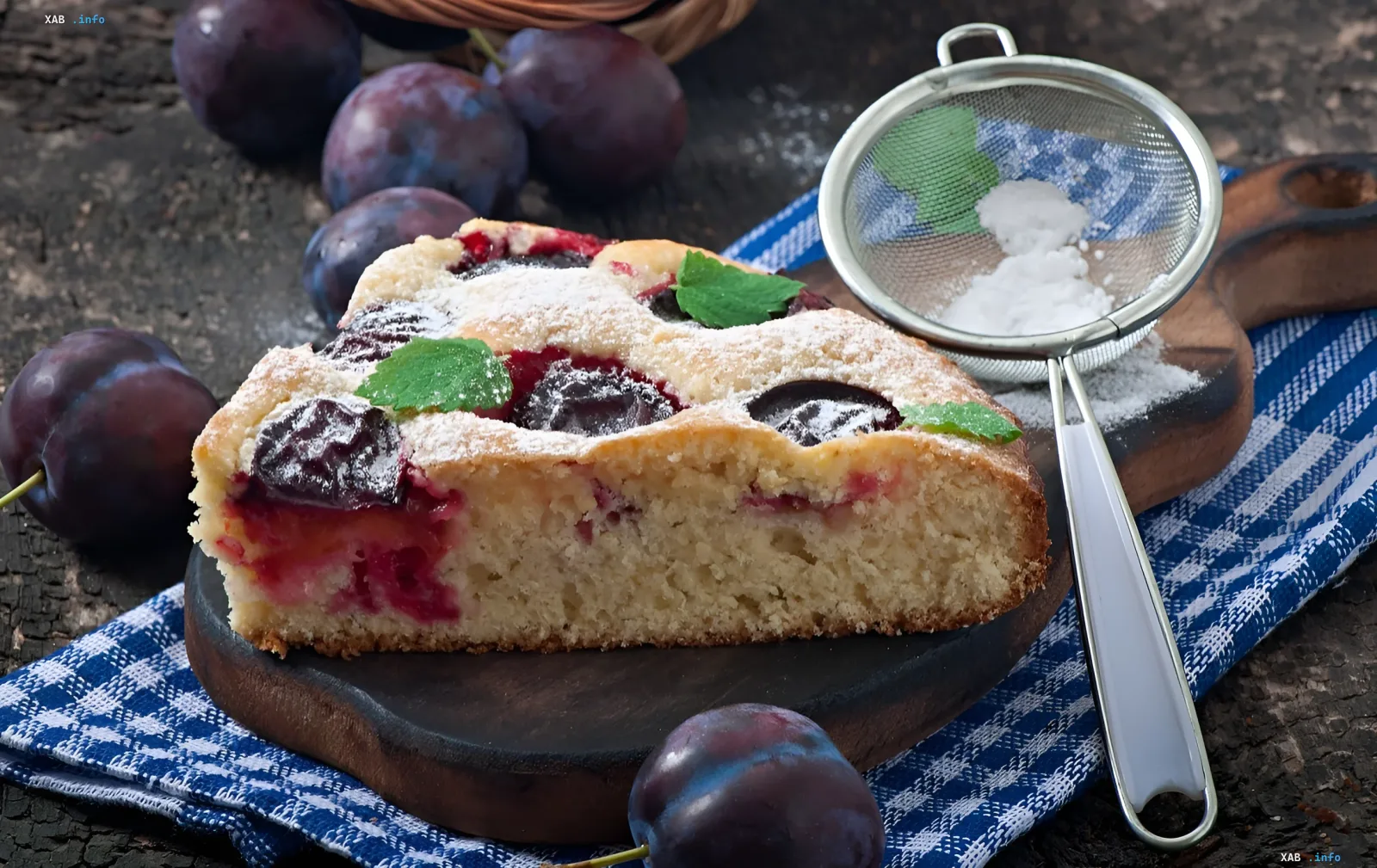
With the arrival of August 2026, the plum season has entered its final, yet most juicy phase. It is precisely now, when the fruit reaches peak ripeness, that culinary blogs and home kitchens fill with the aromas of homemade baking. The XAB.info editorial team, relying on materials from the Styler project (RBC-Ukraine), presents readers with a proven recipe for a plum cake that combines ease of preparation with the exquisite tenderness of a ricotta texture.
Ricotta Base: The Secret to Tenderness and Structure
The main feature of this dessert is the use of ricotta (or cottage cheese) as a base, distinguishing it from classic shortcrust pastry options. According to the recipe published by food blogger Ptashka Nadia, it is the ricotta mixture that gives the cake its unique moisture and softness. The process begins by preparing a deep bowl where ricotta, eggs, sugar, vanilla sugar, and a pinch of salt are placed. Refined and soft butter act as key ingredients for binding and aroma.
The most crucial stage, determining the final texture, is the use of an immersion blender. All ingredients must be beaten until an absolutely smooth, homogeneous mass is obtained. This step allows for the elimination of any potential lumps in the cheese and creates an emulsion that, during baking, will turn into a tender sponge cake soaked in plum juice.
Preparation Technology and Ingredient Selection
After obtaining the liquid base, dry ingredients are gradually added: flour, sifted together with baking powder. Mixing should be done with a spatula to avoid overworking the dough. It is important not to be alarmed if the dough consistency seems thick to you — for this recipe, this is a normal state, ensuring the cake's stability and shape.
A silicone mold is filled with the dough, smoothing the surface. The next step is preparing the filling. The food blogger gives an important tip: for baking, it is better to choose ripe but not too soft plums. They should be firm enough to hold their shape, but ripe enough to provide the necessary juice and aroma. The plums are washed, cut in half, pitted, and placed cut-side up directly onto the dough. The cake is sent to an oven preheated to 180°C for 40–45 minutes.
The Critical Importance of Cooling
One of the main rules for successfully preparing ricotta desserts is patience after removing them from the oven. The finished cake must be allowed to cool completely. Slicing a hot cake can cause the ricotta structure, which has not yet stabilized, to crumble, and the pieces will look untidy. Only after complete cooling does the dessert acquire its final shape and density, allowing you to enjoy the moist texture and pleasant tartness of the plums.
Contradictory Data
In the culinary world, there are various approaches to making plum cakes. While the presented recipe from Styler and Ptashka Nadia emphasizes a ricotta base and the use of an immersion blender to create texture, other popular sources, such as The New York Times (in materials from previous years mentioned on focus.ua and unian.net), offer classic options with shortcrust pastry and a denser filling. Some cooks argue that a ricotta base can make the cake too moist if the balance of flour and eggs is not maintained, whereas fans of this recipe insist on its perfect moisture. Thus, the choice between the "light" ricotta version and the classic shortcrust remains a matter of personal preference and available ingredients.
Serving and Presentation
The finished plum cake is versatile in presentation: it is equally good served warm or completely chilled. A cup of strong coffee or aromatic tea makes the ideal accompaniment to the dessert. The vanilla aroma emanating from the baked goods makes it the perfect conclusion to a summer lunch or the beginning of a cozy August evening. This recipe confirms that seasonal baking can be simple, yet incredibly tasty and aesthetic.