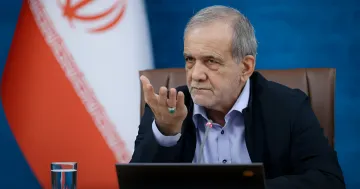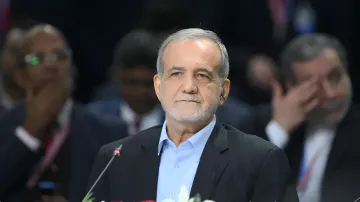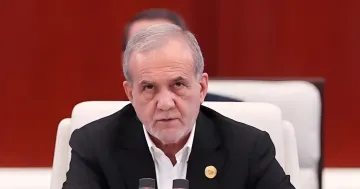
Iranian President Masoud Pezeshkian once again publicly confirmed that the agreement reached with the United States serves the national interests of the Islamic Republic. The statement came against the backdrop of Tehran's ongoing assessment of the deal's outcomes and both sides' attempts to lock in its parameters in a stable, practical framework. According to the head of state, Iran views the document not as a concession but as a tool that allows it to reduce external pressure and create predictable conditions for the country's development.
Essence of the Statement
At the core of Pezeshkian's position is the thesis that the agreement was concluded in the interests of the Iranian people and the state, rather than under external pressure. The president emphasized that Tehran approaches the document as a working instrument that must deliver concrete results. Thus, Iran's official rhetoric is shifting from a rhetoric of confrontation to one of managed interaction, in which the preservation of sovereignty and national interests is declared the main criterion for further steps.
The Condition of Reciprocity
A key element of the statement was the condition set by Iran: Tehran is ready to abide by the terms of the agreement on the condition that the United States acts in a mirror fashion and does not deviate from its own obligations. Pezeshkian directly linked the Iranian side's fulfillment of the document's provisions to Washington's conduct, thereby introducing the principle of reciprocity as a basic rule. This means that, according to Tehran's logic, any unilateral actions or deviations by the United States would automatically call into question Iran's fulfillment of its own obligations.
Contradictory Data
When comparing various publications on the Iranian president's statement, a divergence in emphasis is noted. Some sources convey Pezeshkian's words as an unconditional intention by Iran to fulfill its obligations under the agreement, underscoring Tehran's readiness to comply. Other outlets emphasize the reciprocity caveat, pointing out that the Iranian side's adherence to the document directly depends on corresponding steps by the United States. In fact, these are two sides of the same statement: the basic intention to honor the deal and, at the same time, the condition that has been set. The difference in framing is tied to which fragment of the quote is placed in the headline, rather than to any contradiction in the president's position itself.
Context and Significance
The statement fits into a broader process of normalization or, at the very least, stabilization of relations between the two countries after a period of tension. For Iran, the public confirmation of the agreement's benefits also serves as an internal signal: the leadership is demonstrating that the deal is not a capitulation but serves the country's interests. For the international observer, it is important that Tehran has established a clear rule of reciprocity, which could become either a mechanism of deterrence or a trigger for escalation in the event of a balance being broken.
Reactions and Outlook
Further dynamics will depend on how both sides interpret the principle of reciprocity in practice. While Iran declares its readiness to work within the framework of the agreement, the key question remains the monitoring of obligations fulfillment on both sides and the availability of dispute-resolution mechanisms. In the coming weeks, analysts' attention will be focused on the concrete steps taken by Washington and Tehran, which will either confirm the durability of the deal or show that the reciprocity condition is turning into a source of new contradictions.