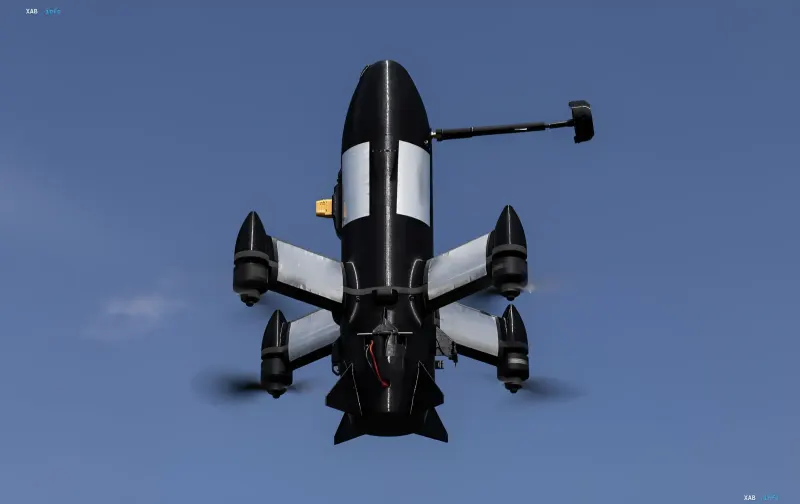
The Polish Ministry of Defense has announced an international competition for the procurement and testing of a new class of unmanned aerial vehicles. The focus is on specialized interceptor drones designed to destroy enemy UAVs used for reconnaissance, surveillance, and aerial attacks.
Technical requirements: speed and kinetic impact
In the published specifications, the Polish military outlined clear parameters for the desired platform. The system must operate in a fully autonomous "fire and forget" mode. The primary method of target engagement is kinetic impact, preferably utilizing a warhead.
The drone must be capable of operating at any time of day. A critical condition is the safety algorithm: if the target is lost, the system must automatically abort the mission and land.
Key characteristics that competition participants must demonstrate include:
- Maximum flight speed — at least 150 km/h;
- Range — from 1.5 km;
- Target detection radius — from 200 meters;
- Platform weight — no more than 2 kg;
- Operational readiness for launch — 12 seconds;
- Ability to operate in winds up to 12 m/s.
Restrictions on origin and standards
A key selection criterion is the geography of production. Platforms must be manufactured in European Union or NATO countries. The competition organizers also prioritize solutions featuring software with a Polish-language interface.
Furthermore, manufacturers must comply with strict quality standards, specifically ISO 9001 or AQAP (quality standards for the defense industry).
Context: accelerating military modernization
The procurement of such systems fits into Poland's broader strategy of actively strengthening its defense capabilities. As part of the "Eastern Shield" program, the country is accelerating military training for its population. According to recent data, more than 20,000 people have signed up for voluntary exercises, a record figure for the republic.
However, infrastructure work is progressing with mixed results. In the last six months, under the "Eastern Shield" program, only one kilometer of a full defensive line has been built, although the overall plan envisages the creation of a defensive perimeter stretching 700 km.