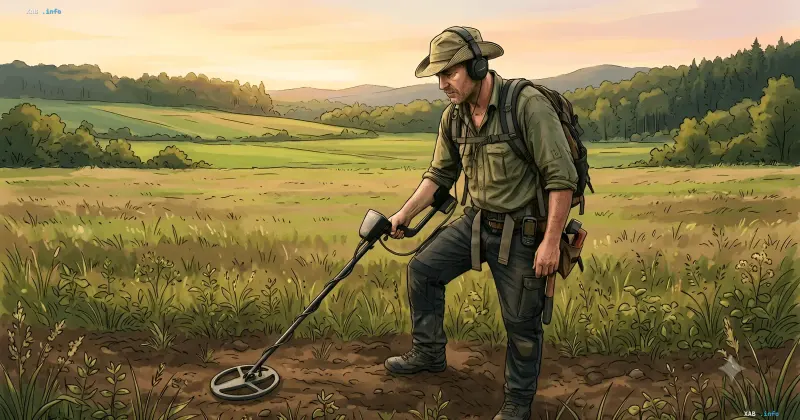
Starting January 1, 2027, new rules for searching for buried and abandoned movable artifacts using electronic or technical equipment, including metal detectors, will come into force in Poland. The amended Act on the Protection of Monuments and Cultural Heritage abolishes the previous procedure for qualified seekers to obtain a permit from the regional office for the protection of cultural heritage and replaces it with registration of activities via a mobile application provided by the Minister of Culture and Heritage Protection. It is important to emphasize that this is a change in administrative procedure, rather than unlimited and free-of-charge artifact hunting — the law retains strict territorial restrictions and reporting obligations.
From Permit to Registration
According to the amendments, the right to search using technical equipment is granted to persons aged 18 and older, provided they comply with the conditions established by law. Before starting the search, the seeker must obtain the consent of the property owner and the current owner of the object, and then submit a registration notification via the mobile application. The notification must indicate the applicant's identity, the time and geographical scope of the search, as well as commitments regarding the owner's consent, the applicant's age, and the obligation to disclose information about discovered artifacts. Registration is considered valid only after confirmation, and persons who intentionally provide false information are subject to criminal liability.
Chronology: How the Entry into Force Date Was Postponed
The legislative path of the document was non-linear. The Polish Sejm passed the law on July 13, 2023, with an initial entry into force date of May 1, 2024. The deadline was later adjusted to May 1, 2025. On March 25, 2025, the Council of Ministers approved a draft further postponing the entry into force to allow time to prepare the system and resources. The final amended law dated April 4, 2025, was published on April 24, 2025, setting the final date as January 1, 2027. Thus, by the time it enters into force, agencies and users will have almost two years to adapt.
Who Can Search and Where
The law clearly defines zones where searching under the simplified registration mechanism is prohibited. Restricted areas include registered or listed monuments, areas within 10 meters of recognized monuments, monuments recognized as historical symbols, cultural parks, world heritage sites and their buffer zones, cemeteries, and a number of other objects. Searching in Polish waters continues to be regulated by a separate permitting mechanism. Consequently, registration via the application does not abolish location restrictions and does not affect land use rights.
Obligations After a Find
A person who discovers items presumed to be archaeological relics is obliged to ensure their preservation, mark the discovery site, and immediately notify the competent provincial-level relic protection authority. If at least three suspected relics are found in an area of no more than 100 square meters, the seeker must immediately report this and temporarily suspend activities so that authorities can conduct an inspection. The authority is required to inspect the artifacts and the excavation site within six days of receiving the notification, and then within 30 days evaluate whether the items are relics and announce the results and further actions.
Rewards and Liability
The law provides that persons who discover archaeological relics during searches, accidental finds, or construction and excavation works may receive a monetary reward or certificate upon fulfilling reporting obligations. A monetary reward is awarded if the artifact has exceptional historical, artistic, or scientific value; the maximum payment amount is set at 25 times the average monthly earnings. At the same law, it introduces punishments for unregistered search activities, searching in prohibited zones, and failure to fulfill reporting obligations, making the new system not a liberalization, but a streamlining of artifact hunting practices.