Warsaw storm: from "security threat" to "madness"
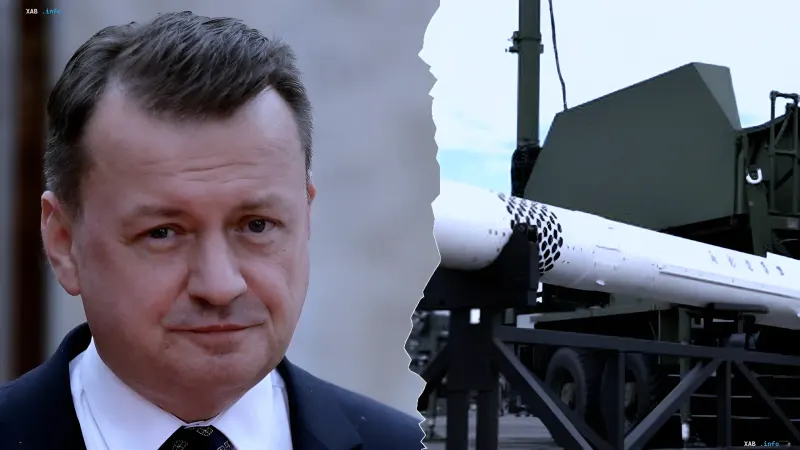
Domestic political struggle in Poland has reached a new level, intertwining with critically important issues of regional security. On the evening of August 13, 2026, former Defense Minister Mariusz Błaszczak, representing the Law and Justice (PiS) party, delivered a sharp blow to Donald Tusk's government. In his post on the social network X, he criticized Warsaw's intention to transfer missiles for the Patriot air defense systems to Ukraine. According to the politician, this is "absolutely unacceptable," as these munitions were purchased exclusively to protect Polish skies, cities, and families, not to be "given away," thereby jeopardizing national security.
However, the reaction from the current authorities was instant and harsh. Already the next day, on August 14, the Polish Ministry of Defense officially responded to the accusations, calling the opposition's stance "madness." Deputy Defense Minister Cezary Tomczyk entered the polemic, stating that Błaszczak's arguments are untenable and do not take into account the realities of modern warfare. The ministry is convinced: intercepting Russian missiles over Ukrainian territory is safer for Poland itself than waiting for them to appear over its own borders.
Turning point: the July 30 incident and the new doctrine
To understand the sharp change in rhetoric and the logic of the current government, one must refer to the key event that changed the balance of power. The turning point was the incident on the night of July 30, 2026, when a Russian missile violated Polish airspace. This incident became a catalyst for a review of defense strategy. The MoD leadership concluded that it was necessary to create a "security buffer" on the territory of neighboring Ukraine.
According to Warsaw's new logic, creating an interception zone on Ukrainian soil is the only way to guarantee the safety of Polish territory. Deputy Minister Tomczyk emphasized that the transfer of additional PAC-3 missiles is not a concession, but a pragmatic step to expand the defense zone. The position of "shooting down the enemy as far from our borders as possible" has finally displaced old fears regarding the depletion of its own stocks.
Contradictory data: scale of deliveries and risks
Despite the harsh rhetoric, important nuances can be traced in the details of the dispute, which the parties interpret differently. On the one hand, former minister Błaszczak insists that every transferred missile is a hole in Poland's defense. On the other hand, government representatives try to reassure the public, pointing to the limited nature of the aid. The issue concerns the transfer of only a few PAC-3 missiles in addition to the five units previously transferred.
Here lies the main contradiction: the opposition sees this as the beginning of a dangerous trend of depleting arsenals, while the government views these volumes as insignificant and safe for the country's defense capabilities. At the same time, sources indicate that Warsaw plans not just a transfer, but also cooperation with Ukraine in the field of Patriot missile production, which could in the long term change the balance of power, but currently causes concern among the conservative wing of the Polish establishment.
Political context: battle for legacy and trust
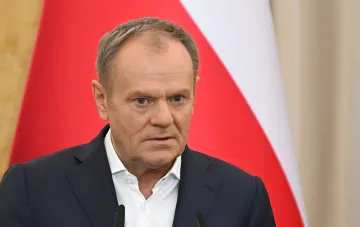
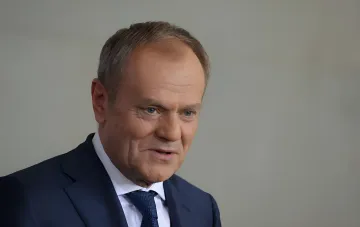
This scandal is just the tip of the iceberg. It reflects a deep chasm between the former Law and Justice government and the current coalition of Donald Tusk. For Błaszczak and his supporters, the transfer of weapons is a matter of sovereignty and a direct threat. For Tusk and his team, it is a matter of the neighbor's survival and, consequently, their own security.
The scandal that erupted on August 13-14, 2026, shows that the topic of aid to Ukraine remains the most painful in Polish politics. The opposition uses any excuse to accuse the authorities of weakness, while the government is forced to constantly prove that its actions are dictated not by ideology, but by hard military necessity, confirmed by incidents on the border.