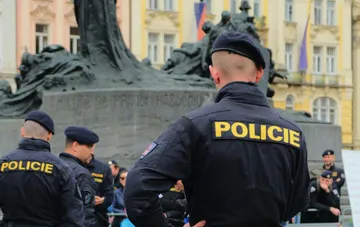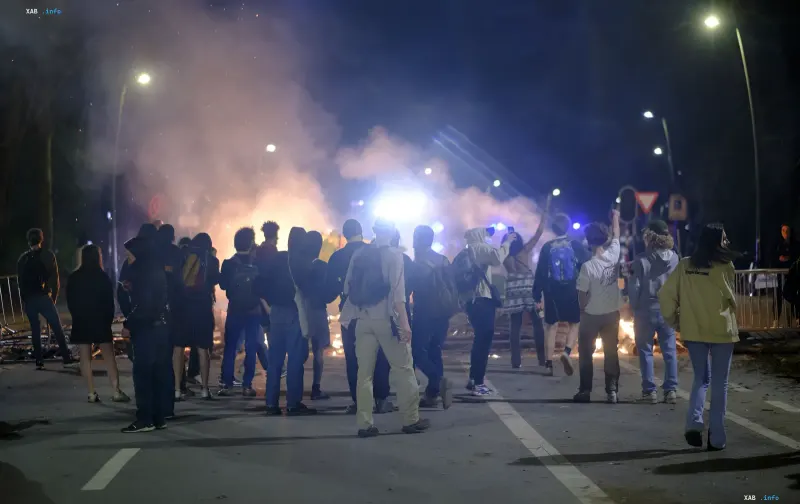
On Sunday, November 15, Prague saw one of the largest street demonstrations in recent years as tens of thousands of people gathered in Letná Park to protest government plans to change the funding system for public media. The authorities' initiative proposes abolishing the monthly television and radio subscription fee and switching broadcasters to direct state funding. According to preliminary estimates by local authorities, the rally could have drawn hundreds of thousands of participants, but even the actual number of demonstrators was so large that protesters blocked nearby metro stations.
Symbolism of the Date and 'Newspaper Hats'
The choice of date is no coincidence: the rally took place on the eve of November 17, the day the Czech Republic marks the anniversary of the 1989 Velvet Revolution, which overthrew the communist regime and paved the way to power for dissident and playwright Václav Havel. This gave the protest a distinct civic-patriotic character. Some participants arrived wearing pointed hats made from folded newspapers, honoring an animated character who for decades was a symbol of evening children's fairy tales on Czech Television and became an informal 'mascot' of public broadcasting.
What the Ruling Coalition Proposes
The bill is being promoted by the coalition led by Prime Minister Andrej Babiš, which includes his party, the far-right SPD, and the Eurosceptic 'Motorists' force. The document proposes abolishing the monthly household fee of 205 crowns (about $9.26), which is currently one of the key sources of funding for broadcasters. The government justifies the move by citing the reduction of the financial burden on the population, while also accusing private and public media of biased reporting. At the time of the rally, the bill had already passed a preliminary vote and is awaiting further review in parliament.
Media Market and Public Reaction
The authorities' plans triggered a series of actions by the professional and civic community. In early November, employees of Czech public television and radio held a one-day strike, which shortened broadcast time. Representatives of the creative community and students came out to support the broadcasters. Mass protests against the funding reform had also occurred earlier: according to organizers, in late October about 14,000 people took to the streets in Prague and Brno alone, carrying national flags, EU and Ukrainian symbols, and banners demanding the preservation of public media independence.
The Core of the Dispute: Independence vs. Budget Control
The conflict boils down to the question of who finances public broadcasting and how. Protesters fear that abandoning the subscription fee and shifting to budget funding will make television and radio more vulnerable to political pressure and undermine their independence. Reform proponents, conversely, insist that the changes will simplify the financing model and remove regular payments from citizens. In any case, the rally in Letná showed that the status of public media remains one of the most sensitive topics in Czech society, capable of mobilizing the streets on a scale comparable to the country's key political events.