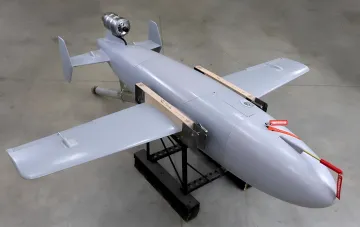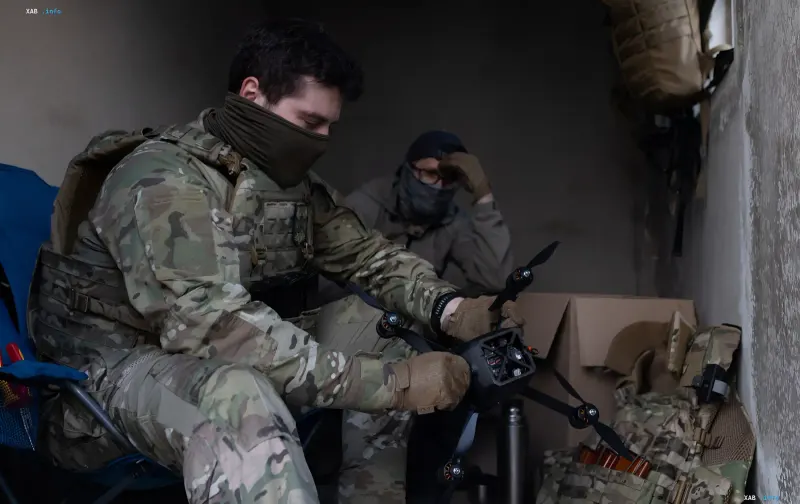
In an environment where aerial attacks on industrial and energy infrastructure have become a systemic factor, the issue of defense is no longer exclusively a government concern. A practice has emerged in Ukraine where large holdings and critical enterprises independently organize a multi-layered air defense system. A representative of the 'Wild Hornets' company revealed the architecture of such a system in an interview with RBC-Ukraine and explained why, in real-world conditions, a combination of drones, automated turrets, and electronic warfare (EW) systems is the closest to an ideal solution available to business today.
Architecture of Multi-Layered Protection
According to 'Wild Hornets' experts, the ideal private air defense system that business can implement in current realities is built on three components: interceptor drones, automated turrets, and EW systems. These elements form not a single line, but multiple echelons of defense. The close-in echelon, located directly at the protected infrastructure, is provided by automated turrets capable of engaging low-flying targets at short range. The first, far echelon consists of interceptor drones that intercept enemy UAVs on approach, preventing them from reaching the target. EW systems perform a secondary but critically important function—jamming the control and navigation channels of attacking UAVs, reducing their accuracy and effectiveness.
Economic Logic of Investment
Developing private air defense is an expensive endeavor, and the economic sense of such investments, according to experts, is primarily evident in large holdings with high asset values. However, the calculation here is simple: the consequences of a single 'Shahed' hit can destroy a facility worth about $50 million along with products of equivalent value located on-site. In this context, the costs of a multi-layered defense system look like insurance, many times smaller in scale than potential damage. Experts emphasize that if a company could acquire scarce portable anti-aircraft missile systems (MANPADS) or even a Patriot system to protect its own facilities, this would be the optimal solution, and the business itself would turn into the most attractive employer in the region. Nevertheless, in real conditions where such systems are concentrated in the hands of the state, the combination of drones, turrets, and EW remains the practical maximum.
Legal Framework and State Experiment
The idea of allowing critical enterprises to independently participate in defense against air attacks was voiced back in 2025, when the Ministry of Defense was headed by Denys Shmyhal. In early March 2026, the Ukrainian government officially authorized the launch of a corresponding experiment, which legalized the activities of private air defense units. Subsequently, the Ministry of Defense publicly reported for the first time on the successful results of these units, which have already begun performing combat missions. Thus, private air defense has ceased to be a theoretical concept and has become an active element of the national security system, complementing state air defense forces.
Practical Significance for Industry
The formation of a private air defense echelon is important not only for individual enterprises, but also for the stability of entire production chains. In conditions where strikes on infrastructure can paralyze the work of entire regions, the ability of key enterprises to independently ensure their air defense reduces systemic risks for the economy. The multi-layered architecture—with long-range drone interception, close-in turret protection, and EW suppression—makes it possible to create a flexible system adaptable to a specific threat profile and facility geography. For business, this means not just buying equipment, but building a full-fledged security contour where technological components work in tandem and mutually reinforce each other.