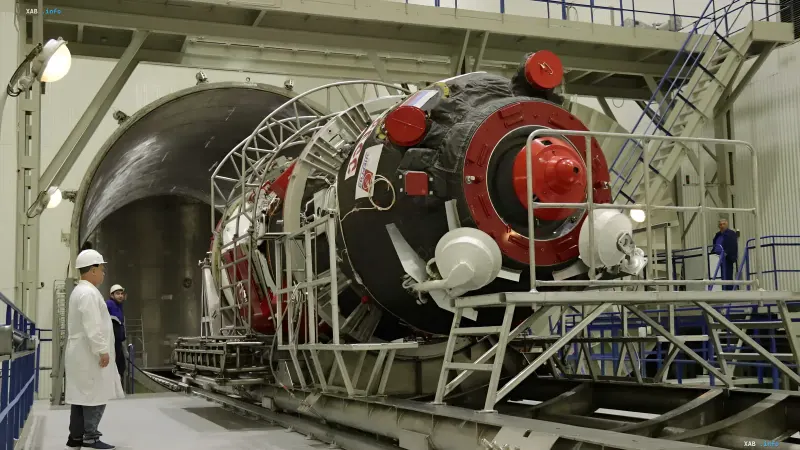
At the Baikonur Cosmodrome, one of the key stages of preparation for the launch of the Progress MS-35 cargo spacecraft has been completed. In early August 2026, the spacecraft successfully underwent comprehensive leak-tightness tests, which are a mandatory requirement for flight clearance. This procedure, initiated at the beginning of the previous week, proceeded in a standard mode, confirming the reliability of the life support systems and the structural integrity of the spacecraft.
Simulating Open Space Conditions
To conduct the inspection, specialists placed the 'Progress MS-35' into a special vacuum chamber located in the assembly and test building. This equipment allows for the full simulation of open space conditions, creating the necessary vacuum and temperature regimes. During the tests, gas was supplied through special pipelines to all compartments and lines of the spacecraft. Engineers carefully monitored the pressure to ensure the absence of leaks and the tightness of all docking nodes. After the successful completion of the procedure, the spacecraft was returned to its standard work station.
Preparation for the 96th Joint Launch
According to data provided by program representatives, the upcoming launch will be the 96th joint step within the mission to supply the International Space Station (ISS). This underscores the strategic importance of this flight for maintaining the uninterrupted operation of the orbital laboratory. Currently, after returning from the vacuum chamber, engineers have connected the spacecraft to ground test equipment. Specialists have begun the next phase of preparation, which includes checking on-board systems and integration with the launch vehicle.
Significance of Tests for Flight Safety
Experts emphasize that successfully passing leak-tightness tests creates a fundamental basis for the safe and stable conduct of the upcoming launch. Tests in a vacuum chamber allow for the detection of potential defects that may only manifest under conditions of weightlessness and a rarefied atmosphere. Guaranteeing tightness is critically important not only for the preservation of the spacecraft itself but also for ensuring the safety of the cargo it will deliver to the station, including fuel, water, food, and scientific equipment.
Contradictory Data
During the fact-checking of information regarding the timing of the tests, minor discrepancies were found in the wording of various sources. The publication ixbt.com reports that the process began 'at the beginning of the previous week' (relative to the publication date of August 11), indicating that work began in the period from August 1 to 7. At the same time, other news summaries (Rambler News) mention that the check took place 'in early August' without specifying exact start dates. However, these differences are purely editorial in nature and do not affect the confirmed fact of the successful completion of the tests by August 11, 2026.