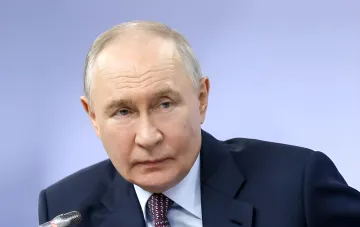
Amidst rising tensions in Eastern Europe, Lithuanian Defense Minister Robertas Kaukėnas made a sensational statement regarding the Kremlin's strategic plans. According to him, Russian leader Vladimir Putin is indeed considering scenarios for attacks on the Baltic states — Estonia, Latvia, and Lithuania. However, despite the existence of developed plans, the final decision to launch an operation has not yet been made.
Kremlin Plans: Strikes on Critical Infrastructure
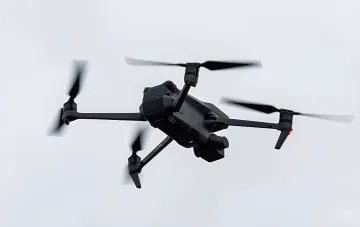
According to information obtained from the Lithuanian Defense Minister, Moscow has not abandoned the idea of striking critical infrastructure in the region. Special attention in the Kremlin's plans is paid to the possibility of using unmanned aerial vehicles. Kaukėnas emphasized that Russia is still considering a scenario in which Ukrainian drones would be used for provocations aimed at accusing Kyiv of aggression against NATO countries.
Operation Status: Decision Not Yet Made
Despite the existence of detailed plans, Robertas Kaukėnas assured the public that, as of the current moment (August 2026), there is no decision to conduct any specific operation. The Minister noted that there are no direct threats indicating that an attack could occur in the coming days. "There is no decision to conduct any operation as of today," he stated, emphasizing that allies are closely monitoring every move by Moscow.
NATO Position: Warning Against Provocations
The Lithuanian Minister recalled that warnings about possible provocations have already been voiced at the highest level by many countries in the alliance. NATO is demonstrating unity in countering hybrid threats. Kaukėnas conveyed a message to the Russian authorities: "They have repeatedly stated very clearly: we see, we hear, we know, so do not do it." This statement became resonant against the backdrop of previously obtained US intelligence data on Putin's plans to escalate the conflict with NATO.
Contradictory Data
While the Lithuanian Defense Minister claims that the decision to attack has not yet been made, other sources point to a high degree of readiness of Russian special services for provocations. Earlier, American intelligence warned of Putin's plans for war with NATO, and the Polish Foreign Minister voiced forecasts of further aggressive actions by Moscow. There is a discrepancy in the assessment of timeframes: while Kaukėnas speaks of the absence of threats "in the coming days," Western experts point out that preparation for a provocation could be completed at any moment, creating a situation of uncertainty.