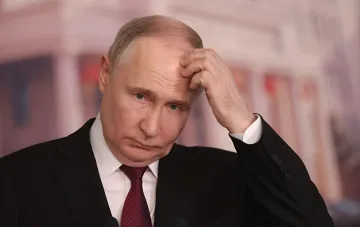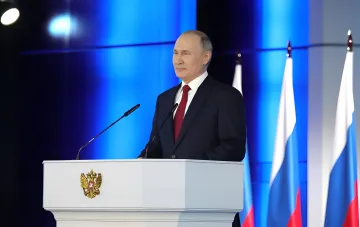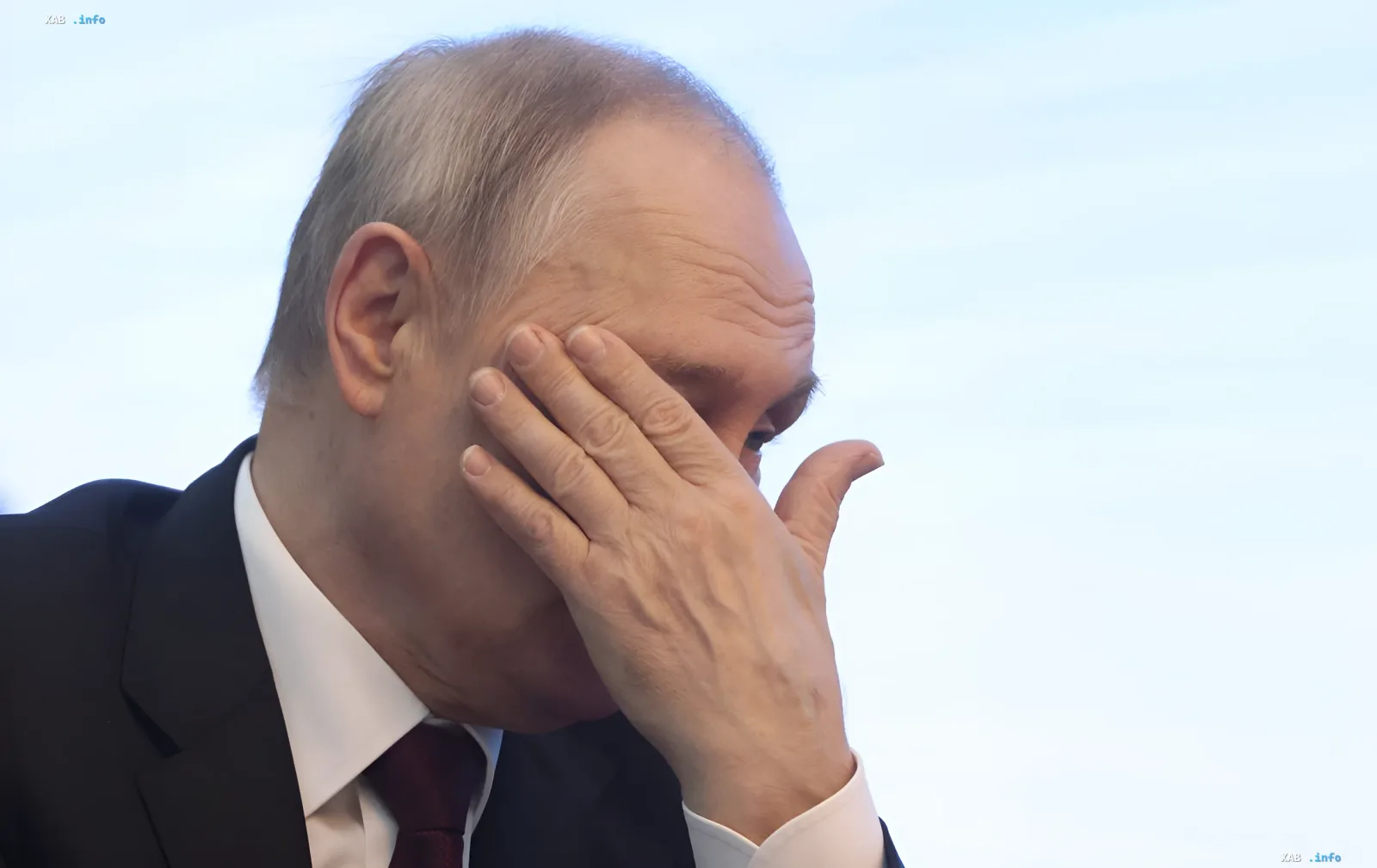
Vladimir Putin publicly acknowledged that Russia is indeed facing fuel problems, but effectively transferred responsibility for resolving them to the cabinet of ministers headed by Mikhail Mishustin. According to the Kremlin chief, a special commission has been set up to address the situation and is already working on the issue — although he did not disclose the specific powers or tasks of this body. The statement came against the backdrop of reports that a gasoline shortage has affected more than 70% of Russian gas stations, yet Putin refused to characterize what is happening as a serious crisis.
'Certain inconveniences' instead of a crisis
The central emphasis in Putin's remarks is the minimization of the scale of the problem. Instead of the term 'crisis,' he used the phrasing 'certain inconveniences' for the population, stressing that it is the government that must keep the situation under control. This rhetorical move allows the Kremlin to avoid acknowledging the systemic nature of the breakdown in the fuel market while preserving an appearance of manageability. Observers note that shifting responsibility onto Mishustin is a typical mechanism in which the executive branch receives a mandate to act, while political responsibility for the outcome is formally diluted.
Scale of the breakdown: 63 regions and a 'second phase of tension'
The factual picture, according to the data that prompted the discussion, is considerably broader than 'inconveniences.' Restrictions on gasoline sales were in effect in 63 of the country's 85 regions, while localized fuel disruptions or price increases were recorded in another 19 regions. The day before Putin's statement, Deputy Prime Minister Alexander Novak reported a 'second phase of tension' in the fuel market, indirectly confirming that the problem is growing rather than subsiding. Taken together, these indicators show that the breakdown has affected the overwhelming majority of Russian regions.
Cause: strikes on oil refineries
The situation in the Russian fuel market began to deteriorate following a new series of Ukrainian strikes on refineries. In the first half of August, at least nine plants with a combined processing capacity of 145 million tons per year were hit; at least four plants were forced to halt operations. Separately noted is a strike by the Ukrainian Armed Forces on one of Russia's largest refineries — the TANEKO plant in Nizhnekamsk. It was precisely the reduction in processing capacity, by the logic of events, that led to the shortage of finished fuel at gas stations and to regional restrictions on sales.
Contradictory data
There is a notable gap between the official rhetoric and the actual figures. On the one hand, Putin characterizes the situation as 'certain inconveniences' and refuses to call it a crisis, shifting responsibility onto the government. On the other hand, the data on 63 regions with gasoline sales restrictions, 19 regions with localized disruptions, and the coverage of more than 70% of gas stations, along with Novak's statement about a 'second phase of tension,' point to a large-scale systemic breakdown. Thus, one side (the Kremlin) insists on manageable 'inconveniences,' while the body of regional and industry indicators describes a crisis situation — and that is the essence of the contradiction in the public sphere.
Context: public and church reaction
The fuel crisis has already triggered public resonance: it was previously reported that the Russian Orthodox Church is blaming Russians for their anger over the fuel crisis, indicating that the problem has moved from an industry-level issue to a social one. Taken together, Putin's statement, the data on regional restrictions, and the strikes on refineries form a picture in which the official narrative of 'inconveniences' is increasingly difficult to reconcile with the reality of a fuel shortage across most of the country.