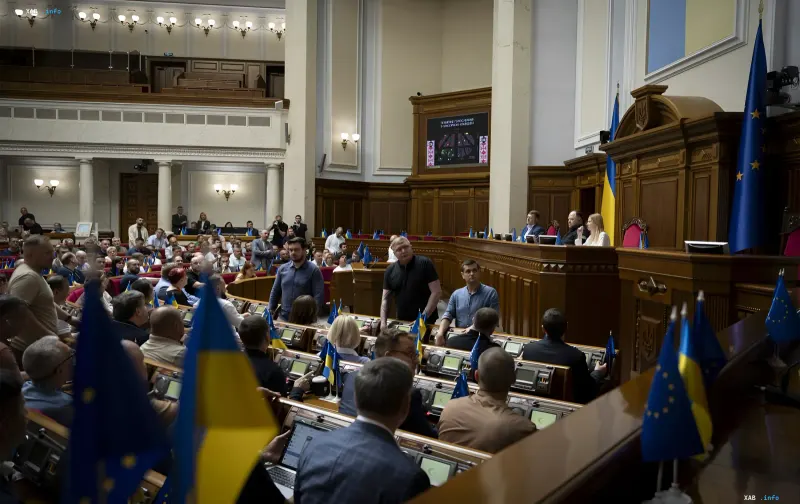
On October 28, 2026, the Verkhovna Rada of Ukraine voted to adopt Draft Law No. 16013, which strengthens criminal liability for participation in the operation of fraudulent call centers. The document was initiated by Ukrainian President Volodymyr Zelenskyy, who designated the bill as urgent. A total of 270 MPs voted in favor of the document. The law aims to protect citizens' bank accounts and funds from cyberfraud and to improve mechanisms for countering financial criminal schemes.
What the Law Specifically Introduces
The key innovation of the document is the introduction of criminal liability for the transfer, receipt, acquisition, or storage of access means to bank accounts, electronic wallets, and so-called "drop accounts" used in criminal schemes. Thus, the law expands the list of acts subject to criminal liability, covering not only the direct appropriation of funds but also the maintenance of the infrastructure for fraudulent operations—including the illegal use of bank cards and citizens' personal data.
Who Bears Responsibility and For What
It is important to understand that the maximum sentence of 12 years in prison is stipulated for the creation and leadership of a fraudulent group, rather than as an automatic punishment for every call center employee. Specific liability depends on the actions committed by an individual and the circumstances established by the investigation and the court. According to publications dedicated to the text of the bill, punishments are differentiated: organizers and leaders of "offices" face the strictest sentence, employees ("office workers") face imprisonment of over 10 years, and liability is also provided for those who provide premises or services, as well as for recruiters for such call centers.
How the Law Defines an Organized Group
The document introduces the concept of an electronic communication fraudulent organized group—an association of three or more persons who have pre-organized for the systematic appropriation of someone else's property or obtaining the right to property through deception or abuse of trust. This refers to scheme participants acting according to a coordinated plan with a distribution of functions. Telephone communications, the internet, and other electronic communication tools may be used to commit the fraud. The law also provides for exemption from punishment for a person who notifies law enforcement agencies about the activity or creation of such a criminal organization; however, a person who independently created an "office" will not be exempt from punishment.
Context: Scale of the Problem and Other Decisions of the Day
The adoption of the law takes place against the backdrop of public assessments of the phenomenon's scale: according to specialized media outlets, fraudulent call centers in Ukraine, by some estimates, generate up to a billion dollars a month and employ tens of thousands of workers, making the toughening of liability a top priority in combating cybercrime. Recall that on September 2, Volodymyr Zelenskyy reported sending two bills to the Verkhovna Rada on toughening liability for organizing fraudulent call centers. Separately, on the same day of October 28, the Verkhovna Rada adopted the state budget for 2027 in the first reading, as we also reported, including the document's main indicators and a record number of submitted amendments.