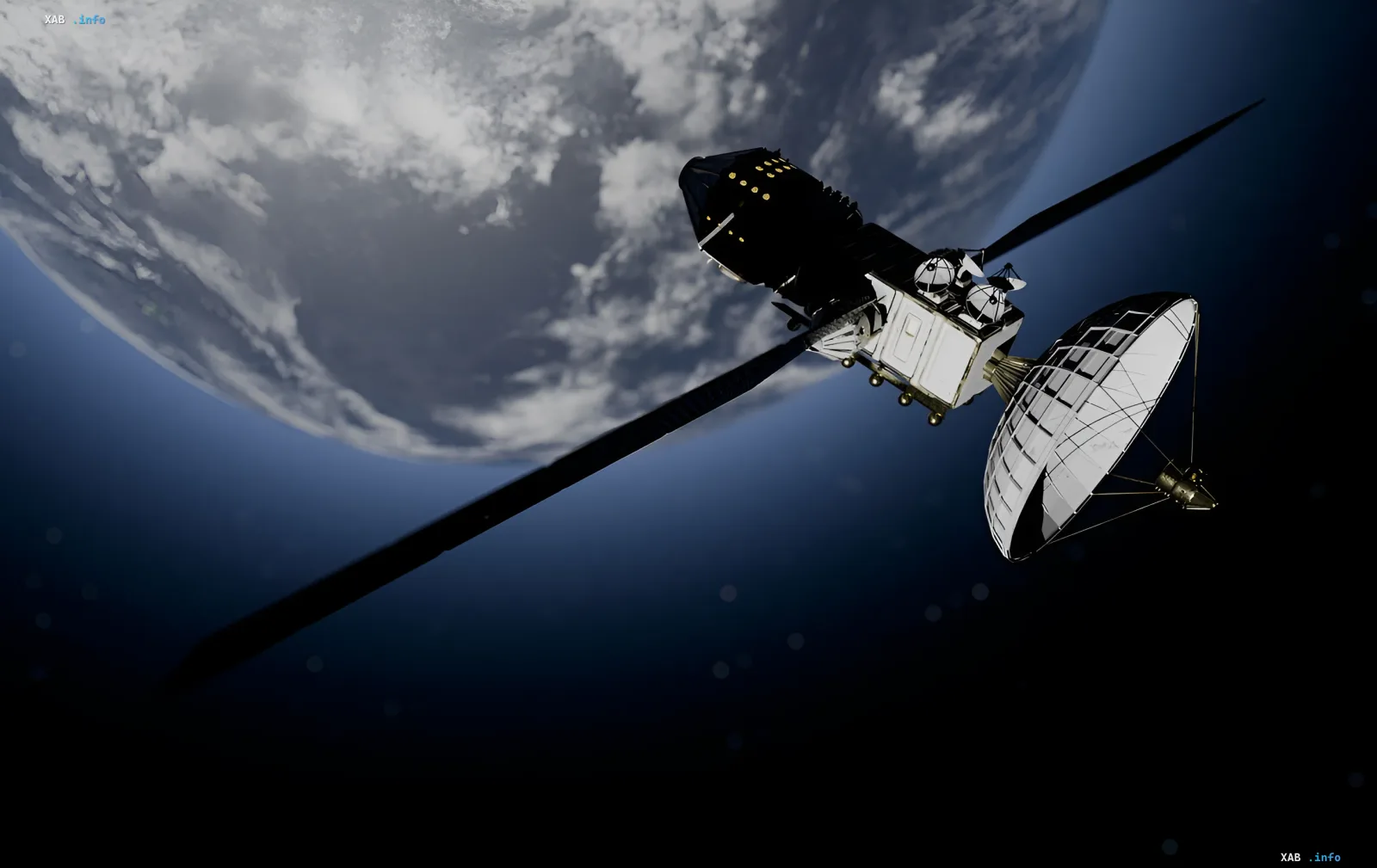
According to a report by the Institute for the Study of War (ISW), cited by RBC-Ukraine, the second batch of 16 satellites from Russia's 'Rassvet' constellation, launched into orbit on July 19, 2026, has failed to reach its planned operational altitude. The N2YO satellite tracker shows that, as of August 31, none of the spacecraft had climbed to the 550-kilometer mark, while most of the satellites were at altitudes of 300 to 400 kilometers. Some of the spacecraft are already losing their orbit, and at least two, according to available information, are heading toward re-entry into Earth's atmosphere. For comparison: of the first batch, launched on March 24, 2026, 12 out of 16 spacecraft reached the required altitude, and by the end of August they were still holding at 550 km.
Contradictory data
The primary materials contain an inconsistency in the figures for the target orbit. On the one hand, the operational altitude that the satellites are supposed to reach and that the first batch maintains is given as 550 kilometers. On the other hand, the same description of the second batch states that 300–400 km is 'significantly below the planned 870 kilometers.' Both values are cited within the same report, and neither is confirmed by any independent public statement from the developer. As a result, the exact target orbital profile for the second batch remains unclear: either an error was made in the text, or different altitudes were specified for different batches/subsystems. Until these figures are clarified, they should be treated with caution.
What this means for troops on the front
The key consequence of the satellites' low position is a shortened operational lifespan. The lower a spacecraft flies, the more strongly it is slowed by the upper atmosphere, and the faster its fuel and resources for maintaining orbit are consumed. Nevertheless, the existing constellation of 12 operational spacecraft from the first batch poses a real threat: it provides Russian troops with up to an hour and a half of communication with ground terminals twice a day over Ukrainian territory. Even in such short windows, the link allows for more precise guidance of remotely piloted drones. According to analysts, it was precisely the loss of access to Starlink on February 1, 2026, that pushed Moscow to accelerate the deployment of its own 'Rassvet' system.
Strikes on launch infrastructure
The failure of the second batch coincided with a series of Ukrainian strikes on the infrastructure on which the launch of the spacecraft depends. On the night of August 15, facilities of the 'Progress' Rocket and Space Center, which produces 'Soyuz'-type launch vehicles, were attacked. On August 23, Ukraine attempted a strike on the Plesetsk Cosmodrome — two days before a 'Soyuz-2.1b' rocket carrying the GLONASS-K1 satellite was launched from there. It was from Plesetsk that Russia launched both batches of 'Rassvet,' so strikes on this hub threaten not only the production of launch vehicles but also the very ability to place new spacecraft into orbit.
Ambitious plans and real constraints
The system's developer, the aerospace company 'Bureau 1440,' had announced plans to carry out 'dozens' more launches and add 'hundreds' of new spacecraft. Under the plan, the constellation was to grow to 156 spacecraft by the end of 2026 and to 292 satellites by 2030. However, for stable round-the-clock communication over Ukraine, an estimated 200 to 300 operational satellites are required, and Moscow is unlikely to achieve this within a compressed timeframe. The main reason is a shortage of launch vehicles amid strikes on production and launch facilities. The project's cost is estimated at roughly $6.1 billion; behind 'Bureau 1440' stand the resources of the major X Holding conglomerate and, according to reports, ties to Russian intelligence services.
Dependence on imports and the absence of domestic chips
Researchers had previously pointed to the project's critical dependence on imported components. In 2025, 'Bureau 1440' spent nearly $68 million on foreign purchases, with a significant share of the supplies coming from China. Russia has still not developed its own radiation-resistant microchips: the announced tenders for their development received not a single application. The combination of these factors — the failure of the second batch, strikes on launch vehicles, and technological dependence — indicates that further delays in the deployment of the 'Rassvet' constellation should be expected in the near term.