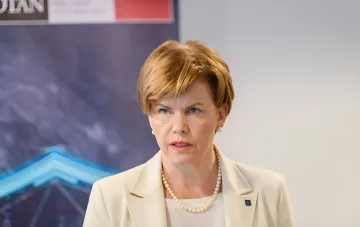
Dmytro Plekhanchuk, spokesperson for the Ukrainian Navy, stated on a tele-marathon broadcast that in the confrontation in the Black Sea, the Russian Federation is suffering significantly greater losses than Ukraine, and that its grain export is under threat due to shipment problems. According to him, the operation of Ukraine's civilian maritime corridor is being ensured, and the navigation of civilian vessels continues despite enemy attacks, while Kyiv is constantly working to expand its own capabilities in the region. Plekhanchuk emphasized that Russia "is trying to pretend that everything is fine with them," yet in this "game" it is "suffering, if we take it purely nominally, far greater losses than we are."
Outcomes of the "game" in the Black Sea
The assessment of the scale of losses given by the Ukrainian military is qualitative and, as he himself clarified, "purely nominal" in nature. It is not about comparing specific write-offs of equipment, but about the overall dynamics: according to Plekhanchuk, Ukraine retains the ability to ensure civilian navigation and is building up its potential, whereas Russia is forced to redistribute resources and is losing operational effectiveness in the waters. It is precisely this asymmetry, in the view of the Navy spokesperson, that determines the outcome of the Black Sea confrontation in Kyiv's favor.
Civilian corridor and navigation
The key practical indicator cited by the Ukrainian side is the functioning of the civilian maritime corridor. Plekhanchuk confirmed that navigation is taking place and is not stopping even against the backdrop of ongoing enemy attacks. At the same time, he stated that Ukraine "will try to somehow increase our capabilities" in the region, indicating a course toward further expanding control over safe shipping routes and protecting export flows.
The "Molotov school" and diplomatic tactics
Commenting on Moscow's negotiating positions, the Navy spokesperson accused the Kremlin of using "outdated diplomatic methods," which he called characteristic of the so-called "Vyacheslav Molotov school," in which any negotiations are perceived as an opportunity to put forward additional demands. "As soon as the Russians are offered something, they immediately demand some additional bonuses," the military man noted. He cited the period after the end of the "grain deal," when Russia demanded the lifting of sanctions for its extension, and concluded that Russia is in fact itself interested in agreements to stop attacks on vessels.
The grain crisis inside Russia
In parallel, according to Plekhanchuk, an internal crisis over the export of agricultural products is intensifying in Russia: the Black Sea ports accounted for the largest share of Russian grain exports. The spokesperson stated that in Russia "the question of the state buying up grain that they will no longer be able to physically ship out because of the Black Sea ports" is being raised. In particular, the operation of the key port complex in Novorossiysk, according to him, remains at a minimal level, shipment volumes have shrunk significantly and are "approaching zero," and with the shipment of products there "everything is also very sad for the Russians."
Contradictory data
It is important to note that the central claim about Russia's "greater losses" is a one-sided and nominal assessment by the Ukrainian side, not supported in open sources by independent verification of specific figures. The official Russian position, on the contrary, according to the same Plekhanchuk, "pretends that everything is fine with them," that is, publicly minimizes the problems. Thus, the two sides present directly opposite pictures of the state of affairs: Kyiv talks about Russia's systemic losses and the collapse of shipments, while Moscow talks about maintaining control. Independent quantitative data that would allow this contradiction to be definitively resolved are not presented in open sources at the time of publication, so both versions are presented as they are.
Context: strikes on vessels near the ports
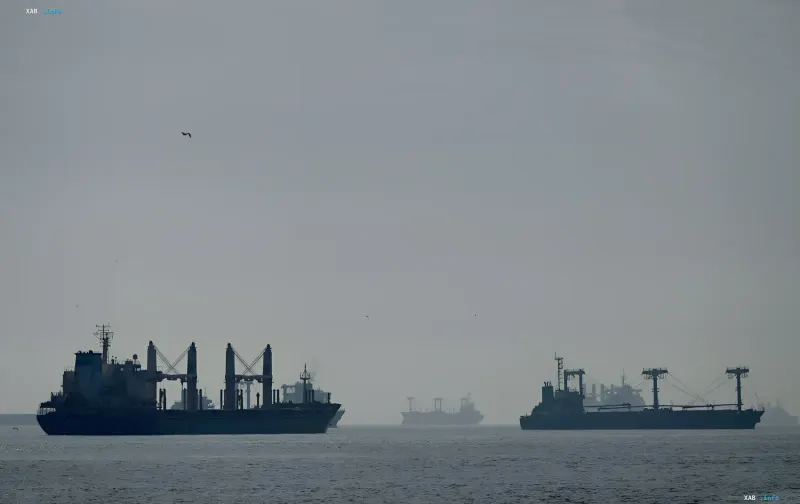
The statements were made against the backdrop of intensified Ukrainian strikes in the Black Sea region. Recently, drones attacked at least five grain vessels near the Russian Black Sea ports of Novorossiysk and Tuapse. This episode illustrates the logic that Plekhanchuk spoke about: Moscow is trying to continue grain exports, while Ukraine is deliberately limiting shipments, which leads to a reduction in volumes at the ports and, according to Kyiv's assessment, to the risks of an internal grain crisis in Russia.