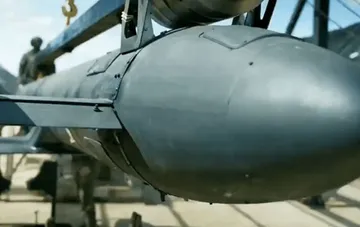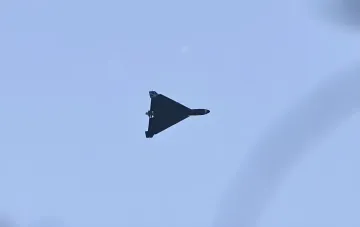
On the night of September 19, 2026, the Russian Armed Forces carried out a massive combined strike on Ukraine, employing ballistic missiles, anti-ship cruise missiles, and aerial drones. According to a report by the Ukrainian Air Force cited by RBC-Ukraine, the attack used two 'Zircon' anti-ship missiles, 174 strike drones, and 'Bandierol'-type missiles. Preliminary data indicates that, as of 08:00, air defense forces had downed or suppressed 141 targets. Strikes by the enemy's aerial attack means were confirmed at 15 locations, with debris from downed targets falling at 9 locations. Meanwhile, according to information available in the morning, enemy missiles failed to hit their declared targets, and the exact coordinates of their impact are still being verified.
Scale and Structure of the Night Strike
A key feature of this attack was the simultaneous use of several classes of weapons, which is characteristic of a tactic aimed at overloading air defense systems. Two 'Zircon' missiles — high-speed anti-ship missiles with hypersonic potential — were launched in combination with more than a hundred strike drones and 'Bandierol' missiles. This combination is designed to force defenses to spend expensive interceptors on relatively cheap aerial targets while simultaneously creating a threat from ballistic missiles. The use of the anti-ship 'Zircon' in a night strike on Ukrainian territory is itself a signal that the missile is being employed as a universal means of striking ground and coastal objects, not just maritime targets.
Air Defense Performance and Preliminary Results
According to Air Force data, by 08:00, 141 targets from the enemy's declared arsenal had been downed or suppressed. This means that the overwhelming majority of aerial threats were neutralized before reaching their targets. Nevertheless, as the military emphasize, the figures remain preliminary: the final balance will be known only after a full inspection of all locations and the completion of the work by the assessment teams. The confirmation of 15 strike points and 9 debris fall points indicates that some attack means did break through the defense or were downed near vulnerable objects, requiring an assessment of possible damage and human losses, which were still being clarified at the time of publication.
Consequences and Data Under Verification
By the morning of September 19, information on missile impact sites and the full list of affected locations remained provisional. The military explicitly stated that enemy missiles did not hit their targets, although the coordinates of their impact are being verified. This means that in the coming hours, adjustments may be made both to the number of downed targets and to the list of locations with consequences. For residents of the affected regions, it is critically important to follow official Air Force channels and local authorities, as data on debris falls and possible damage may be updated as the assessment teams and emergency services continue their work.
Context: US Support for Air Defense
The night attack came against the backdrop of an important diplomatic step: on the same day, the US Department of State approved a potential agreement on the sale of weapons to Ukraine, providing for the procurement and modernization of air defense systems, as well as related equipment and services. This context is directly relevant to understanding the outcome of the night battle: it is precisely the presence and expansion of the air defense fleet that make it possible to maintain a high interception rate against combined strikes of this scale. Washington's approval of the deal can be seen as a response to the growing load on Ukraine's air defense, which regularly repels attacks combining ballistic missiles, cruise missiles, and massed drones.
Assessment and Outlook
The summary of the night strike confirms a sustained trend: Russia continues to rely on combined attacks, pairing expensive missiles with massed drones in an attempt to test and exhaust air defense resources. The Ukrainian side demonstrates the ability to intercept the majority of threats, but the price of such defense is high and depends on the constant replenishment of the interceptor arsenal. In a situation where the US has just approved the supply and modernization of air defense systems, the key factor in the coming weeks will be the speed of integrating new complexes into the unified defense network. Until then, each night attack will remain a test of resilience, and preliminary figures, as in the case of the September 19 strike, will be refined over the course of a day.