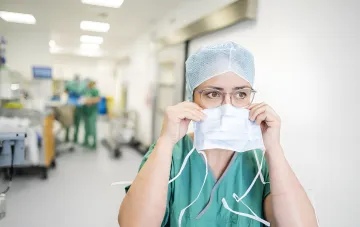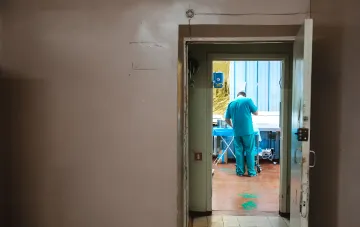
Russian military hospitals, according to reports from Ukrainian and international media outlets, have stopped coping with the flow of wounded participants in the war against Ukraine. As RBC-Ukraine reports, citing The Moscow Times, an increasing number of fighters are being treated and rehabilitated not in specialized military facilities, but in ordinary civilian hospitals, where entire departments are specifically reprofiled for them and a special regime of secrecy is introduced. The existence of such closed units was revealed to the publication by medical workers from several regions, including Yaroslavl Oblast and Siberia.
Secret Departments in Civilian Hospitals
According to medical workers, in one of the hospitals in Yaroslavl Oblast, two closed departments have been operating since 2024, where up to 70 participants in the war are simultaneously undergoing treatment and rehabilitation. A traumatologist at one of the city hospitals in Siberia said that doctors and nurses in such departments sign non-disclosure agreements, and all medical documentation is classified: patient medical records lack the patient's first, last, and patronymic names, with only a number listed in their place. In the assessment of the publication's sources, this approach is intended to hide from the public the real scale of losses and the strain on the healthcare system.
Beds, Regions, and Non-Disclosure Documents
The end of May 2023 became, according to data from the publication "Vot Tak," the point at which the authorities promised to transfer nearly 5,000 beds in 27 civilian hospitals across 11 regions, including Moscow, Saint Petersburg, Rostov-on-Don, and Sevastopol, to the Ministry of Defense. At the same time, no official announcement of such a decision was made, and the list of specific hospitals remains unknown to this day. According to "Vot Tak's" calculations, there are currently at least 58,300 beds in military medical institutions in Russia, where around one million wounded can be treated annually, however, according to doctors, there are still not enough places.
System Overload and Impact on Citizens
Medical workers note that the appearance of military patients in civilian hospitals directly affects the availability of medical care for other citizens: it becomes noticeably more difficult for them to see specialists. In effect, part of the resources, personnel, and bed capacity is being reallocated in favor of closed military departments, which increases the load on an already overburdened healthcare system in the regions where such units have been deployed.
Contradictory Data
It is important here to distinguish between two sets of figures. On the one hand, data on the transfer of 5,000 beds to 27 hospitals in 11 regions and on the operation of closed departments are based on leaks and statements by medical workers, not on published official documents — Moscow has not confirmed either the list of institutions or the volume of beds transferred, so these figures cannot be considered verified by a state source. On the other hand, the loss estimate referenced in the context — data from the Center for Strategic and International Studies (CSIS) — is a third-party analytical assessment, not an official Russian tally: according to CSIS calculations, the total losses of the Russian army by June of the current year amounted to 1.4 million people, of whom at least 450,000 were killed, and the rest were seriously wounded or went missing. Russian authorities do not acknowledge these figures, which creates a direct discrepancy between the independent assessment and the official silence.
Context: Losses and Mobilization Orders
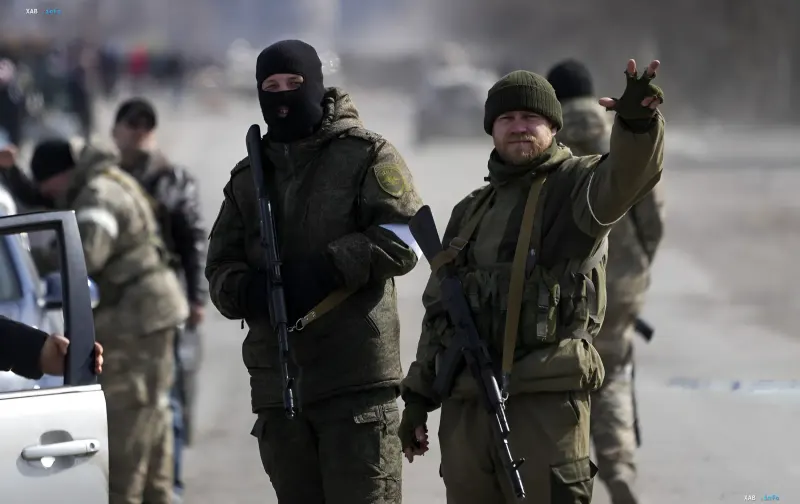
The increased load on medical institutions is occurring against the backdrop of ongoing mobilization processes: it was previously reported that Russians are mass-receiving "mobilization orders" at military commissariats, which allows hundreds of thousands of men to be urgently called to assembly points, while draftees are increasingly facing restrictions when attempting to leave the country. Taken together, these factors, in the assessment of journalists, explain why the treatment of the wounded is increasingly being moved outside official military hospitals into closed departments of civilian hospitals.