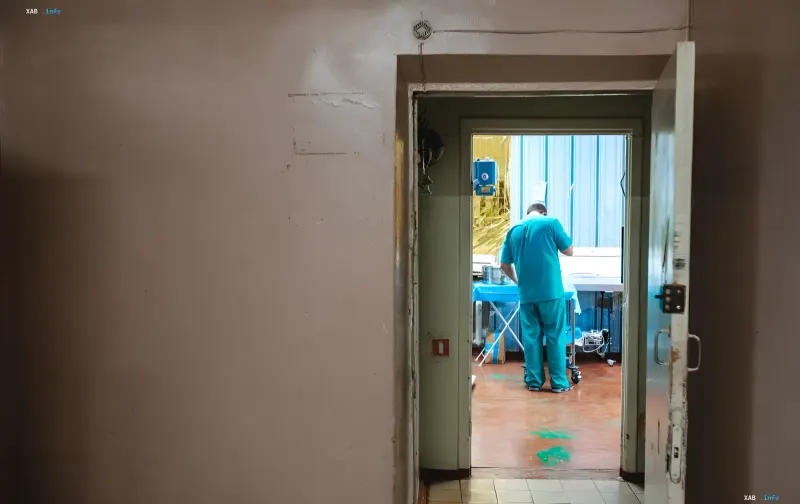
Russia's Foreign Intelligence Service (SVR) has published data indicating a deep staffing crisis in the country's state healthcare system. According to information reported by RBC-Ukraine, Russian medical institutions are short by approximately 23,000 doctors and more than 63,000 mid-level medical specialists. The total deficit of qualified personnel thus exceeds 86,000 people — a figure that, analysts estimate, threatens the functioning of primary healthcare across a number of regions.
Regions in the red zone and narrow specialties
The most acute situation, according to SVR data, is in Volgograd, Rostov, and Astrakhan oblasts. There, there are only 1.7 résumés per doctor vacancy — an indicator showing that even with active recruitment, employers cannot fill their staff. The shortage of narrow-specialty professionals deserves separate attention: Russian clinics are short by about 15% of the required number of orthodontists, as well as pediatric dentists, implantologists, and maxillofacial surgeons. It is precisely these fields that typically ensure access to scheduled and high-tech care, and their shortage directly affects patients' waiting times for treatment.
Formal staffing levels and actual workload
The situation in Saint Petersburg is of particular interest, where 100% staffing of medical positions is officially declared. At the same time, according to the same SVR data, the city has an acute need for general practitioners (district therapists), pediatricians, and emergency medical service workers. The formal indicator, as noted in the report, is achieved because current medical staff are forced to work 1.5–2 positions, compensating for the lack of colleagues. In the view of experts, this regime leads to chronic staff overload and rising professional burnout, which in the long term only worsens the outflow of personnel.
Vanishing specialties and outflow to the private sector
The staffing deficit also affects certain medical specialties that are effectively disappearing from the state system. In 2024, only 12 osteopathic doctors worked in Russian state clinics, and they were absent in 80 regions of the country. The number of manual therapists in state medicine was about 200, and their numbers have declined by 13.3% in recent years. Qualified specialists, according to intelligence data, are massively moving from state institutions to the private sector or leaving the profession altogether. Among the key reasons cited are low pay and the lack of practical experience among medical school graduates, who are not ready to work in conditions of mentor shortages and overloaded departments.
Systemic nature of the problem
The problem is not limited to healthcare. According to labor market analysts, a shortage of qualified workers also affects trade, construction, and transport, creating systemic risks for Russia's social and economic spheres. In Ukraine, by contrast, a similar structural gap between employer requirements and candidate skills is recorded: demand for skilled workers exceeds supply, with the shortage felt most acutely among plumbers, electricians, and emergency-repair specialists. Thus, the staffing crisis in medicine is part of a broader trend affecting both countries in the region.
Contradictory data
The presented information contains a number of internal inconsistencies. First, the official data on 100% staffing of medical positions in Saint Petersburg directly contradicts the statement of an acute need for general practitioners, pediatricians, and emergency medical workers in the same city. The explanation given by the SVR — working 1.5–2 positions — effectively acknowledges that the formal indicator does not reflect the real situation. Second, the source of the data is the Foreign Intelligence Service, not the Russian Ministry of Health, which raises questions about the counting methodology and whether these figures match official statistics. Exact Ministry of Health data that would allow cross-verification of the 23,000 doctors and 63,000 mid-level specialists figures have not been provided in open sources at the time of publication.