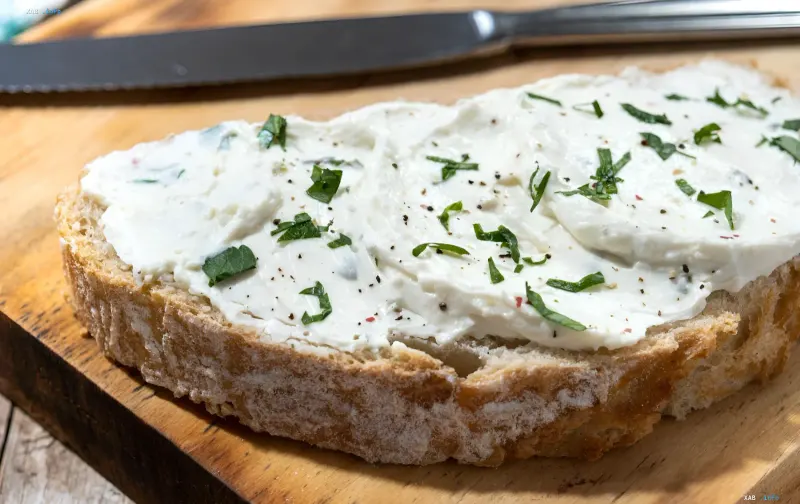
Short-video feeds are increasingly filled with clips featuring the same star — a thick white spread on a crispy toast, sprinkled with fresh herbs and black pepper. The recipe racking up thousands of views is surprisingly simple: ordinary garlic, cream cheese, and olive oil. According to the lifestyle project WAVE (RBC-Ukraine), it is precisely the way the garlic is prepared that turns this familiar vegetable into the base of an aromatic appetizer that users call “café-style plating from home.” The trend's relevance is also confirmed by a number of Ukrainian media outlets publishing variations of garlic spreads in their recipe sections.
The secret is in the heat treatment
The key difference between this recipe and a classic garlic paste is that the cloves are not added raw. They are sautéed in a small amount of olive oil until golden or slowly baked. As a result, the garlic loses its sharpness and pungency, gaining a soft, almost creamy texture and a lightly sweet note. It is precisely this transformation of flavor, as observed by the video creators, that explains why the appetizer is perceived as “something new,” even though the basic ingredients are familiar to every kitchen.
Step-by-step assembly of the spread
According to the description provided in the source, the process looks like this: the garlic is sautéed in olive oil until golden, and the sesame seeds are separately toasted. Then the garlic and sesame are transferred to a bowl, and cream cheese, finely chopped chives, and salt are added. Everything is mashed with a fork into a smooth, creamy mass. The finished spread is applied to toasted bread, croutons, or crackers. In some popular variations, parsley, black pepper, or chili flakes are mixed into the blend — this allows the flavor to be tailored to your mood and the season.
Why the recipe “took off” in short videos
Experts in gastronomic content highlight several reasons for its viral spread. First, accessibility: no ingredient requires a specialty store, and the preparation itself takes only a few minutes. Second, the visual effect — a white creamy mass on a golden toast with a green sprinkle looks like a dish from a cozy café menu, which fits perfectly into the “before/after” format of vertical videos. Third, the spread can be prepared in advance and stored in the refrigerator, then simply taken out and spread over a fresh toast before serving — this fits the rhythm of a quick breakfast.
The idea is not new, but the presentation is fresh
It is worth noting that the combination of cooked garlic and olive oil has long existed in cooking: from Mediterranean pastes to classic garlic sauces. The novelty of the current trend lies not in the composition itself, but in the format of presentation and distribution — short videos, minimalist plating, and an emphasis on the “home café effect.” Users in the comments under the clips, as a rule, limit themselves to brief reactions and requests to share the recipe, which in itself confirms the dish's high recognizability and appetizing appeal.
Contradictory data
No significant factual discrepancies were found in the provided sources. The only point worth noting: the basic recipe description mentions chives as a mandatory component, whereas the list of “popular variations” features parsley. This is not a contradiction but a matter of variability: chives are part of the base version, while parsley, black pepper, and chili are optional additions. Also, in one of the related articles (glavred.info), the emphasis is placed on “three ingredients,” which corresponds to a simplified version without sesame and chives. The difference in composition is explained by the fact that each author adapts the recipe to their own presentation format.