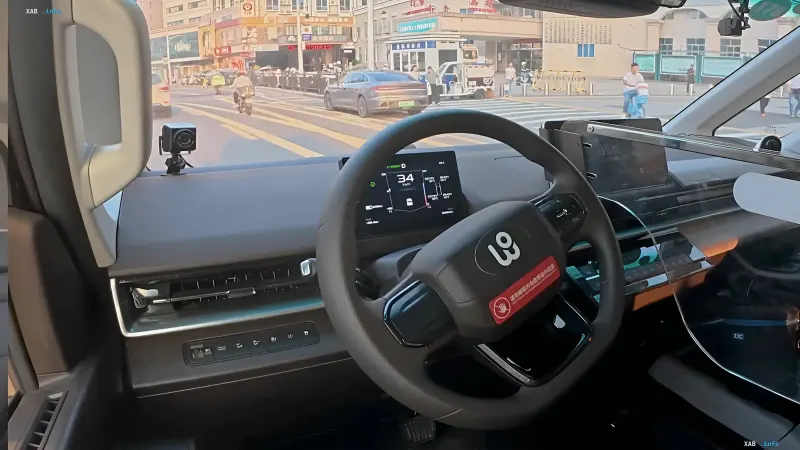
Autonomous transport in China has transitioned from demonstration runs to a phase of regular commercial operation. In Guangzhou and Shenzhen, robotaxis are already being used for paid passenger transportation, and their operational geography has noticeably expanded: service areas now cover more bustling urban districts with intense traffic, not just designated test zones. As interior footage shows, these vehicles are equipped with modern digital cockpits featuring multimedia displays, camera suites, and sensors, while the steering wheel carries the operator's branding — in this case, the WeRide platform.
Commercial launch and zone expansion
A key milestone for the industry right now is not the mere fact of driverless movement, but scaling: increasing the number of vehicles, expanding route networks, and integrating into daily urban logistics. This is precisely what industry representatives emphasize, noting that pilot projects have grown into a sustainable service in high demand by both citizens and tourists.
Technical foundation: the WeRide position
“China’s automotive industry and the production of new energy vehicles hold a leading position globally, creating a solid technical foundation for the future large-scale deployment of autonomous driving,” notes Li Yifan, Vice President of WeRide. According to him, it is this combination of a developed automotive industry and mass electric vehicle production that gives the country an infrastructural and technological advantage in the race for autonomous transport.
Delivery drones: from coffee to defibrillators
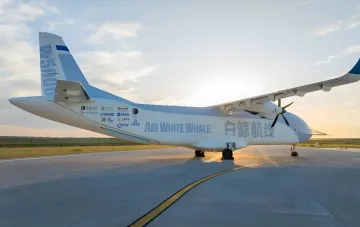
In parallel with the ground segment, air logistics are actively developing in Shenzhen. Drones are already delivering coffee to a kiosk located in a city park — a service that locals and tourists find convenient. LowAlt Technologies is testing drones for the delivery of defibrillators and medications, while Mengtai Aerolink provides deliveries to remote villages and islands where ground infrastructure is poorly developed.
Scaling horizons
The synergy of these initiatives — commercial robotaxis in megacities, medical and household drone delivery, and operations in hard-to-reach areas — is forming a holistic autonomous transport ecosystem for China. The next step, as market participants point out, will be further expansion of coverage zones and increased flight frequency, which will transition the technology from a novelty to a mass urban service.