Despite rapid progress in robotics and the emergence of new types of weaponry on the battlefield, armored vehicles remain the foundation of military mobility and survival. The illusion that robotic platforms will completely replace classic armored vehicles is dangerous and does not correspond to reality.
This was stated by the Executive Director of the National Association of Defense Industry Enterprises of Ukraine (NAUDI), Serhiy Honcharov, in an interview with RBC-Ukraine. The expert emphasizes: while robots have significant technical limitations, armor remains the only reliable shield against the mass use of FPV drones and minefields.
Technical limitations of robotics
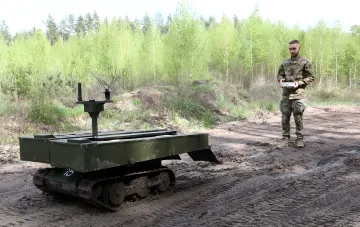
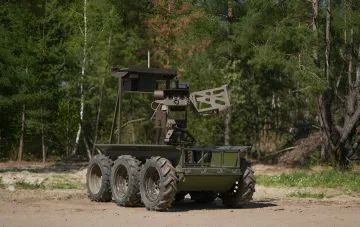
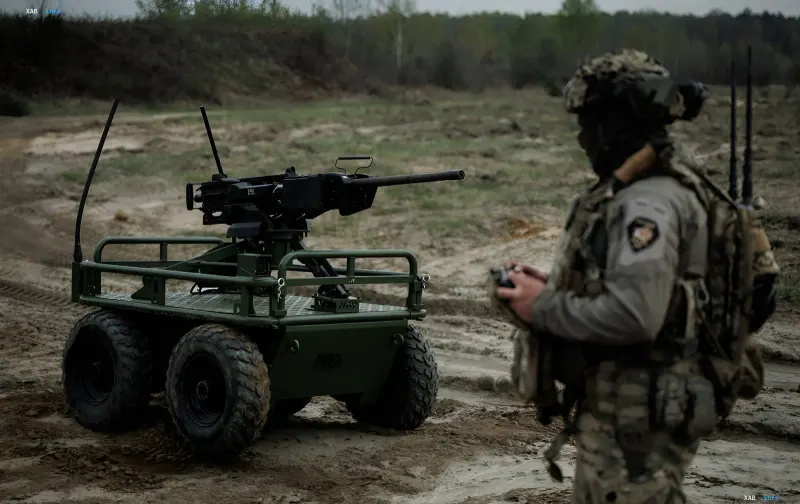
The situation with the deployment of combat robots is often oversimplified in the public sphere. However, the reality is that most modern budget ground robotic complexes (GRCs) have a relatively low speed of movement. Moreover, they are not always capable of overcoming difficult terrain, which is critically important during the active phase of hostilities.
The effectiveness of robotic systems depends directly on a number of factors that often remain off-screen:
- Careful planning of movement routes;
- Risk of losing the control signal in complex conditions;
- The level of training of operators and headquarters providing control.
It is precisely the human factor and the quality of command training that are decisive for the survivability of GRCs. This is why the results of using robots in different units can differ significantly.
Armor as a necessity
The head of NAUDI emphasizes that armored vehicles still hold a key place in combat operations. Logistics routes and combat zones are under constant pressure from the enemy, who massively uses FPV drones and remotely sets mines.
Under such conditions, the use of unarmored vehicles in the zone of impact becomes practically impossible. Armor provides protection that light robotic platforms cannot yet guarantee.
Prospects and innovations
At the same time, the development of robotics continues. Earlier, there was news about the promising GRC "Pegasus", which during tests demonstrated the ability to overcome difficult off-road terrain inaccessible to most mass-produced analogues. Notably, this sample turned out to be several times cheaper than factory solutions, which opens up new opportunities for scaling technologies.