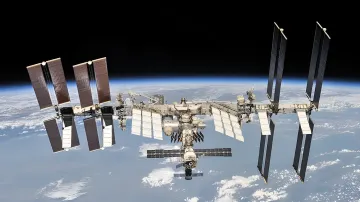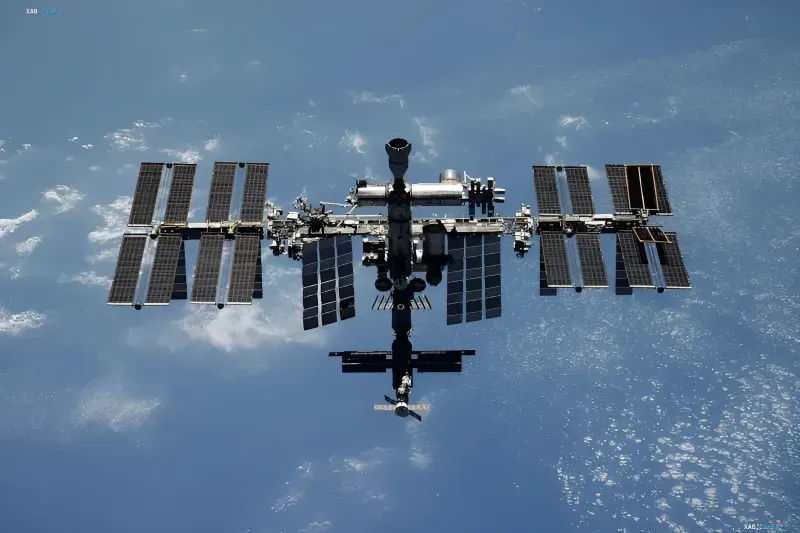
The state corporation Roscosmos and the American NASA have moved to a practical discussion of one of the most complex stages in the history of the International Space Station — its deorbiting. According to Kommersant, citing the head of Roscosmos, Dmitry Bakanov, the parties are discussing the allocation of responsibility: in what manner, which segment of the station, and what share of the work each side will take on. According to the head of the Russian space agency, a personal meeting with the head of NASA has not been discussed at this stage, and the negotiations are being conducted in a working manner.
Negotiations on the Distribution of Roles
The key issue currently on the negotiating table is the division of functions between the Russian and American segments during the final maneuver. This is where the greatest technical and political sensitivity lies: the ISS is not simply a spacecraft, but a structure assembled from modules of several states, and its "disposal" requires a coordinated sequence of actions. Bakanov emphasized that Moscow is in no hurry: "I think we still have about a year and a half in reserve. We are definitely not rushing here," Kommersant quotes him. This wording sets the tone for the entire process: this is not an emergency or forced scenario, but a planned, controlled operation.
Timeline and Deorbiting Technique
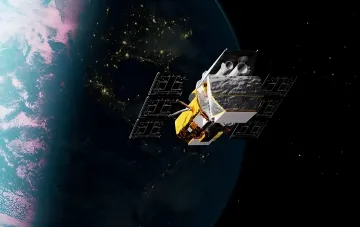
According to available data, two Russian Progress cargo spacecraft and the American USDV (U.S. Deorbit Vehicle) are planned to be used to deorbit the station. The process of gradually lowering the orbit is estimated to take about two years. This means that this is not an instantaneous braking, but a prolonged, controlled reduction in orbital altitude, followed by a controlled entry into the dense layers of the atmosphere and the burning up of the structure over a safe area of the ocean. The ISS, as a reminder, began operations in November 1998, meaning that by the time the operation is completed, the station will have been in operation for nearly a quarter of a century.
Contradictory Data
There is a notable inconsistency in the dates in the published wording. On the one hand, Bakanov states that the station's operation has been "extended from 2028 to 2030." On the other hand, the same article notes that "the planned lowering of the ISS will begin in 2028." At first glance, these statements contradict each other: if operation is extended to 2030, why does the lowering start as early as 2028? The most likely explanation is that 2028 is the beginning of the active orbital descent phase, while 2030 is the end of the entire cycle, including the completion of operations and the controlled atmospheric entry (given that the lowering process takes about two years). Nevertheless, in the original source these dates are given without a distinction of phases, which creates room for ambiguous interpretation and requires clarification from Roscosmos and NASA.
Context: From the ISS to ROS
The deorbiting of the ISS is part of a broader plan for Russia's transition to its own crewed presence in orbit. To replace the ISS, Russia plans to launch the Russian Orbital Station (ROS) into space by 2032. Thus, the end of the ISS era and the start of the ROS era are chronologically overlapping: by the time the old station is deorbited into the ocean, the new Russian platform should already be in the deployment stage. This makes the current negotiations with NASA not merely a technical, but a strategic issue, determining exactly how the transition from a joint project to a national one will be carried out.
International Dimension
The ISS project is being carried out through the joint efforts of Russia, the United States, Japan, Canada, Germany, Denmark, Spain, Italy, the Netherlands, Norway, France, Switzerland, Sweden, and the United Kingdom. This means that the decision to deorbit the station formally affects the interests of all partners, even if the key levers of controlling the braking are in the hands of Russia and the United States. This is precisely why the discussion of the allocation of responsibility between the two main participants — Roscosmos and NASA — is significant for the entire international community that has invested resources in a structure that, for nearly thirty years, has remained one of the symbols of peaceful cooperation in space.