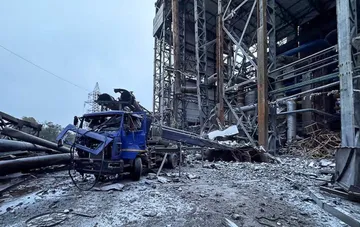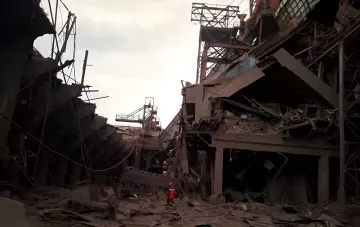
On September 12, 2026, Russia struck the Zaporizhstal plant with ballistic missiles for the third time in a month. According to Metinvest Group data, cited by RBC-Ukraine, four enemy missiles hit the enterprise's production area. As a result of the attack, four workers of the plant were injured. As the company emphasizes, at the time of the strike the enterprise was effectively not operating: following the previous missile strikes on August 11 and 27, 2026, the plant had not resumed production activities.
Strike on an object that is no longer operating
The key fact noted by Metinvest is that the target of the September 12 attack was not an active production facility. After the strikes on August 11 and 27, the plant did not return to work, yet in the night of September 12 it came under fire again. Metinvest Group's Chief Operating Officer, Oleksandr Myronenko, stated that Zaporizhstal produced cast iron and steel exclusively for civilian needs, did not manufacture military products, and had no facilities on its territory that could turn the enterprise into a military target. Thus, according to the company's assessment, this is deliberate damage to production capacity, jobs, and Ukraine's economy.
"Systematic destruction of civilian industry"
Commenting on the aftermath of the attack, Oleksandr Myronenko noted: "Fortunately, there were no fatalities this time, however four of our workers sustained injuries. This is already the systematic destruction of Ukraine's civilian industry, its economic foundation, and the people who keep it running." The company notes that the scale of damage grows with each new attack: the full extent of the damage cannot yet be assessed, but it is preliminarily deemed critical.
Why there is no threat of a man-made disaster
Metinvest explains that since the plant was not operating after the previous attacks, there was no threat of a man-made disaster at the time of the September 12 strike. Moreover, significantly fewer workers were on the enterprise's territory at the moment of the attack, which, according to the company, may have reduced the number of casualties. Currently, work is ongoing at Zaporizhstal to address the aftermath of the strike and inspect damaged facilities; once completed, specialists will be able to more accurately determine the nature and scale of the destruction.
Broader context: strikes on metallurgy and Russian exports
It is important to understand the broader context: Russia is intensifying attacks on Ukrainian metallurgical enterprises while continuing to supply its own products to global markets, including EU countries. It is separately noted that metallurgical plants face additional pressure due to excessively high electricity prices. The combination of these factors, according to experts, makes civilian metallurgy vulnerable and economically dependent on external conditions amid ongoing strikes.