Large-scale infrastructure expansion: 59 new bases
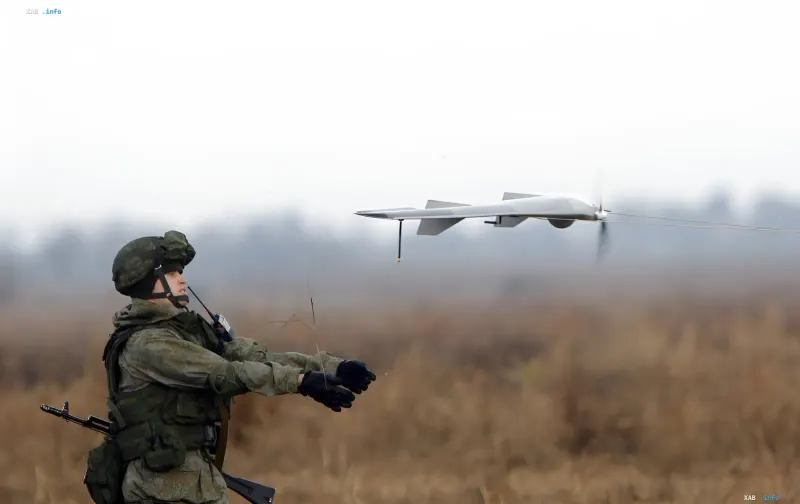
According to a report by the Institute for the Study of War (ISW) published in August 2026, Russia has made a significant leap in the development of its drone infrastructure. Along the border with Ukraine and Belarus, 59 new launch rails for unmanned aerial vehicles have been constructed. These facilities are located on 10 different military bases, indicating a systematic approach to organizing mass attacks. Intelligence data suggests that each of these bases can hold more than 1,000 drone units, creating a colossal reserve for conducting prolonged and intensive operations.
Technological upgrade: preparation for launching 'Geran-4' and 'Geran-5'
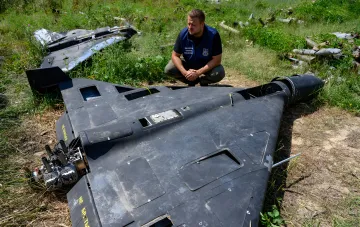
ISW analysts have noted the structural features of the new launch installations. Approximately 20 of the built facilities have significantly increased lengths, indicating their specialization for launching new generations of jet attack drones — 'Geran-4' and 'Geran-5'. These devices are presumably faster and more resilient, which will significantly complicate the work of Ukrainian air defense systems. Increased range and speed will allow strikes on targets in western Ukraine, which were previously out of reach of standard loitering munitions.
Survival strategy and integration with 'Rassvet' satellites
Moving launch sites deep into Russian territory serves a dual purpose. First, this protects infrastructure from retaliatory strikes by Ukrainian forces, which previously successfully attacked facilities near occupied Donetsk. Second, the adversary plans to integrate new bases with its 'Rassvet' satellite constellation, which by 2026 has become a functional analogue of Starlink. This combination will ensure high-precision guidance of drones to targets in the deep rear, including energy infrastructure nodes and air defense command centers.
Contradictory data
While the ISW report confirms the fact of infrastructure construction, there are discrepancies in assessing the timing of the facilities' commissioning. According to The Telegraph, construction took place over the last few months, however, Ukrainian intelligence (GUR) notes that some bases are in the final tuning stage and may be fully utilized only by the end of 2026. Furthermore, there are contradictions regarding targeting: American analysts view these capacities as a threat to NATO countries in case of escalation, whereas Russian sources officially state exclusively a defensive nature and border protection.
Impact on combat tactics
The creation of such a network of launch sites changes the balance of power in the western direction. The ability to simultaneously launch hundreds of drones from several remote bases will create an effect of 'saturation' for Ukraine's air defense systems. This forces Kyiv to revise its defense strategy, betting on distributed interception systems and cyber protection of control channels. Experts warn that in the coming months, the intensity of attacks on western regions may increase several times, as Russia is ready to use the accumulated drone reserve to achieve strategic goals.