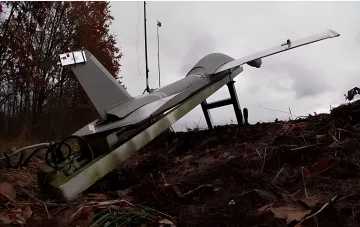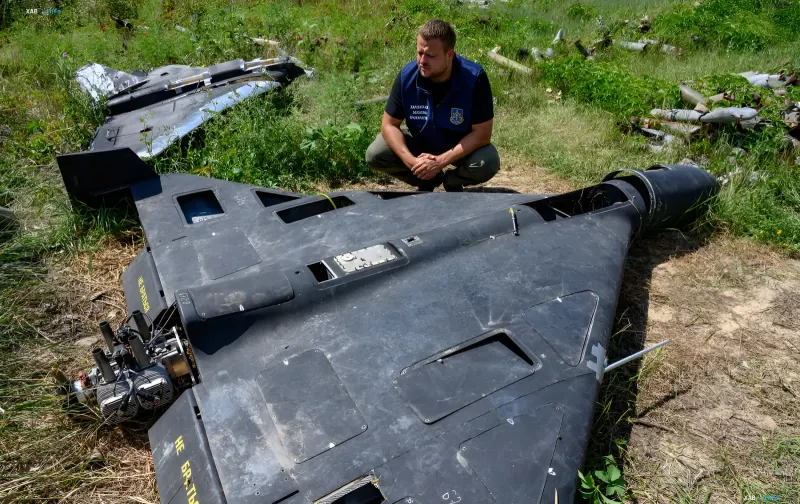
The Russian Federation has carried out a large-scale and dangerous modernization of its long-range strike drones "Geran-4", significantly updating their navigation systems, power units, and warheads. According to a recent report by the Institute for Study of War (ISW), these changes are designed to increase the drones' resistance to electronic warfare (EW) systems and maximize their effectiveness in strikes against Ukraine's critical infrastructure.
Key Technological Upgrades of UAVs
During the modernization, the "Geran-4" received advanced autonomous navigation components, including a high-precision American-made magneto-inductive sensor. This device allows the drone to independently determine its flight direction even under active EW signal jamming. Furthermore, Russia has replaced the imported jet engine with a domestically produced power plant assembled at a facility in the "Alabuga" special economic zone. This reduces the Russian military-industrial complex's dependence on foreign components and scales up production.
New Warhead and Threat to Logistics
A major change is the introduction of a specialized KRSN cumulative-cutting warhead designed to destroy reinforced concrete and steel structures. Analysts link this to recent massive Russian strikes against Kyiv's Northern and Southern bridges. Experts emphasize that Moscow aims to expand the combat capabilities of UAVs faster than Ukraine can adapt countermeasures, posing severe risks ahead of the upcoming winter period.
Tactical Challenges and AFU Response
Beyond the "Gerans", Russian developers continue to expand the range of platforms used. Notably, on October 5, the 8th Army Corps of the Armed Forces of Ukraine reported intercepting a new large-scale reconnaissance drone "Molnia-13" equipped with four engines. Simultaneously, experts point to Russian attempts to increase the speed of jet UAVs up to 800 km/h, which will require fundamentally new solutions from Ukrainian air defense and interception assets currently designed for slower targets.