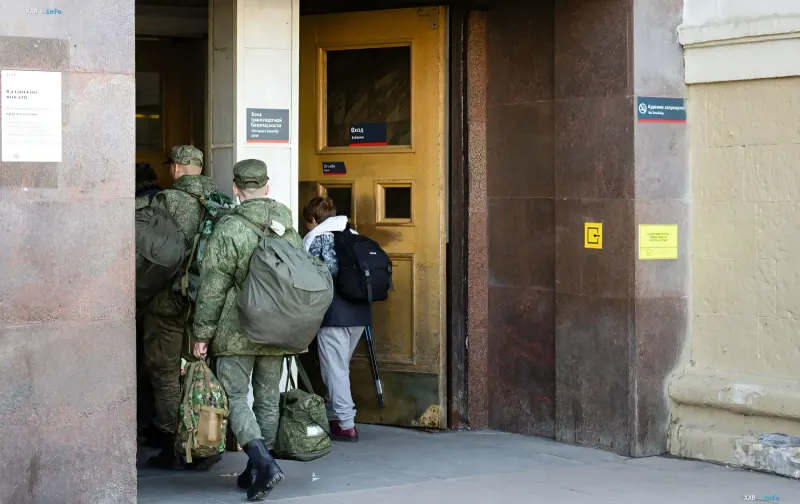
In Russia, according to human rights organizations, so-called hidden mobilization is gaining momentum: forced detentions and the coercion of men into signing contracts with the Ministry of Defense have become, according to activists, an everyday practice. This is reported by RBC-Ukraine, citing a piece by The Moscow Times. In July and August 2026, human rights defenders documented corresponding complaints, which, according to the publication, came from 17 regions of the country. The project "Go Into the Woods" (Idyote Lesom) received 18 similar appeals over two months, while the organization "Conscience Appeal" (Prizyv k Sovesti) received 18 complaints about forced recruitment over the same period.
The mechanics of coercion and vulnerable groups
Human rights defenders clarify that the victims of hidden mobilization are most often men from vulnerable social groups. According to The Moscow Times, Russian authorities are finding it increasingly difficult to find volunteers to send to war, so pressure on potential contract signers is intensifying. The priority is given to those who have debts, those who are under investigation, those who have lost their driving licenses, or who have other legal "hooks" that allow the application of administrative and forceful pressure. It is precisely such people, activists say, who become the main targets of recruiters' "hunt."
Infrastructure preparation and population outflow
In parallel with complaints about coercion, the preparation of military infrastructure to receive a large number of recruits is being documented. Earlier, RBC-Ukraine reported that in the Russian Federation the readiness of the military system for the mass intake of personnel is being checked, and training grounds are being inspected for their ability to accommodate a significant number of people. Against this backdrop, the outflow of citizens is also intensifying: in response to rumors of a possible mobilization, Russians are reacting with mass trips abroad. A record passenger flow was recorded at the Verkhniy Lars border crossing on August 15 and 16 — more than 19,000 people a day passed through it, heading mainly to Georgia.
Contradictory data
The collected information contains a notable inconsistency, which is important to reflect honestly. On the one hand, human rights organizations are documenting real cases of detentions and coercion into contracts, and the infrastructure and border crossings show signs of preparation for the mass movement of people. On the other hand, according to the same RBC-Ukraine, no final decision on a new wave of mobilization in Russia had been made at the time of publication. Thus, the publicly documented facts of coercion and the preparation of training grounds coexist with the official absence of a decision on full-scale mobilization. The gap between practice on the ground and the position at the decision-making level remains the key contradiction in this story, and both versions — and the activists' complaints, and the statements about the "undecided" matter — should be considered as part of a single picture.
The situation remains dynamic: the combination of a growing number of complaints, infrastructure preparation, and record flows at the border indicates that the topic of hidden mobilization in Russia in 2026 continues to remain one of the most acute and least transparent for independent observation.