The Ukrainian side is warning of a qualitatively new phase in the tactics of Russian air strikes. According to the outlet Flash, cited by RBC-Ukraine, in an interview with The Guardian, Serhiy Beskrestnov, the President of Ukraine's external advisor on technological defense issues, stated that Moscow is developing a new wave of drones and missiles equipped with Chinese jet engines capable of reaching speeds of over 320 kilometers per hour. In his words, it is precisely these machines that are already being used for multi-hour attacks on Kyiv and other major cities, and Russia's production capacity currently exceeds Ukraine's.
A New Wave of Jet-Powered Drones
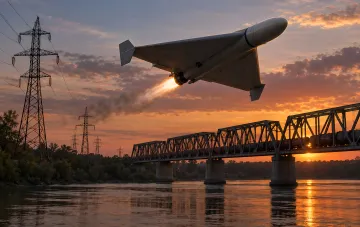
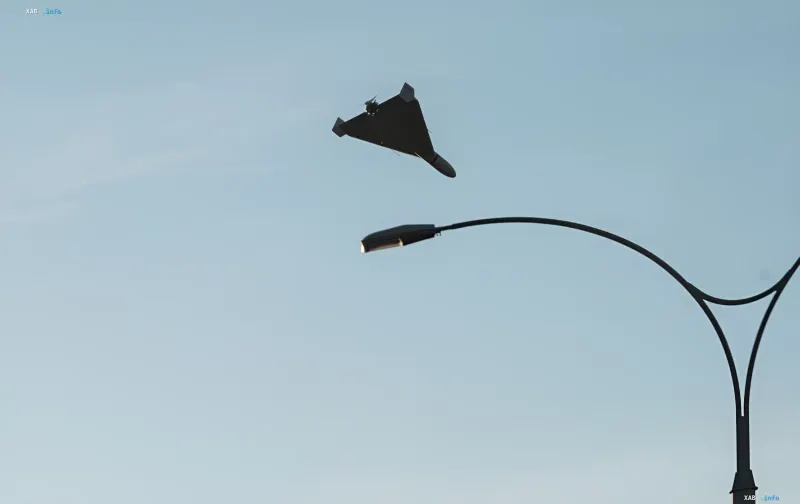
According to Beskrestnov's assessment, the key difference of the new generation is the shift from piston engines to Chinese-made jet propulsion. This allows the drones to maintain high speed over a prolonged flight, significantly reducing the reaction time of air defense systems and making interception more difficult. The expert describes these machines as a development of the so-called "Shahed" line, but now with jet propulsion, taking the threat to civilian and military infrastructure to a new level.
Scale of Use Is Growing
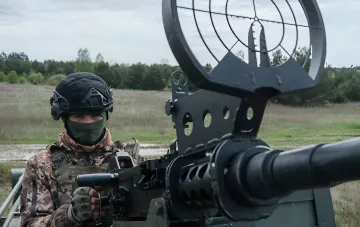
The dynamics of use cited by the advisor demonstrate acceleration: in August 2026 alone, according to his data, Russia launched approximately 2,500 jet-powered "Shaheds" at Ukraine, compared to about 1,500 in July. In other words, the volume of strikes by this type of aircraft grew by two-thirds in a single month. Beskrestnov notes that currently the main burden of destroying jet-powered drones is carried by fighter jets, since existing anti-aircraft and surface-to-air missile systems do not always manage to intercept fast-moving targets at low altitudes.
Plans for 2027
The largest figures are tied to 2027. According to Beskrestnov, Russia plans to produce around 36,000 jet-powered drones of this type, as well as another 30,000 units with slower piston engines. In addition, as he claims, the strike arsenal may be supplemented by roughly 10,000 cheap "Bandierol" cruise missiles and 10,000 "Dan-T" missiles. Altogether, in the assessment of the Ukrainian expert, this should multiply Moscow's ability to strike Ukraine's energy, industrial, and other infrastructure.
Ukraine's Response
In response to this threat, according to Beskrestnov, Ukraine is working on its own autonomous interceptors and already has a prototype. He reported that between four and six Ukrainian companies are working on creating jet-powered interceptors. However, in his assessment, these developments are not yet ready for serial production, which, in the expert's view, gives Moscow a temporary technological and production advantage. Earlier, Flash also warned that Russia is capable of launching up to 100 ballistic missiles at Ukraine every month and is increasingly targeting civilian infrastructure — warehouses, enterprises, and retail chains.
Contradictory Data
It is important to note that almost all quantitative figures in this topic — 2,500 units in August, 1,500 in July, 36,000 and 30,000 for 2027, as well as 10,000 "Bandierols" and 10,000 "Dan-T"s — come from a single source: the statement of the President's advisor, conveyed through the Flash interview. There is no independent confirmation of these figures from other verifiable sources in the provided materials, so they should be perceived as an assessment by the Ukrainian side, not as an established fact. Moreover, the original text contains an incorrect and internally contradictory formulation in which Russia's jet-powered strike drones are described as "the first generation of cheap Ukrainian interceptors," which contradicts the overall context: interceptors are defensive means, whereas the rest of the statement discusses offensive Russian aircraft. This points to errors in the transmission or translation of the original source, and the exact meaning of this phrase requires clarification from the speaker himself.
In any case, even with these caveats, the stated dynamics — the growth in the number of jet-powered drones during 2026 and the announced plans for 2027 — confirm a trend toward increasing the dependence of Russian strikes on mass-produced, relatively cheap, but fast aircraft. For Ukraine, this means the need to accelerate serial production of its own interceptors and diversify air defense means, so as not to allow the adversary to consolidate a temporary advantage in the airspace over major cities.