On the night of August 20, 2026, the Russian Armed Forces launched one of their most massive attacks on Ukraine in recent times. The primary targets were not only military and energy infrastructure but also business assets—specifically the warehouses of major retail chains and logistics hubs in the Kyiv region. According to the Air Force, the attack began around midnight and involved the launch of ballistic and cruise missiles, as well as over a hundred drones, most of which were directed towards Kyiv and the Kyiv region. By morning, it became clear that distribution centers for food and cosmetic chains were under fire, threatening supply disruptions for consumers.
Scale of the Night Attack
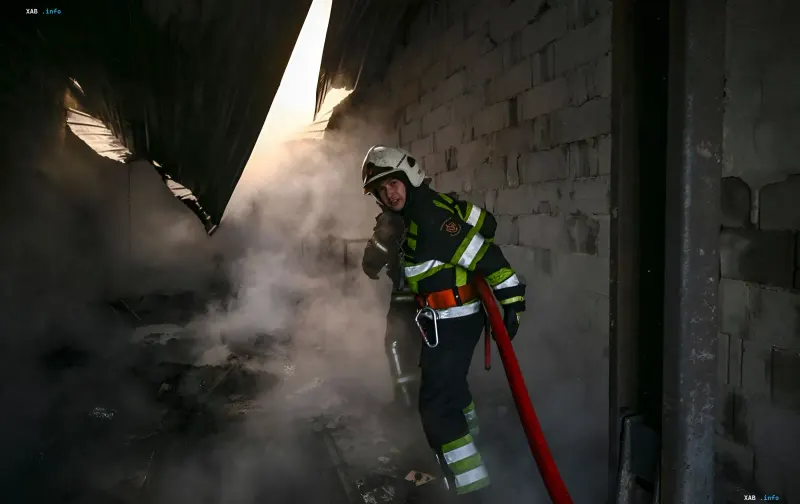
According to the Ukrainian Air Force, the enemy used Onyx, Zircon, and Iskander-M ballistic missiles, as well as S-400 (as noted in the briefing), 36 Kh-101, Iskander, and Kh-59 cruise missiles, 8 Kalibr cruise missiles, 2 'Banderol' drones, and 168 Shahed attack drones, about half of which were jet-powered. Strikes were recorded at 28 locations, with debris falling at two additional sites. As of 16:30 on August 20, the State Emergency Service reported eight injured and one deceased in the Kyiv region; rescuers continued to extinguish fires at a fuel enterprise in the Brovary district and at three locations in the Borodyanka district, where logistics infrastructure objects were hit.
Strike on Logistics and Retail
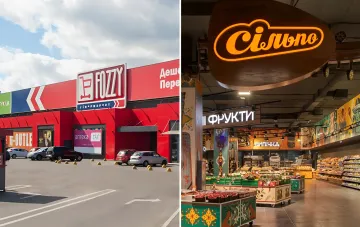
The central focus of the attack was commercial infrastructure. The Fozzy supermarket chain reported a hit on its warehouse in Martusivka, Kyiv region, where fresh produce was stored; the company noted that this warehouse had only been in use since the previous week, following a previous Russian attack on its logistics. The company 'Fine Ice Cream' (Faini Lyody) announced the destruction of its distribution warehouse in Kyiv, which supplied 13 cities—stating that tons of ice cream, equipment, and vehicles were destroyed. The French brand Yves Rocher Ukraine reported damage to its product warehouse and temporarily suspended online orders. VARUS confirmed an attack on a warehouse in Borodyanka holding part of its inventory, while 'Eko Market' reported damage to its own warehouse but maintained store operations. A separate target was the KLO oil depot in the Brovary district, where, according to footage published by the company, fuel tanks were destroyed.
Consequences for Consumers and Business
Retailers are already rerouting supply chains and seeking alternative storage and logistics solutions. Fozzy promised that 'favorite products will remain nearby,' Yves Rocher pledged to inform customers about the status of placed orders after assessing the consequences, while VARUS and Eko Market warned of potential shortages of certain items in stores. Experts note that targeted strikes on distribution centers represent not only direct material damage but also a tool of pressure on food availability: the destruction of a single warehouse, as in the case of 'Fine Ice Cream,' can disrupt supply chains for dozens of cities at once.
Contradictory Data
When comparing versions, several inconsistencies emerge. First, companies assess the extent of damage differently: 'Fine Ice Cream' speaks of a 'destroyed' warehouse, VARUS of a 'damaged' warehouse, while Fozzy and Yves Rocher refer to a 'strike' and 'damage,' making it difficult to form a unified picture of losses. Second, casualty data at the time of the State Emergency Service briefing (one dead, eight injured as of 16:30) is preliminary and may be revised as cleanup and debris removal conclude. Third, the list of weapons used by the Air Force includes the S-400 among ballistic missiles, which raises questions among specialists, as this is an air defense system, not a ballistic missile; until official data is clarified, this detail should be treated with caution.
Context: War Against the Economy
The August 20 attack continues the line Russia is pursuing against the Ukrainian economy: strikes on logistics, fuel, and retail warehouses are designed to simultaneously weaken the military rear and create shortages on shelves. For businesses, this means not only direct losses but also the need to duplicate critical nodes in supply chains, increasing costs amidst ongoing shelling. As of August 21, restoration work on damaged objects in the Kyiv region continues, while operator companies redistribute stocks to minimize the impact of the attack on consumers.