Russian strikes on Ukraine's logistics infrastructure continue to be one of the key factors pressuring the country's food and trade system. Ruslan Shostak, co-owner of the Varus grocery chain, in a Facebook post referenced by RBC-Ukraine, attempted to systematize the actual losses of warehouse capacity and explain why completely destroying most warehouses at the current intensity of attacks would take the enemy decades — and even then only in a hypothetical scenario where warehouse reconstruction in Ukraine is fully halted.
Scale of warehouse infrastructure losses
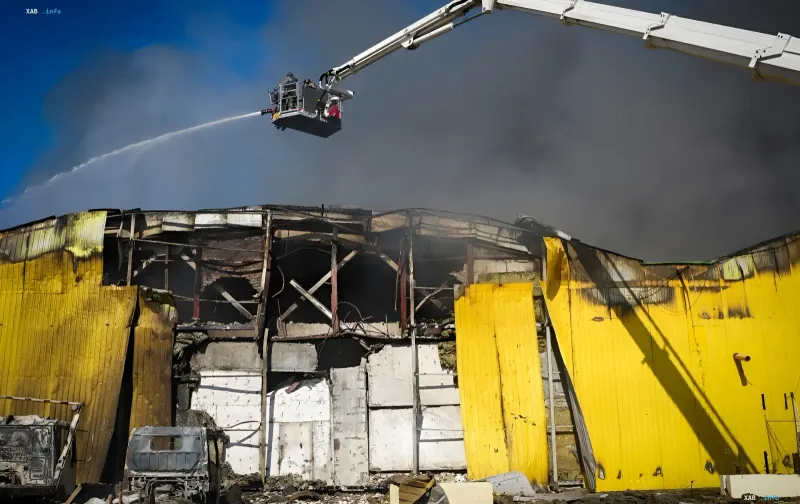
According to Shostak, since the start of the full-scale war in Ukraine, 2.1 million square meters of Class A and B+ warehouse space have been destroyed. A significant portion of these losses falls on Kyiv Oblast — about 1.5 million square meters. The particular acuteness of the situation is underscored by the dynamics of recent months: since the beginning of 2026, another 900,000 square meters of warehouse space have been destroyed, indicating that the high intensity of strikes on logistics facilities is being maintained.
How many warehouses remain in operation
At the start of the war, the total area of Ukrainian Class A and B warehouses was estimated at approximately 4.2 million square meters. In addition, since the start of the war, another 800,000 square meters have been put into operation, bringing the total volume to about 5 million square meters. Of this amount, 2.1 million square meters have been destroyed, while 2.9 million square meters remain in operation — meaning that more than half of the top-class warehouses are still in use. Shostak also clarifies that if warehouse space at large enterprises across the country is taken into account, the total volume of infrastructure will be significantly larger, reaching tens of millions of square meters of various classes.
Why complete destruction would take decades
The businessman's key conclusion is that at the current pace of Russian attacks, completely destroying most warehouse capacity would take the enemy decades, and only in the case where warehouse reconstruction in the country is fully stopped. In some publications, this estimate was phrased as requiring around ten years to destroy 90% of food warehouses, however Shostak himself emphasizes that this is precisely a projection into the future, not a description of the current state of infrastructure.
Impact on retail chains and an appeal to shoppers
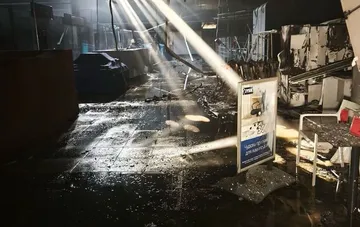
Separately, Shostak commented on the consequences of the strikes for retail chains. "It is bitter to admit, but what is happening now is a real tragedy. And if anyone wants to support their favorite chain — come. Make your purchases. This is the best support in the current reality," he wrote. At the same time, the businessman urged Ukrainians not to create a panic and not to stockpile goods, noting that no shortage is expected in the country: if a needed item is not available in one store, it can be found in another. A reminder of the vulnerability of retail facilities was the nighttime shelling of Kyiv on September 8, as a result of which a Varus supermarket in the Solomianskyi district was destroyed: part of the structure collapsed, debris was scattered around the building, and a large crater formed nearby.
Contradictory data
Publications by different outlets show discrepancies in wording. Some headlines (including in materials referencing the words of the founder of Varus) operate with the figure of "90% of warehouses" and a timeframe of "10 years," which may be read as a statement about the current level of destruction. However, in other materials, in particular in a publication titled "Not 90%," the co-owner of Varus and EVA directly corrects this narrative, naming the actual scale of destruction. According to Shostak's factual figures, of approximately 5 million square meters of top-class warehouses, 2.1 million square meters have been destroyed — that is, about 42%, not 90%. Thus, "90%" and "decades" should be considered a hypothetical projection of how long it would take to reach such a level of destruction if the current pace of attacks is maintained and there is no reconstruction at all, rather than a statement of losses already incurred.