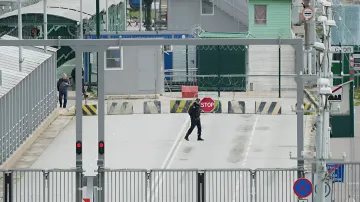
The Russian Ministry of Foreign Affairs held a meeting with Estonia's Chargé d'Affaires in Russia, Marek Jõks (Marek Juhtegi), during which Moscow's "resolute protest" was conveyed. The occasion arose from two circumstances: accusations by the Russian side regarding an attempted arson attack on a defense enterprise in Estonia and the Estonian government's decision to close the land border with Russia. According to representatives of the Russian Foreign Ministry, the accusations put forward by Tallinn "have no evidentiary base whatsoever," and the step to close checkpoints is regarded as counterproductive for both sides.
Economic Warnings and a "Boomerang" for Allies
The Russian agency stated that closing the border "will deal another blow to the Estonian economy" and "will boomerang both on Tallinn itself and on its EU and NATO allies." Thus, Moscow positions Estonia's decision not as a sovereign security measure, but as an action that, in its assessment, will hit the trade and logistics ties of the entire region. The diplomatic channel is nevertheless maintained: the Chargé d'Affaires was summoned precisely for the oral delivery of the protest, indicating Moscow's attempt to record its position in official correspondence without bringing the situation to a rupture of relations.
Border Closure from December 1: Tallinn's Decision and Its Internal Opponents
Starting December 1, 2026, the Estonian government is closing all land checkpoints on the border with Russia for at least six months. The official reason was an attempted arson attack on the defense enterprise Threod Systems: Estonian authorities believe the sabotage was organized by Russian intelligence. Notably, the decision did not pass without internal resistance — the country's president, Ülle Madise, and the mayor of Narva, a city directly bordering Russia and most dependent on cross-border exchange, publicly disagreed with it. This creates a line of disagreement in Estonian politics between the government's position and a number of high-ranking officials for whom the border closure looks economically and politically risky.
Accusations of "Tacitly" Providing Airspace
In addition to the protest regarding the border and sabotage, the Russian Foreign Ministry once again accused Estonia of "tacitly providing its airspace for the flights of Ukrainian drones" aimed at attacking Russian territory. The agency claims that such flights "have been objectively and conclusively recorded by the Russian side more than once." The Estonian diplomat was, according to the Russian Foreign Ministry, "reminded again" that such actions "are on the verge of unleashing an open war with Russia." The phrasing indicates that Moscow intends to use the UAV topic as a systemic argument in diplomatic pressure on Tallinn, rather than as a one-off statement.
Context: Chronicle of Mutual Accusations Between Moscow and the Baltics
Accusations of providing airspace for Ukrainian drones are not new: Russia has leveled them against the Baltic states repeatedly, while Tallinn, Riga, and Vilnius consistently deny these claims. Thus, the current episode involving the summons of a diplomat and the closure of the border fits into a long series of mutual accusations in which each side relies on its own picture of the incidents. For observers, the key question remains whether the diplomatic channel will remain operational against the backdrop of the fact that ground communication between the two countries will effectively be cut off for six months starting December 1, and the rhetoric from the Russian side is escalating to the level of threats of "open war."