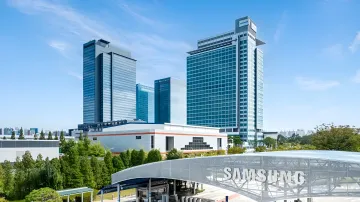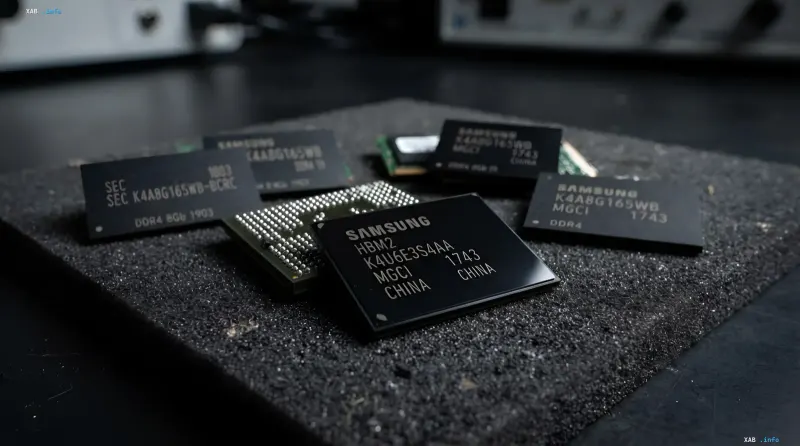
Samsung Electronics' memory chip production capacity for the period from 2027 to 2029 is largely already reserved by major customers. Moreover, a number of clients are pushing for long-term agreements that would guarantee supplies up to 2031. This was reported by Wccftech, citing South Korean industry sources, which also forms the basis for the ixbt summary dated November 21, 2026.
Capacity reservation and requests until 2031
According to industry sources, companies are fixing DRAM and HBM volumes well in advance, fearing further shortages. Customers are requesting not only additional supplies under existing agreements but also the extension of contracts several years into the future. For Samsung, this means that a significant portion of its production plans for the next three to five years is effectively already allocated among key clients even before the start of the respective periods.
AI infrastructure as the main demand driver
The rapid growth in demand for memory from AI infrastructure is cited as the primary reason for this market behavior. Major data center operators and AI developers are striving to secure the necessary volumes of DRAM and HBM in advance. These segments generate the most intense demand for high-speed memory used in server and accelerator configurations, pushing companies toward multi-year capacity reservations.
Contracts: ten signed and about ten more in negotiations
According to the same industry data, Samsung has already signed long-term agreements with ten major customers and is in talks with about ten more companies. At the conference dedicated to the company's performance in the third quarter of this year, representatives stated that they expect to cover 60–70% of their production capacity with such contracts by 2030. Those interested in long-term supplies include not only data center operators and server manufacturers but also companies in the automotive, mobile, and telecommunications sectors.
Why production cannot be scaled up quickly
The situation is complicated by the fact that it is impossible to quickly increase memory production: building new manufacturing sites and installing equipment take several years. In addition, transitioning to more complex HBM generations consumes extra production resources. Samsung previously warned that the tight supply situation for memory could persist at least until 2028, which aligns with the logic of multi-year capacity reservations by customers.
Context: China and CXMT amidst the shortage
Against this backdrop, competition between regions is also intensifying. According to Bloomberg, based on a Bank of Korea report, by 2028, new plants from Samsung Electronics and SK Hynix will increase South Korea's production capacity by approximately 600,000 wafers per month. During the same period, China's largest memory manufacturer, CXMT, expects to increase capacity from the current 300,000 to 600,000 wafers per month; however, due to a low yield rate of usable chips, the actual supply volume from China is estimated to remain significantly lower than South Korea's. To finance this expansion, CXMT and Yangtze Memory Technologies have turned to the domestic stock market: in July, CXMT conducted one of the largest IPOs in Chinese history, raising nearly $10 billion, and YMTC plans to list shares for another $4.6 billion before the end of the period. Memory shortages have already led to record price increases, which further encourages both manufacturers and customers to engage in long-term planning.
Summary
The combination of factors — AI infrastructure demand, long-term contracts, limited capacity growth rates, and regional competition — indicates that the memory market will remain tight over the next few years. For Samsung, this means high utilization of production plans until 2030, and for customers, it means the necessity to lock in supply volumes in advance to avoid being in a shortage zone.