In the RBC-Ukraine podcast "ETO BAZA" (THIS IS THE BASE), serviceman of the 413th Unmanned Systems Forces Regiment "Raid" and Defense Express weaponry expert Ivan Kyrychevskyi stated that Ukraine maintains the initiative in the drone war, while Russia is unable to quickly turn jet-powered Shaheds into a sustainable advantage. According to his assessment, the Geran-4 and Geran-5 cost upwards of $200,000 per unit, while Moscow lacks trained operators for their mass deployment. The expert emphasizes that Ukrainian forces were the first to use jet-powered kamikaze UAVs in this conflict, and the Russian side essentially replicated this approach.
Who first used jet-powered kamikaze drones
Kyrychevskyi points out that back in the winter of 2022, Ukraine was the first to deploy jet-powered kamikaze drones, notably the converted Tu-141 Strizh—a large-scale asset with a launch weight of several tons, a fuselage length of about 11 meters, and, according to open sources, the capacity to carry a 150-kg bomb. According to the expert, this asset proved effective enough to begin striking Russian strategic aviation. In late December 2023, as he notes, it became known that Russia might develop its own jet-powered Shahed, which was subsequently planned for scaling—meaning Moscow, in his words, was following in the footsteps of Ukrainian practice.
Midlstrikes and mutual "copying"
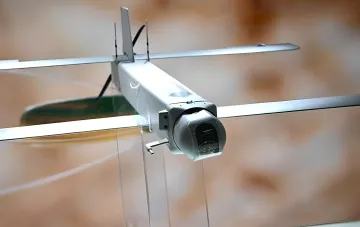
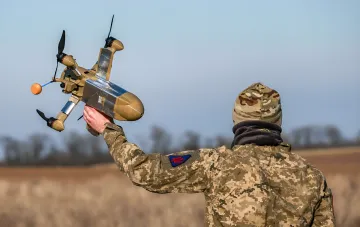
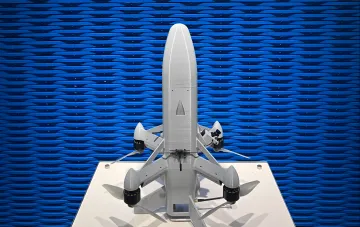
The expert lists a lineup of Ukrainian midlstrikes for various tasks: the FP-2 for striking troop concentrations in the frontline zone, items like the Bulava or B2 for destroying high-value moving targets, and the Palyanytsia—estimated by him as a simplified version of the Neptune with a launch weight of about 300 kilograms. Kyrychevskyi links the emergence of the Palyanytsia in 2024 to the fact that Russian ammunition arsenals "started acting up"—they began blowing up due to jet-propelled assets, as he puts it. Separately, he mentions the Bliskavka drone, which he says is built on the basis of a copied Russian Molniya and designed to strike low-value targets such as vehicles and personnel vans. The expert also notes that the practice of "waiting drones" (dzhyduny) was similarly adopted by Russia from the Ukrainian side, though the Ukrainian side did not publicize it in time.
Air defense adaptation and strikes on launch sites
Answering a question about the decrease in the intensity of jet Shahed raids on Kyiv and neighboring regions in recent weeks compared to the beginning of the season, Kyrychevskyi explains this by the time needed for the defense forces to develop solutions and adapt. He points out that in recent months, segments involving interceptor drones have been scaled up, including within his regiment, and in September, several successful strikes were carried out against jet Shahed launch sites in the Donetsk area. At the same time, the expert notes that some actions of the unmanned systems forces cannot always be disclosed publicly right away.
Why, according to the expert, the initiative has not shifted to Moscow
Kyrychevskyi believes that Russia seizing the initiative could be discussed if Ukraine had abandoned long-range operations under the pressure of jet drones; in his assessment, this did not happen, and in the "quantity race," the Ukrainian side quantitatively surpasses the Russian side. He also notes that unlike early 2026 statements about "thousands of AI-enabled drones" over cities, such apocalyptic scenarios are not materializing, and Russian forces are failing to achieve the necessary level of threat mitigation from Ukrainian midlstrikes, neither through mobile fire groups nor their own interceptors. At the same time, other sources record that Kyiv experiences periods of almost continuous air raid alerts due to jet Shaheds flying along a well-known route near the Belarusian border, with some reaching the capital; Ukrainian specialists point out that Russia's transition to jet modifications is specifically linked to cheaper mass Shaheds being shot down more frequently by interceptors. Thus, the assessment of the current balance of power in the "drone war" remains a subject of discussion, although the fact that both sides actively use jet UAVs and midlstrikes is confirmed by all cited sources.