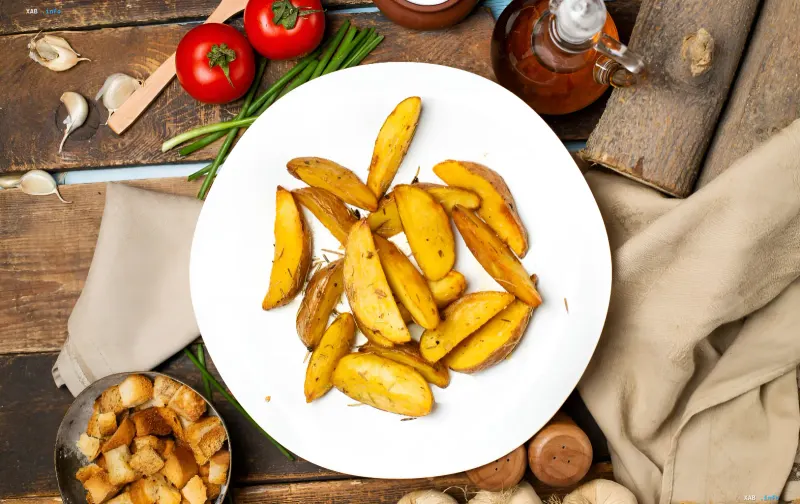
Rustic potatoes (or roasted potato wedges) are one of the simplest and most versatile side dishes to prepare at home without special skills. However, the trap lies precisely in this simplicity: the wedges often turn out dried out, overly soft, or looking 'boiled.' According to the Styler project (RBC-Ukraine), the key to an appetizing result lies not in the oven itself, but in the proper preparation of the potatoes before they even hit the baking sheet. Below is a step-by-step technology that guarantees a golden, crispy surface and a tender interior.
Blanching and 'roughing' the wedges
The first and most important stage is preparation. The potatoes need to be washed thoroughly and cut into wedges of the same size so they cook evenly. If the skin is thin, it is best to leave it on: it adds an interesting texture to the finished dish and helps the wedges hold their shape. Next comes a crucial step that is often overlooked: the wedges are boiled for 5–7 minutes in boiling salted water. The potatoes should not become completely soft — it is enough for the edges to soften slightly. While the potatoes are in the pot, they are shaken gently several times: small irregularities appear on the surface, which brown excellently during baking and form that very crispy crust.
Marinade: oil, salt, and herbs
After blanching, the wedges are transferred to a bowl and mixed with a small amount of vegetable or olive oil, salt, paprika, black pepper, and dried garlic. If desired, dried rosemary, oregano, or a mix of Italian herbs can be added to the marinade. The main rule at this stage is to mix the wedges thoroughly so that the oil and spices evenly cover every surface. It is exactly this film of oil and herbs that ensures even browning and a rich flavor during the baking process.
Hot baking sheet and dry heat
It is recommended to put the baking sheet in the oven in advance so that it heats up well: contact with the hot surface immediately triggers the caramelization reaction. The potatoes are laid out in a single layer, leaving small gaps between the pieces. If the wedges lie in a dense pile, they release steam and begin to braise rather than roast — and for a crust, you need dry, hot air. Baking takes about 30–40 minutes depending on the size of the pieces; after 15–20 minutes, the wedges are turned over so that the crust browns evenly on all sides. Foil is not needed here: it traps steam and turns the crispy surface soft. Do not take the potatoes out as soon as they are just golden — for an expressive crust, wait until the edges are well browned.
Serving and a simple sauce
Rustic potatoes are best served immediately: it is the hot product that has the most pleasant crispy texture, which is quickly lost upon cooling. A simple sauce goes well with it — sour cream or Greek yogurt with garlic, greens, and a pinch of salt. Thanks to these tips, ordinary potatoes turn into that very side dish that you want to eat hot: with a golden crust on the outside and a soft interior on the inside. It is worth noting that rustic potatoes are one of the popular options for baked side dishes in Ukrainian home cooking — they are prepared both as a standalone dish and in combination with meat, for example with chicken skewers in the oven, which is confirmed by recipes from several Ukrainian culinary publications.