Across the vast expanse of the Altai region, where the borders of four countries converge, large-scale archaeological operations are underway. The Silk Road Archaeological Cooperation Research Center (China), in collaboration with Altai State University (Russia), has commenced the study of ancient burial sites. This event marks the first undertaking for the Altai branch of the Chinese center since its establishment, signifying a new phase in bilateral cooperation.
Searches in the Chileta River Valley
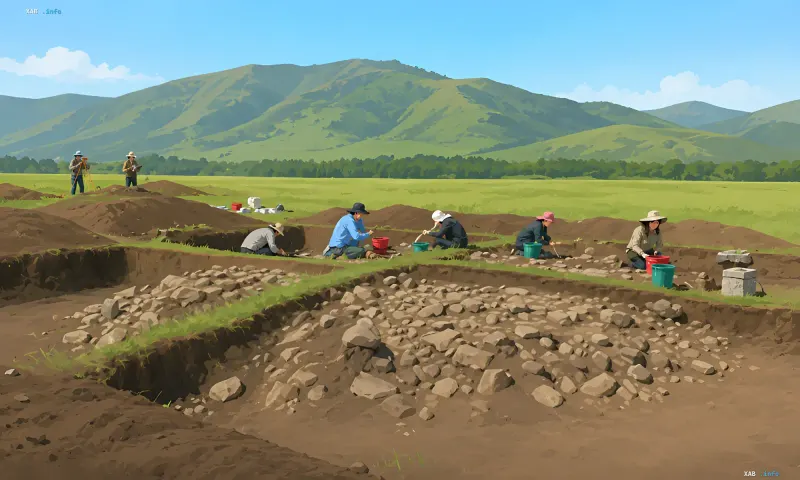
In accordance with the approved plan, the international team has focused its efforts on excavating two ancient cemeteries located in the Chileta River valley. The primary focus is on three tombs dated from the 6th to the 3rd century BC. Among them, researchers distinguish one large or medium-sized mausoleum and two more modest ones.
The objective of the work is not merely the extraction of artifacts but also a deep analysis of the burial structure. Scientists hope to establish a clear link between funeral rituals and the social status of the inhabitants of the early Iron Age.
Reconstructing the Daily Life of Ancient Nomads
Archaeologists are applying a comprehensive approach to the study of history. By collecting systematic soil and organic samples, researchers plan to reconstruct the picture of the natural conditions in which their ancestors lived. This will allow for the reconstruction of resource exploitation methods and the survival practices of ancient communities.
Shao Huiqiu, head of the Chinese archaeological group, emphasized the strategic importance of the region. The Altai, stretching across the territory of China, Russia, Mongolia, and Kazakhstan, remains a key testing ground for studying early nomadic civilizations and the interaction between East and West.
Evidence of Cultural Exchange
Joint work on Russian territory has already borne fruit. In 2025, the team excavated four ancient tombs in the village of Chileta, three of which were attributed to the early Iron Age. These findings became the foundation for the current project.
Of particular interest are finds indicating close cultural ties. Archaeologists discovered stone sarcophagus tombs that share much in common with ancient burial customs in the Xinjiang Uygur Autonomous Region of China. Furthermore, the practice of burying "skulls and hooves"—placing the remains of domestic livestock (horses, cattle, sheep) in graves—has been recorded. Experts believe this ritual originated among nomadic tribes in northern China.
From Bilateral to Quadrilateral Dialogue
To date, archaeological work in the Altai between China, Russia, Mongolia, and Kazakhstan is conducted primarily in the format of bilateral agreements. However, the project leadership sees prospects for expanding the format.
In the future, the new division intends to create a mechanism for quadrilateral archaeological cooperation. This will allow for the formation of a unified platform for joint research, excavations, preservation of cultural heritage, and the training of young specialists. It is expected that such a model will help finally clarify the role of the Altai region as the main corridor connecting the cultures of the Eurasian steppes.