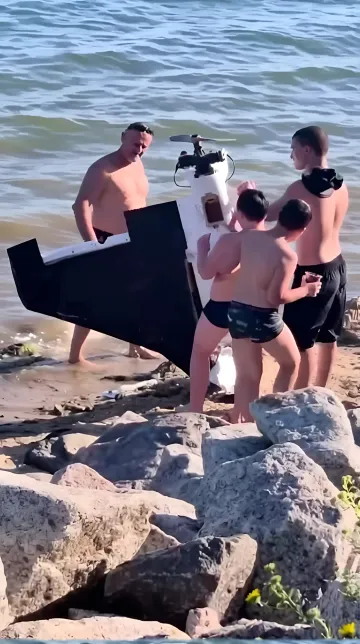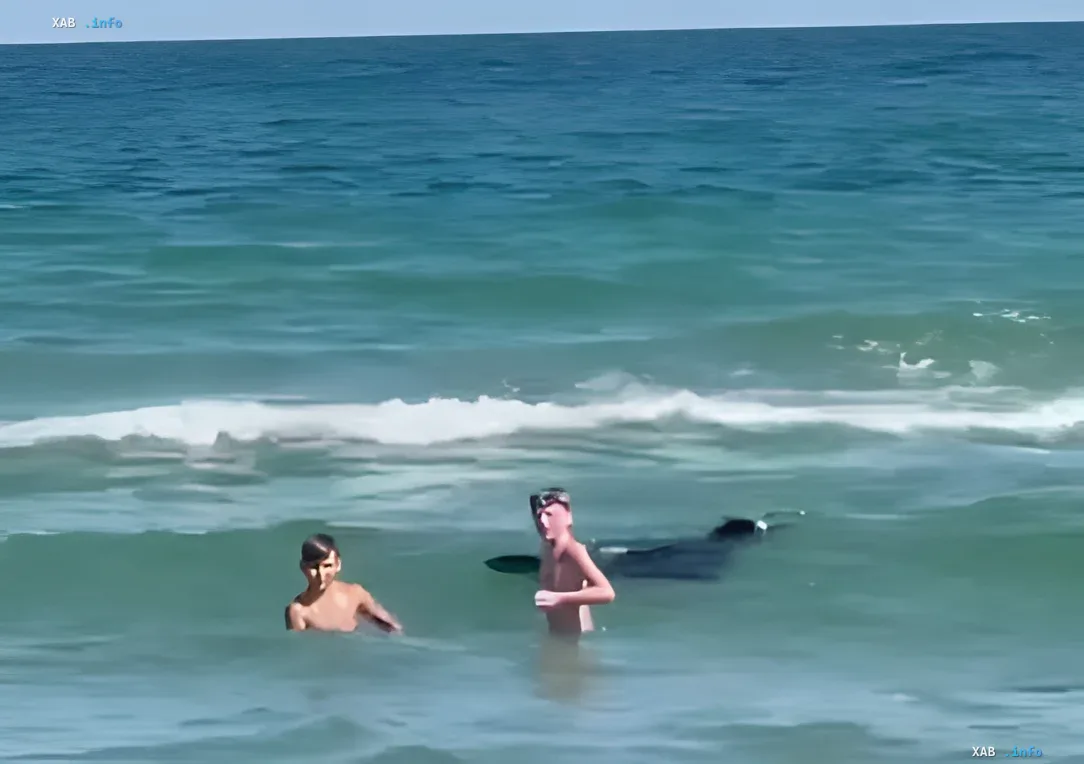
The swimming season in the Odesa region has collided with a new, deadly reality. On Saturday, July 18, 2026, an event occurred at one of the popular makeshift beaches that could have ended in tragedy. In the waters of the Black Sea, in close proximity to vacationers, a drifting fragment of a downed unmanned aerial vehicle was discovered.
Thriller in the shallows: wreckage near children
Preliminary data indicates that the found object is part of the glider of a loitering munition of the "Shahed" (or "Geran") type, which was shot down by air defense systems during the repulsion of another aerial raid. The situation is exacerbated by the fact that the wreckage ended up in shallow water where people, including minors, were present at that time.
Video footage published by witnesses on social media demonstrates a terrifying picture: an unidentified triangular object slowly floats on the water, while vacationers swim nearby. People in the water did not immediately realize the degree of the threat, continuing to stay in close proximity to the potentially explosive cargo.
Hidden threat: why you cannot touch the wreckage
Safety experts emphasize: the fall of a drone into the water does not guarantee its complete deactivation. Fragments of the structure may contain an unexploded warhead, remnants of unburnt fuel, or components of pyrotechnic charges. Any attempt to retrieve such a "souvenir" to the shore or simply touch it can trigger an instantaneous detonation.
This incident became merely the last straw in a series of events. The Odesa region has been subjected to combined strikes for five days in a row. Debris from aerial targets regularly falls both on land and in the sea, turning the coastal zone into a minefield.
Official ban and real risks
The State Emergency Service (SES) and the Odesa Regional Military Administration (RMA) have once again introduced strict restrictions. The authorities have categorically banned visiting coastal zones that have not been checked for the presence of explosive ordnance. However, as practice shows, makeshift beaches continue to be visited by citizens ignoring the warnings.
Specialized services identify three main risks to life in the coastal zone:
- Explosiveness of wreckage: UAV fuzes may trigger from mechanical impact even after falling into the water.
- Drifting mines: Storm conditions and hostilities increase the risk of bottom and anchor mines being dislodged from their positions and washed onto the shallows.
- Lack of protection: Unsanctioned beaches lack equipped shelters and air raid warning systems.
In accordance with the order of the "Odesa" military group command, swimming in open water bodies in the region is restricted by the law "On the Legal Regime of Martial Law". Violation of these rules entails not only administrative liability but also creates a direct threat to the lives of citizens. Emergency services have already arrived at the scene of the incident to verify the location and neutralize the threat.