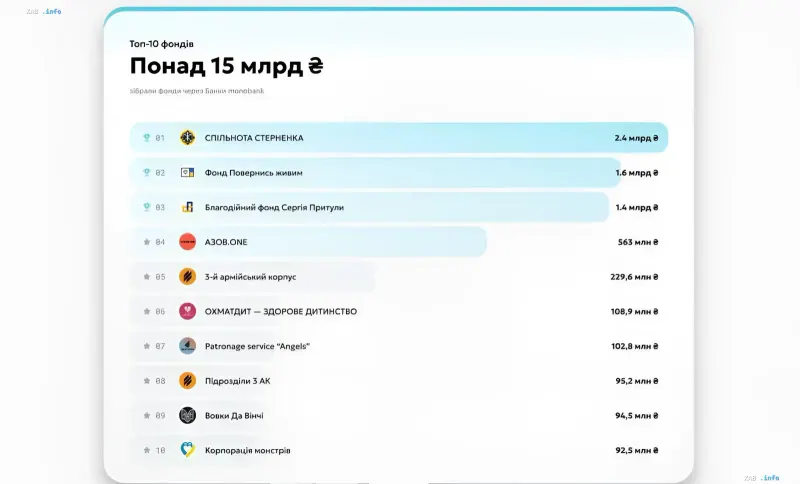
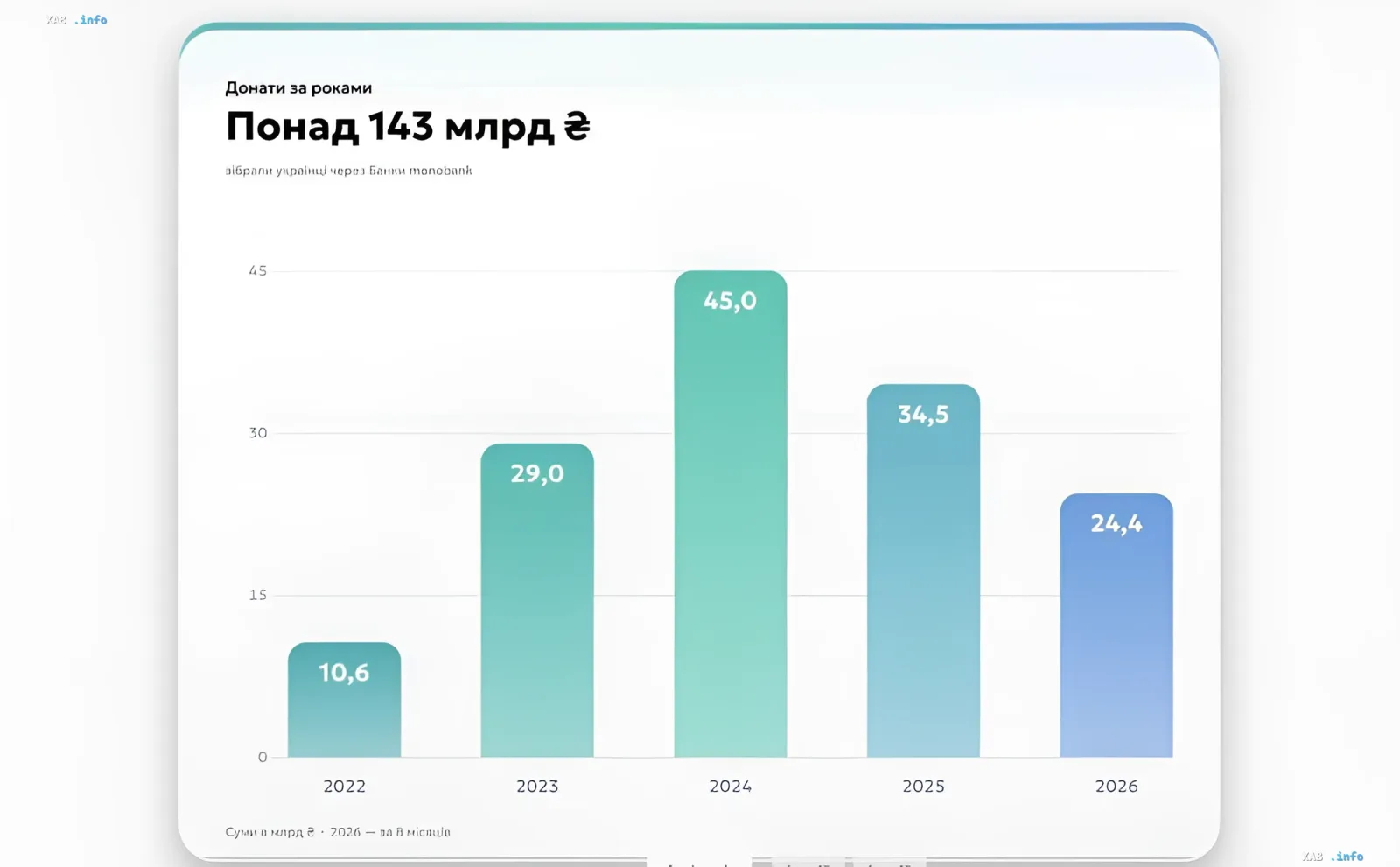
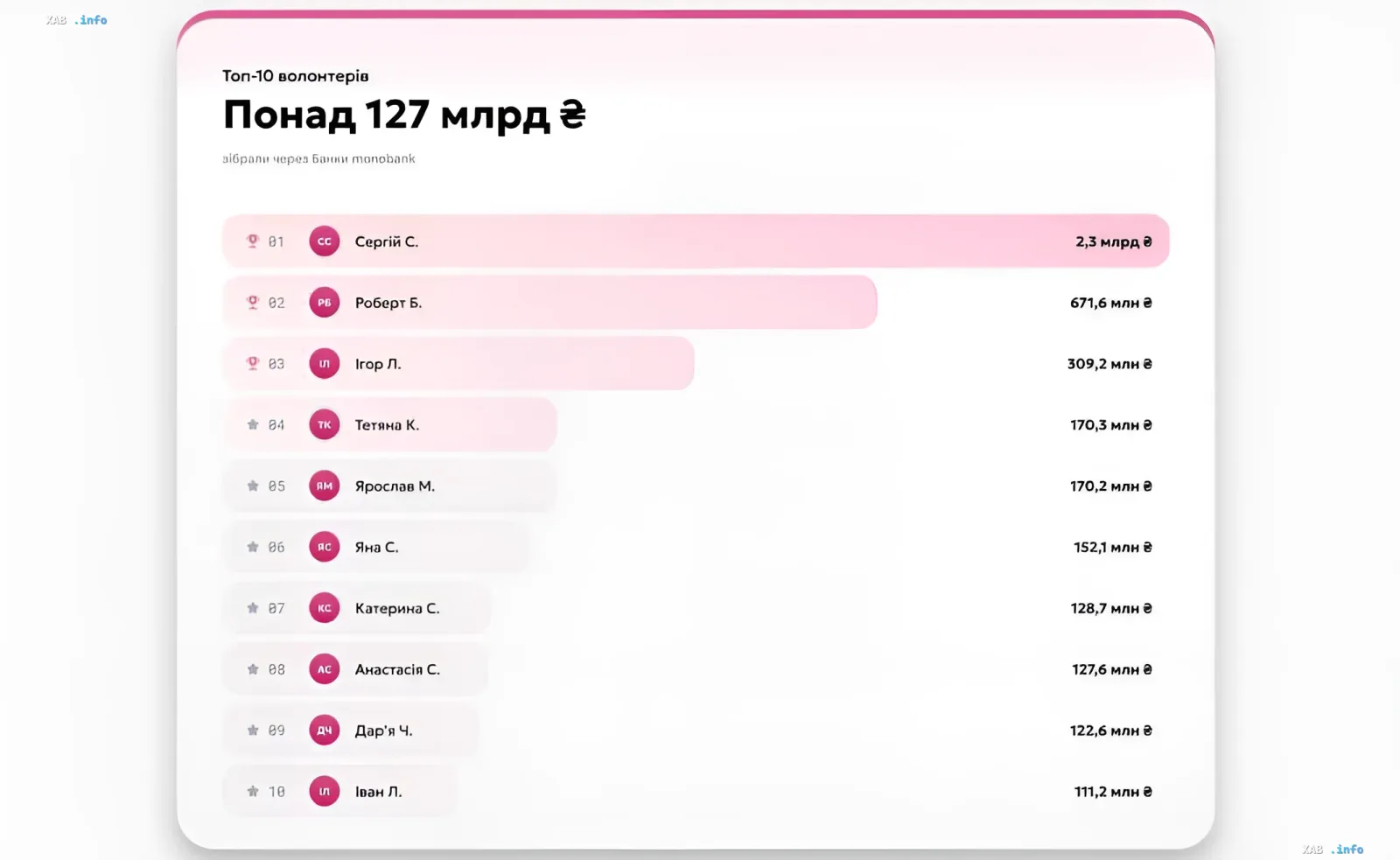
Oleh Horokhovskyi, co-founder of monobank, published official statistics on donation flows since the start of the full-scale war on August 24, 2026. According to these figures, a total of 4.7 billion hryvnias — roughly 90 million euros at current exchange rates — passed through the personal accounts of blogger Serhiy Shternenko and his charity, the Shternenko Community Fund. On this metric, the Shternenko Fund topped the ranking of the largest volunteer collections run through monobank, surpassing the Come Back Alive Fund (1.6 billion UAH) and the Serhiy Pritula Foundation (1.4 billion UAH). These figures capture the scale of a parallel volunteer economy that, over four years of war, has grown to budgets comparable to a number of state defense programs.
Record collections: structure and channels
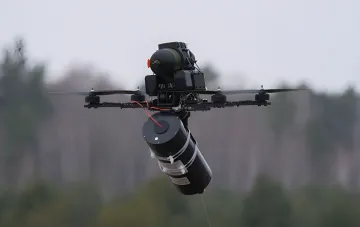
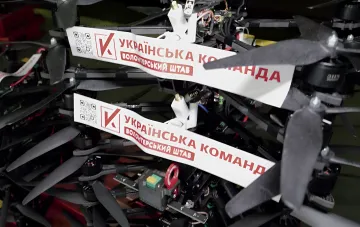
According to participants in the process, the bulk of the funds was directed through large targeted collections for FPV drones, air-defense drones, and maritime equipment for the relevant units. In February 2025, monobank launched a recurring-subscription service, and the Rusoryz project became the first initiative to which Ukrainians began attaching fixed monthly debits. It was precisely the combination of daily video reports, aggressive marketing, and the integration of fintech tools that, in observers' assessments, gave the fund a steady stream of donations.
Shternenko himself describes his structure as a "fast transit" model without large classic warehouses: equipment, he says, is ordered from manufacturers on an advance basis and delivered to the front without waiting for individual collections to close. In the fall of 2025, he publicly acknowledged that at peak load the fund owed drone-systems suppliers 158 million hryvnias. This approach allows supplies to be scaled up quickly, but at the same time it creates substantial credit obligations.
Criticism and transparency questions
The flip side of the billion-scale turnover has been a steady stream of criticism from competitors and political opponents. Open sources regularly publish materials accusing Shternenko's team of purchasing components through chains of intermediaries and inflating the final cost of equipment. Critics point out that at volumes of hundreds of thousands of units, even a small price gap on a single device can generate a significant hidden margin. Shternenko himself rejects these accusations, citing the absence of warehouse logistics and the openness of his reports. No official criminal cases for fraud in the collections have been opened, according to available data, although media pressure on the fund is mounting.
Salary scandal and the split of funds
An additional trigger for public attention was the July 2026 events, when internal financial documents of the fund leaked online. According to the authors of the investigation, Shternenko's common-law wife was employed by the organization with a salary of 103,900 hryvnias per month, even though the fund's website had previously stated that donations for the army were not directed to administrative expenses. In response to the wave of criticism, the fund reportedly split its collection accounts into two categories: a targeted collection for combat equipment and a separate "operational base" for team upkeep, rent, and salaries.
Contradictory data
There are notable discrepancies in the public statements of the parties involved. On the one hand, the co-founder of monobank confirms the total flow of 4.7 billion hryvnias and the fund's leading position in the ranking. On the other — assessments of how much of these funds turned into actual equipment purchases versus how much formed margin or administrative expenses differ between the sides: critics insist on inflated prices in the early stages of the war, while Shternenko denies any hidden markups and explains the expense structure through a no-warehouse model. A similar contradiction concerns administrative costs: the fund's public statements that army donations do not go toward upkeep do not match the leaked documents on employee salaries. As of the time of writing, no independent public audit that would definitively resolve these discrepancies had been conducted.
Analytical conclusion
The confirmed figure of 4.7 billion hryvnias shows that Ukraine has developed a volunteer economy comparable in scale to state defense programs, and that social roles have been substantially redistributed over the course of the war. At the same time, the main challenge facing the fund is a growing crisis of trust: as society grows weary of the war, questions of pricing, margin, and the actual use of funds will be raised ever more loudly and will likely require full independent audits from major volunteer structures.