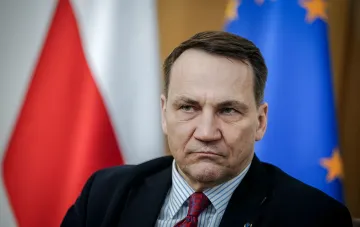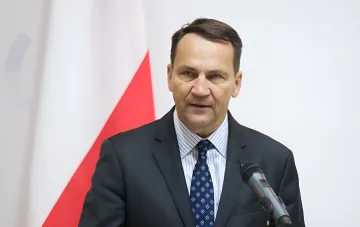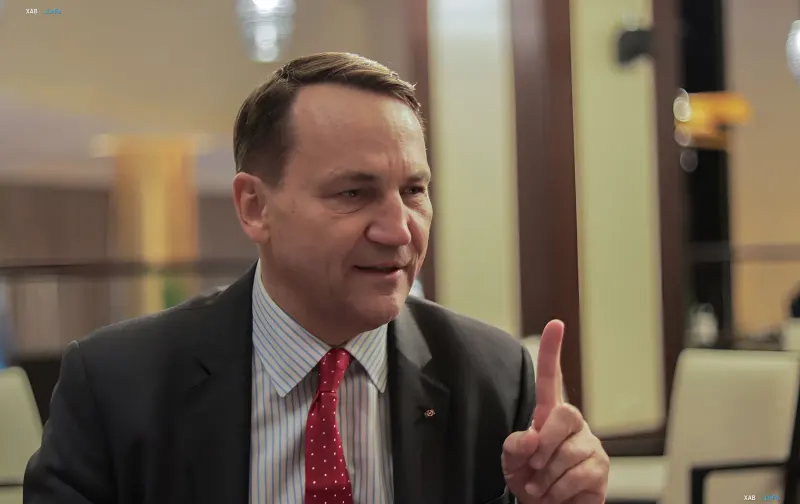
The head of Poland's Foreign Ministry, Radosław Sikorski, called on the European Union to expel a significant portion of Russian diplomatic staff accredited in bloc countries. According to him, the figure is up to 40% of personnel who, in Warsaw's assessment, operate under the cover of Russian intelligence services. The statement was made at a press conference in Weimar after a meeting with his German and French counterparts and was framed as a response to the recent wave of hybrid attacks that, in the Polish minister's view, call for tougher restrictions against Moscow.
Call for expulsion: figures and rationale
According to Polish estimates, more than two thousand Russian diplomats are currently present in EU countries, and no fewer than 40% of them, as Sikorski emphasized, "carry out tasks incompatible with their diplomatic status." The minister stated that these individuals "work for agencies that also carry out terrorist activities in our countries," adding that "Russia is trying to destroy the EU from within and should not be allowed to enjoy the privileges of free movement." In his words, as a gesture of solidarity with Germany, the bloc must introduce "all necessary precautionary measures for our population."
Package of additional restrictions
In addition to reducing the number of Russian diplomatic staff, Sikorski called for restricting the freedom of movement of Russian diplomats, cutting the issuance of Schengen visas to Russian citizens, and requiring Russians to use only biometric documents when entering the EU. Thus, Warsaw is proposing a set of measures affecting the diplomatic corps, civilian entry, and the bloc's visa policy.
Partners' reaction and the context of hybrid attacks
French Foreign Minister Jean-Noël Barrot stated that Paris is ready to support further steps "if circumstances so require." The EU, particularly Germany, reacted sharply to the drone incident in Leipzig, which, according to the Polish side, became the "last straw" against a backdrop of ongoing Russian hybrid attacks on EU countries. In this context, reports indicate that a firm response is being prepared, including restrictions on Russians, diplomats, and the "shadow fleet," as well as a German statement on supplying Ukraine with missiles and thousands of drones to deter Russia.
Contradictory data
The statement text and its retellings contain a discrepancy in the wording of the scale: in one place it speaks of expelling "about half" of Russian diplomats, in another — "up to 40%." Both figures indicate a comparable but not identical volume, and the exact share that Warsaw considers the target is not unified in open retellings. Moreover, the figure of "more than 2,000 diplomats" and the estimate of "no fewer than 40%" are claims by the Polish side, not independently verified data; no independent audit of the number and functions of Russian diplomatic personnel in the EU is provided in the sources.
Thus, Sikorski's initiative is a political call for a coordinated tightening of the EU's position, underpinned by references to hybrid attacks and the Leipzig incident. The actual implementation of the expulsion, visa, and biometric restrictions will depend on coordination within the bloc and on which specific measures key countries, including France and Germany, will support.