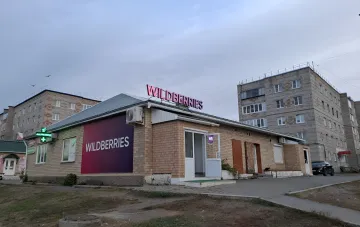
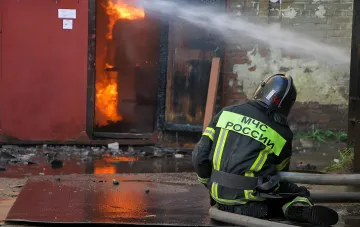
On the night of July 18, powerful explosions rocked Russia, engulfing logistics facilities and fuel depots. However, despite the scale of the incidents, the Russian information space responded to the events with restraint, and in some cases, remained silent altogether. A media monitoring conducted by the "Agency.News" agency and published by RBC-Ukraine revealed a systematic tendency to minimize coverage of the consequences of the Ukrainian Armed Forces' strikes on the Wildberries marketplace warehouses.
Television Censorship: 40 Seconds for a Massive Fire
An analysis of federal television channels' broadcasts showed that none of the leading broadcasting companies included information about the attacks in the list of the day's top news. The topic was raised only in morning and daytime broadcasts, and always secondarily — after reports on the actions of the Russian army at the front.
The most illustrative example is the NTV channel. In the 10:00 news broadcast, the anchor devoted only 40 seconds to the topic of attacks on Wildberries. Airtime was spent recounting official posts by the governors of the Moscow and Tambov regions, after which the broadcast immediately switched to other stories. A similar situation was observed on the "Russia 1" channel at 11:00. Here, too, 40 seconds were allocated, to which a dry statement from an official representative of the Investigative Committee was added.
Even Channel One, which traditionally pays more attention to domestic events, limited itself to a two-minute report in its 12:00 broadcast. At the same time, the authors of the monitoring emphasize: real footage of the fires at the warehouses was not shown on any of the federal channels. The broadcast lacked both video from the scene and full-fledged reports capable of demonstrating the scale of the destruction.
Digital Silence and Fear of Sanctions
The situation in the segment of online media and Telegram channels turned out to be no less strictly regulated. Channels associated with law enforcement agencies also refrained from publishing visual content. The only exception was a photo reprinted from a post by the Governor of the Moscow region, Andrey Vorobyev.
Particular resonance was caused by the explanation from the editorial board of a Telegram channel belonging to Ksenia Sobchak's media holding. The publication released only two news items about the attack, accompanied by an admission of censorship. The editorial board directly stated that the absence of photos of the consequences of the "strikes" was dictated by fear of sanctions from the Russian authorities.
"Because the Russian authorities have banned the media and ordinary people from publishing the consequences of attacks, except for official reports, and we fear sanctions even for publishing photos from which it is impossible to determine the location," the editorial board's comment reads.
Regional Bans and the Scale of Strikes
Facts confirm the existence of strict information restrictions. In the Tambov region, it is officially forbidden to publish any data about unmanned aerial vehicles and the operation of air defense systems. In the Moscow region, where the main fire occurred, no such ban was publicly announced, however, similar rules have been in effect on the territory of Moscow since mid-May.
Despite attempts to hide visual evidence, facts remain facts. On the night of July 18, a powerful fire engulfed a Wildberries train in Elektrostal, Moscow region. Ukrainian President Volodymyr Zelenskyy confirmed the defeat of logistics facilities in the Moscow and Tambov regions, located at a distance of more than 500 and about 700 kilometers from the front line.
In addition to the marketplace warehouse, an oil depot in Noginsk was hit. There were also reports of explosions in Tver and Vladimir. Thus, Russian media found themselves facing a choice: either violate the new information security rules and risk sanctions, or hide the real scale of what is happening from viewers.