Chinese company Sipeed has announced the release of the MaixStation mini-computer, positioned as a direct competitor to enterprise AI stations Nvidia DGX Spark and AMD Ryzen AI Halo. The device is built on the new Axera AX8860P chip and features 128 GB of LPDDR5X memory connected via a 256-bit bus with a bandwidth of 273 GB/s. The expected system price with Kickstarter platform discounts is around $3,999, which is nearly half the base price of the DGX Spark at $6,950. The crowdfunding campaign starts in late 2026, with the first shipments scheduled for three months after its completion. The developer promises to release software tools for the built-in AI accelerator by the end of November.
Axera AX8860P Chip Architecture
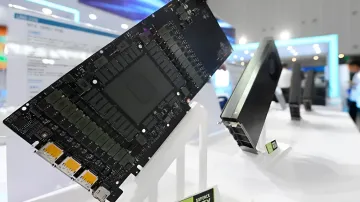
At the core of the MaixStation is the Axera AX8860P platform, manufactured using a 6nm process. The chip integrates a 16-core Arm Cortex-A55 processor and a proprietary neural processing unit developed in-house, delivering 256 TOPS in FP4 format without structural sparsity. The platform supports PCIe 5.0, hardware decoding for up to 64 video streams, and encoding for 16 streams. According to Axera, four such chips can be placed on a single-slot PCIe board, scaling memory capacity up to 512 GB. In a dual-chip configuration, total performance reaches 512 TOPS, and in a quad-chip setup, 1024 TOPS with a scaling efficiency of around 80%.
Performance: Comparison with Nvidia DGX Spark
In tests with the Qwen 3.8-27B model, the Sipeed MaixStation is reported by the developer to perform prompt prefilling 25% faster and generate responses 30% faster compared to the Nvidia DGX Spark. The comparison was conducted in FP4 format with speculative execution disabled. During later internal testing, the MaixStation demonstrated even higher results, although these figures do not yet have official status. For context: under similar conditions, the DGX Spark delivers, according to Nvidia, about 500 TFLOPS, which is roughly double the 256 TOPS of the Axera chip. Nevertheless, based on preliminary estimates, Sipeed's claim of running models with 27 billion parameters locally seems plausible: such a model takes up about 13.5 GB of memory, and with a bandwidth of around 270 GB/s and 4-bit quantization, the system is capable of generating approximately 20 tokens per second.
Pricing and Market Context
The expected price of $3,999 for the MaixStation with Kickstarter discounts creates a noticeable price gap with major competitors. For comparison: the DGX Spark in a configuration with 128 GB of memory and 273 GB/s bandwidth costs $6,950, while the 64 GB version starts at $4,999. PCs based on the AMD Ryzen AI Halo Max+ PRO 495 chip with 192 GB of memory are priced at $7,299.99, and the Max+ 395 model with 128 GB and 256 GB/s bandwidth is priced at $3,999.99. All listed systems use a 256-bit LPDDR5X memory bus. A significant portion of the cost of such devices is the memory itself: back in August, the minimum price for a 128 GB DDR5 kit in the US was estimated at $3,399, and analysts project a 10–15% price increase this quarter. Sipeed clarified that current component market prices were factored into the MaixStation pricing calculations.
Software Ecosystem and Operating System
The MaixStation ships with Debian 13 and the Linux 6.18 kernel. Sipeed offers its own toolkit for working with the NPU and claims support for vLLM, SGLang, and PyTorch frameworks. Axera additionally confirms compatibility with the ONNX format, Hugging Face repository models, and an OpenAI-compatible API. By comparison, the DGX Spark comes pre-installed with DGX OS—an Nvidia-tailored version of Ubuntu 24.04 LTS that includes CUDA and a complete AI software stack. AMD offers its own suite of components: drivers, models, frameworks, and the ROCm platform. In none of the three cases is Windows 11 installation supported at present, though such an option is on the roadmap for all three manufacturers. Sipeed notes that Windows support will depend on user demand.
Design, Interfaces, and Scalability
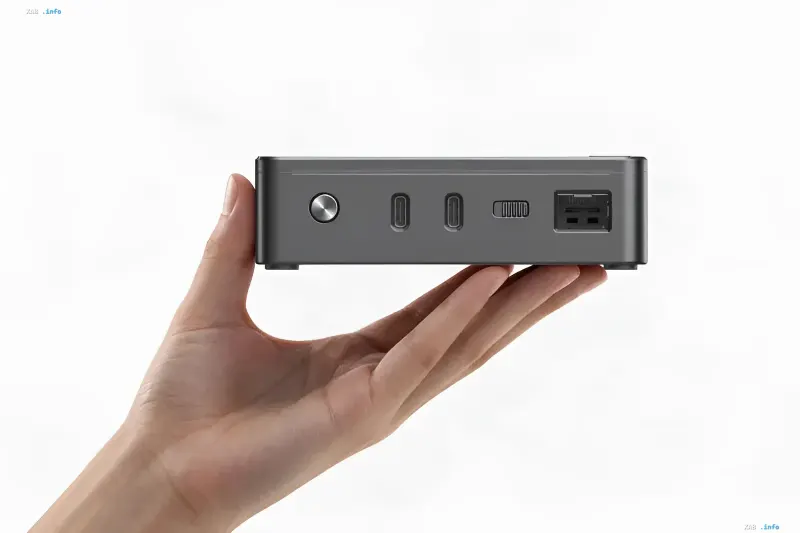
The dimensions of the MaixStation are 11 × 11 × 3 cm, with a typical power consumption of 40 W. Power is supplied via a USB Type-C port. Available interfaces include 10G SFP+, an additional USB Type-C port, an M.2 2280 slot with PCIe 5.0 support (unlike the DGX Spark, which uses the less common M.2 2242 format), and an MCIO 8i connector for connecting a second module. Configurations with one, two, and four nodes are supported, as well as modes utilizing an arbitrary number of PCIe boards. Module interconnection uses a C2C-type link with a bandwidth of 256 Gbps, expandable to 384 Gbps. An additional switch is not required in this setup, unlike clustering Nvidia DGX Spark systems via QSFP. Connection of up to eight computing nodes is maximally supported. Mini-PCs and handheld computers based on the Axera AX8860P chip will also hit the market.
Prospects and Conclusions
The arrival of the Sipeed MaixStation brings notable diversity to the local AI workstation segment, which has until now been dominated by Nvidia and AMD solutions. Sipeed's pricing policy, based on current component costs and a more accessible manufacturing process, makes it possible to offer a memory-equivalent configuration at nearly half the price of the flagship DGX Spark. While the 256 TOPS performance trails the 500 TFLOPS of the DGX Spark, the MaixStation looks like a competitive solution for local inference tasks involving medium-sized models (up to 27 billion parameters). A final verdict on the device can be given after the Kickstarter campaign launches, software is released, and independent benchmarks are published, which, following typical product launch timelines, are expected in the first quarter of 2027.