SpaceX, known for its ambitious space projects, is ready to take another revolutionary step — this time in the field of mobile communications. According to data from Ixbt.com, Elon Musk and SpaceX President Gwynne Shotwell revealed plans to launch their own mobile operator, Starlink Mobile, at a closed meeting with investors. The service is expected to begin operations in late 2027 and will directly compete with the largest US telecommunications companies — Verizon, AT&T, and T-Mobile.
Ambitious Goals: Capturing a $600 Billion Market
The combined annual revenue of the three leading US mobile operators is nearly $600 billion. SpaceX intends to capture a significant share of this market by offering users a fundamentally new model of network connectivity — via satellites. This will ensure coverage in remote and hard-to-reach regions where traditional cell towers are inefficient or non-existent.
Technological Breakthrough: 150 Mbps Speed via Satellites
The key advantage of Starlink Mobile will be the use of the latest spacecraft, whose throughput, according to the company, is 20 times higher than that of current-generation DTK systems. Thanks to this, ordinary smartphones with standard 5G/LTE support will be able to transmit data via satellites at speeds of up to 150 Mbps — a figure comparable to fifth-generation terrestrial networks.
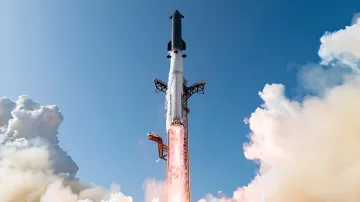
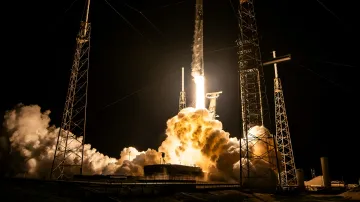
To launch these satellites into orbit, SpaceX plans to use its super-heavy Starship rocket, which has already demonstrated high efficiency in launching large payloads.
Proprietary Modems and Cooperation with Chipmakers
An important element of the company's strategy is the development of its own satellite modems. In the future, SpaceX intends to offer these solutions to leading mobile chip manufacturers — Qualcomm, Samsung, and MediaTek. This will allow satellite connectivity to be integrated directly into smartphones without the need for additional devices, significantly simplifying user access to the service.
Contradictory Data
Although Elon Musk and Gwynne Shotwell presented the project as ready for implementation, some experts point to the lack of official statements from US regulators regarding the allocation of radio frequencies for satellite mobile communications. Moreover, the launch timeline (late 2027) may be optimistic, considering the complexity of coordinating technical and legal issues. Currently, there is no confirmed data on which specific frequencies will be allocated to Starlink Mobile and how this will affect existing operators.
Legal and Regulatory Challenges
Before the full launch of Starlink Mobile, SpaceX must solve a number of complex tasks. In particular, the company needs to regulate the allocation of radio frequencies and obtain all necessary permits from relevant government regulatory bodies, such as the FCC (Federal Communications Commission). Without this, even the most advanced technology cannot legally operate in the US and other countries.
Impact on the Market and the Future of Communications
The launch of Starlink Mobile could radically change the telecommunications market landscape. On the one hand, this will create healthy competition and stimulate technological development. On the other — it may provoke resistance from traditional operators who are already investing billions in 5G and 6G infrastructure.
If the project is successfully implemented, it will not only provide connectivity in remote areas but also become an important tool for the development of IoT, emergency services, and global digital infrastructure.