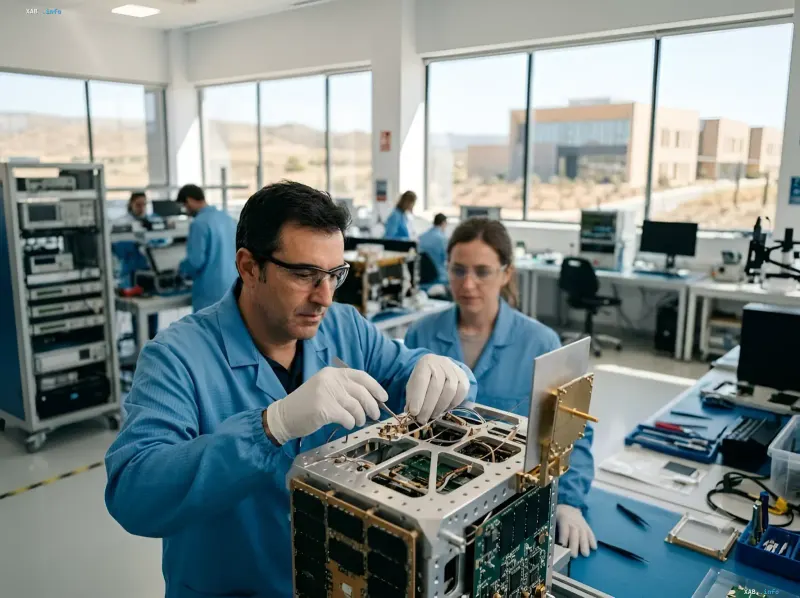
Spain has officially approved a large-scale program to create its own national satellite communication system. The project budget ranges from €1.6 billion to €2 billion (approximately $2.3 billion). This decision makes Madrid the largest national investor within the European initiative for orbital infrastructure. For comparison, Poland previously announced similar investments of €470 million.
Strategic independence in space
The new system will become an integral part of the European IRIS2 project (Infrastructure for Resilience, Interconnectivity and Security by Satellite). The main goal of the initiative is to create a secure satellite network intended for government and military agencies. Unlike commercial counterparts, the project aims to guarantee EU countries full control over critical communications, eliminating dependence on foreign providers.
The Spanish program goes beyond simple participation in the consortium. Madrid plans to create its own space segment, deploy ground control infrastructure, purchase specialized user terminals, and ensure subsequent system operation. At the same time, the national network will be fully compatible with the overall IRIS2 architecture but will remain under Spain's sovereign control.
Technical scale and implementation timelines
The full IRIS2 satellite constellation is to consist of 290 units operating in low and medium Earth orbits. The project is being implemented by the SpaceRISE consortium, which has brought together leading European operators — SES, Eutelsat, and Hispasat — as well as the continent's largest aerospace corporations.
Although Spain has already confirmed multi-billion euro investments, the deployment process will take several years. At present, the system is in the stage of selecting the main satellite manufacturer. The first units are planned to be launched into orbit in 2029, while full operation of the entire network is not expected before 2030. Nevertheless, the early confirmation of funding by Spain sets the pace for the entire European project.