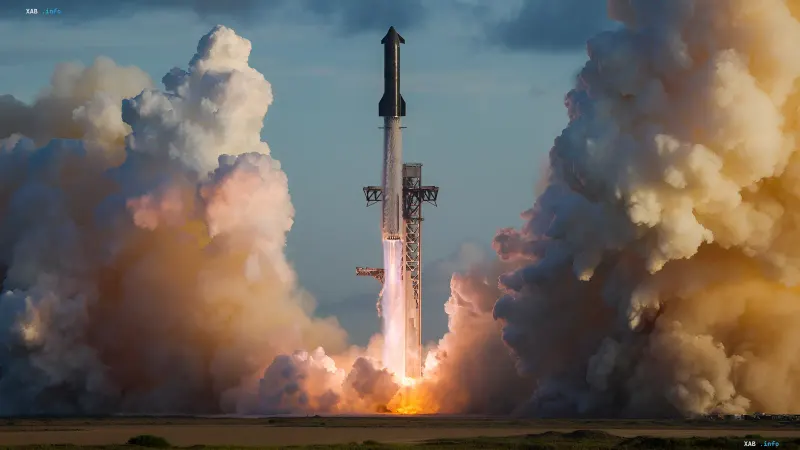
SpaceX has officially acknowledged that its newest spacecraft, Starship, broke apart following a soft splashdown in the Pacific Ocean. However, aerospace experts emphasize that this incident does not constitute a technical problem or indicate a failed test flight. The spacecraft was never designed for a safe landing and prolonged stay in cold ocean water, meaning its subsequent destruction was fully factored into engineering models as an expected scenario.
Test Chronicles and Flight Parameters
Before executing a controlled atmospheric entry and braking maneuver, the upper stage of the Ship 41 space system demonstrated high maneuvering precision. The mission concluded three hours and nine minutes after launch from the spaceport. This duration was approximately six hours and fifty minutes shorter than the originally planned test timeline, though it did not impact the achievement of the campaign's core technological objectives.
Historic Orbital Insertion and Satellite Deployment
Despite the shortened flight time, Starship successfully completed all primary mission objectives, with the exception of the six planned full orbits around the Earth. The mission's major milestone was the historic first fully successful orbital insertion into a stable Earth orbit. Furthermore, specialists confirmed the successful and unobstructed deployment of twenty-six next-generation Starlink communication satellites, demonstrating the system's readiness for commercial operations.
Comparison with Previous Missions
An interesting detail of the flight test program was the comparison with previous launches. During the thirteenth flight, the vehicle also concluded its mission with an ocean splashdown, but remained afloat for about a month before recovery teams lifted its debris from the water surface. The latest scenario demonstrated a different destruction dynamic, fully aligning with Elon Musk's engineering tolerances.
Controversial Data
While official SpaceX representatives and technical experts declare the mission a complete success and view the post-splashdown destruction as routine, some independent observers and foreign commentators highlight the nearly seven-hour reduction in flight duration and the failure to complete the six planned orbital loops. Critics tend to view these deviations as evidence of underlying system limitations, whereas engineers insist on prioritizing primary objectives like orbital insertion and payload deployment.